Seagrass Placemats: Which Natural Fiber Suits Your Table Range?
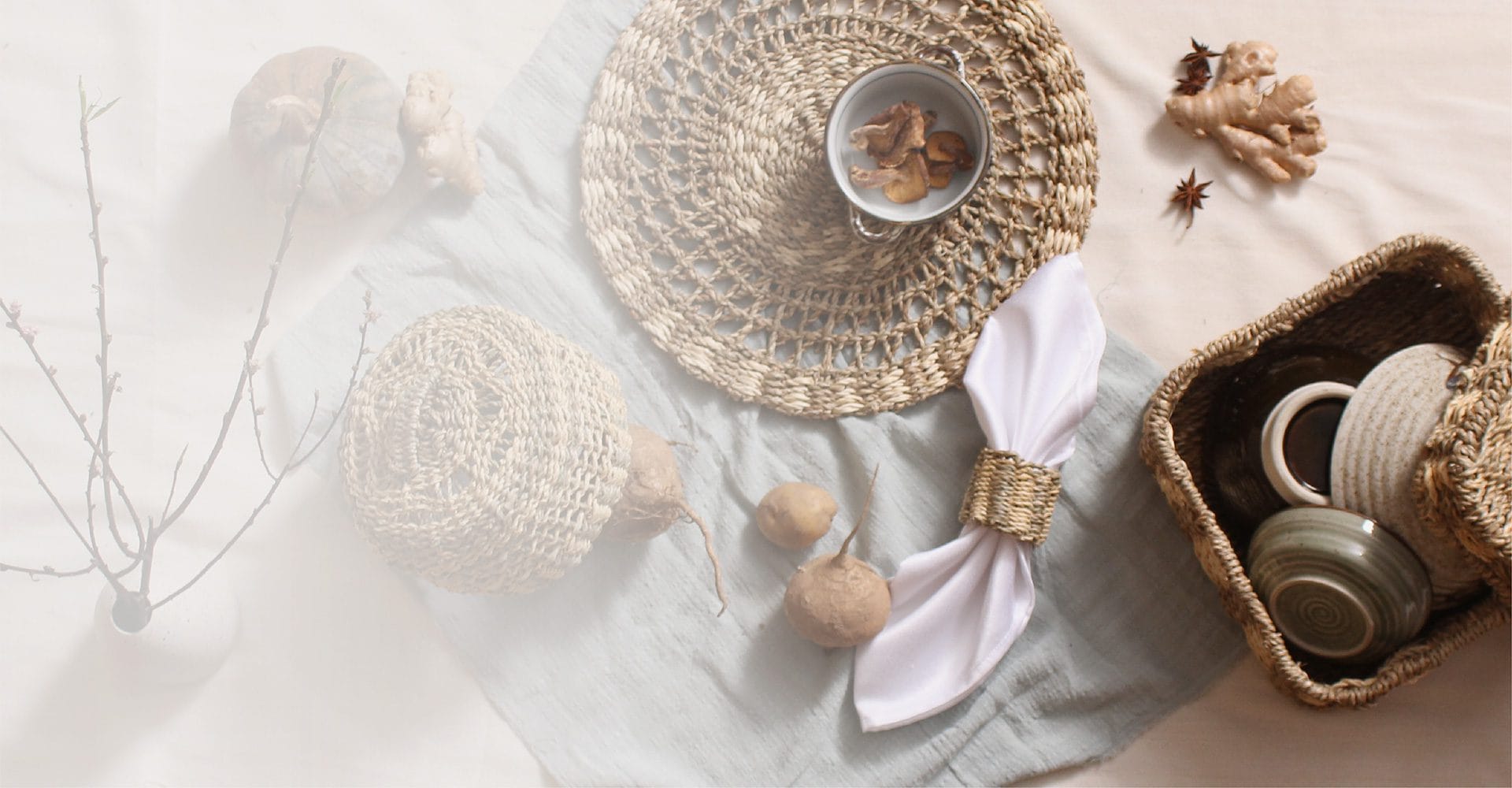
7 Oct 2026A seagrass placemat is a table mat handwoven from dried seagrass, usually round or shaped, chosen for its soft straw colour and a flat, smooth surface that sits steadily under a plate. Seagrass is the most common fiber in the woven placemat category, but water hyacinth, jute and palm leaf each behave differently on a table, and the one you pick changes the colour story, the texture and the way the mat wears. We weave all four at our factory in Nga Son, Thanh Hoa, with a minimum of 50 pieces per design.
Key takeaways
- Seagrass gives the lightest straw tone and the smoothest surface, which is why it leads the placemat category.
- Water hyacinth is warmer and browner with a chunkier braid, jute is darker and harder wearing, palm leaf brings the pale and white patterning.
- Round mats at 35 cm diameter are the standard dinner format; leaf, flower and open work shapes sell as styling pieces.
- No synthetic dyes are used, so every mat ships in the natural hue of the fiber, and most designs can be made in custom sizes.
What are natural fiber placemats made of?
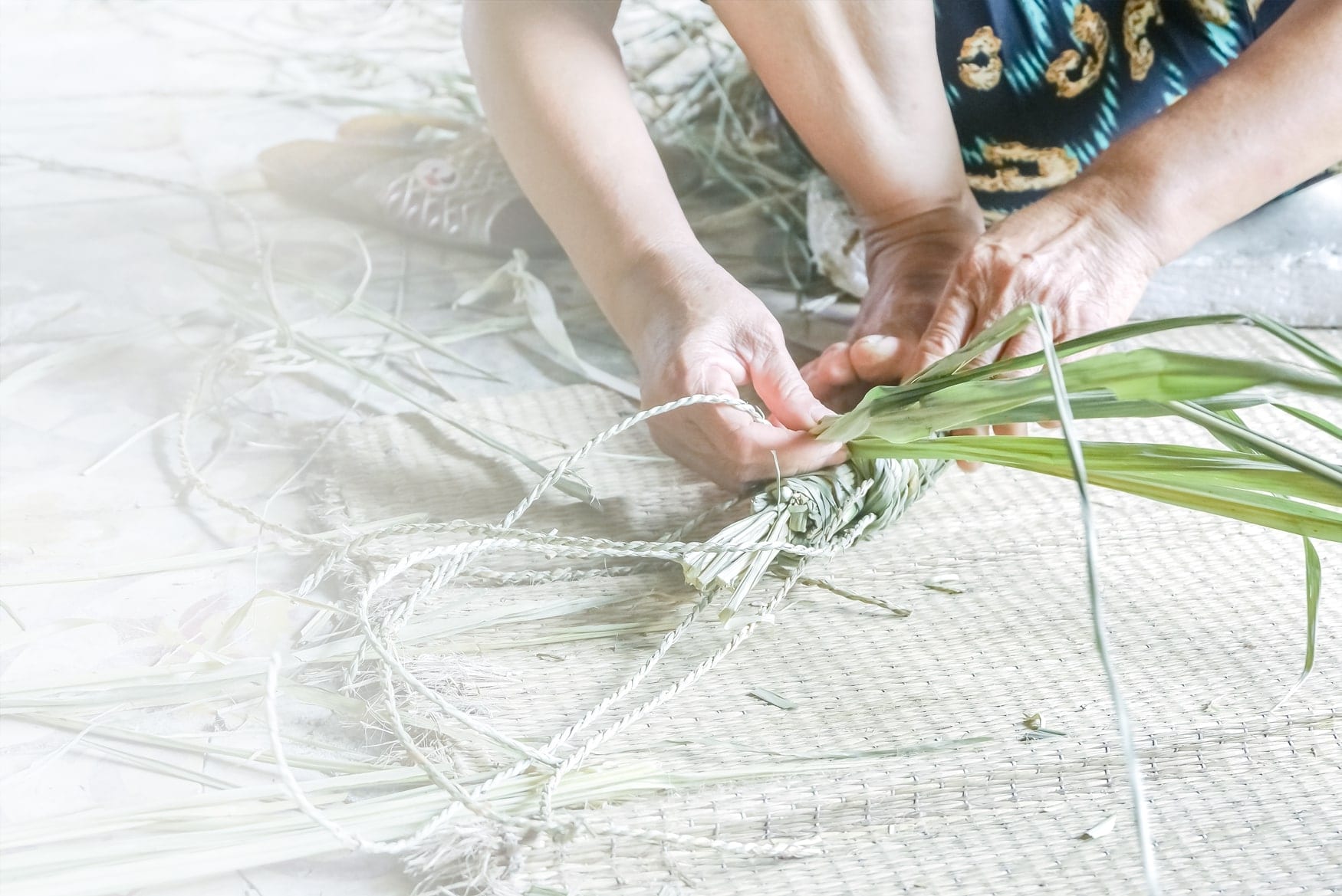
Natural fiber placemats are woven from plant materials that have been harvested, dried and either twisted into a cord or split into flat strips before weaving. There is no plastic core and no backing film. What you see on the surface is the whole material.
Four fibers carry most of our table range. Seagrass is harvested and dried in the Nga Son fields around our factory and is our primary material: high quality, durable, soft and silky, running from light straw to warm brown depending on processing. Water hyacinth is an aquatic plant with a distinctive warm brown tone and a softer, chunkier character. Jute is a bast fiber from plants in the genus Corchorus, grown mainly in India and Bangladesh, strong and durable, carbon neutral and biodegradable, and long used in carpets and coarse textiles. Palm leaf is split, braided and hand-woven using traditional techniques to give smooth edges and the pale, white patterning you see in our mixed-fiber mats.

Corn husk also appears in the table range. It is a waste-utilisation fiber, made from leftover leaves from corn farming, with a milky pale colour that contrasts well against darker seagrass and water hyacinth. Combining two fibers in one mat is a signature of our design work, and our guide to what woven baskets are made of explains how each of these fibers is processed before it reaches the loom.
Seagrass or water hyacinth: which placemat suits your range?
This is the comparison buyers ask for most, because the two fibers photograph similarly and behave differently. Seagrass is the lighter, smoother, more formal of the two. Water hyacinth is warmer, browner and more rustic in the hand.
| Seagrass | Water hyacinth | Jute | Palm leaf | |
|---|---|---|---|---|
| Colour | Light straw to warm brown | Distinct warm brown | Deeper natural brown | Pale, often white patterned |
| Surface | Smooth and silky | Softer, chunkier braid | Coarser and firm | Flat, smooth braided edges |
| Character | Clean and understated | Rustic and tactile | Hard wearing and matte | Decorative and graphic |
| Sells best as | Everyday dinner mats and sets | Rustic and boho table ranges | Durable mats and layering under larger plates | Mixed-fiber mats with contrast |
If you are stocking both fibers, the practical answer is to let seagrass carry your plain round mats and let water hyacinth carry the textured or shaped designs, so the two read as a deliberate pair rather than as near-duplicates on the shelf. Our longer seagrass versus water hyacinth comparison goes through the differences across the whole homeware range, not just the table.

What shapes and sizes do buyers order?
Four formats cover most of the demand. The round mat is the commercial backbone; the shaped mats are what make a table range look designed rather than generic.

Our round kitchen placemat in palm leaf and seagrass is listed at 35 cm diameter in natural brown and natural white, which is the size that sits comfortably under a full place setting. At the other end, the small round seagrass mats are listed at 8 cm and 11 cm diameter and work as coasters and glass mats, usually merchandised alongside the dinner size. Leaf and flower shapes sit between the two: our special design seagrass placemat is one of the shaped pieces buyers pick up as a styling item rather than an everyday mat.

Custom sizing is available across most categories, so if your table range is built around a particular diameter, send the measurement and we will quote against it rather than steering you to the nearest listed size. Because the mats are handmade from natural materials, each piece carries slight differences in size, shape and colour from the sample photographs, and that is worth writing into your own product copy so your customers expect it.
How do woven placemats handle heat, spills and cleaning?
Honestly: treat a woven mat as a place setting, not as a heat pad. Natural fibers are not a trivet substitute, and we advise buyers to test their own hot-dish scenario on a sample before they commit, because what a mat meets on a table in Berlin is not what it meets in Brisbane.
For spills, the rule is speed and dryness. Lift the liquid with a dry cloth rather than rubbing it into the weave, wipe with a barely damp cloth if you need to, and let the mat dry fully in open air before it is stacked. Soaking is what ruins a natural fiber mat, because moisture trapped inside the weave is what mould grows on. Our cleaning and care guide for seagrass and water hyacinth homeware is written so you can pass it straight to your own end customers.
What should you check in a placemat sample?
Lay the sample on a flat surface and look at it edge-on. A good mat sits flat with no lift at the rim and no bow through the middle. A mat that cups or curls has usually been dried unevenly, and it will not settle once it is in a carton.
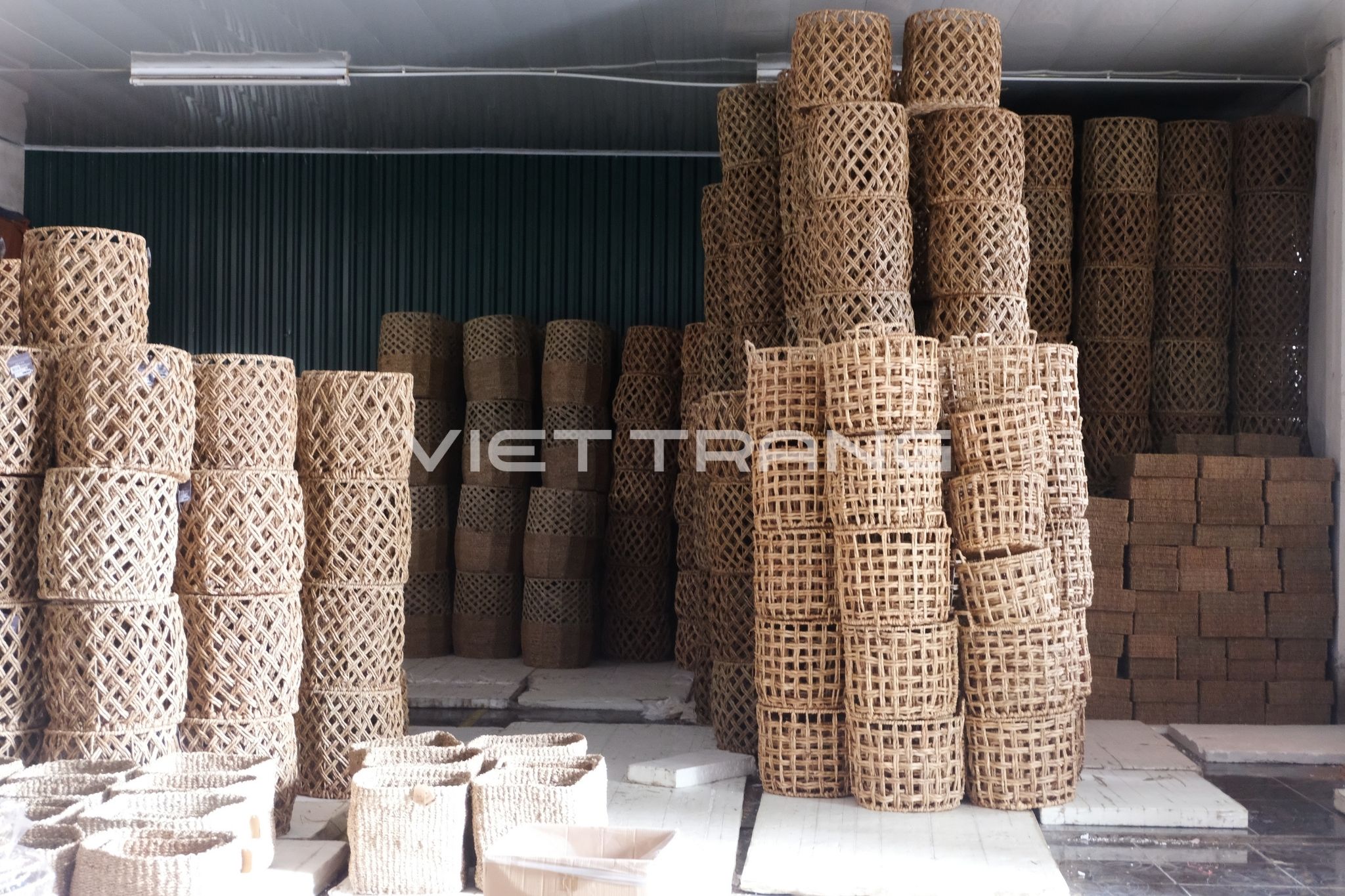
Then run a thumb round the whole edge. The binding should be continuous and tight, with no loose strand ends and no visible glue. Check the reverse as well as the face, because the underside is where a rushed finish shows first. Finally, smell it. A correctly dried mat smells clean and dry; a damp or musty note means moisture is still in the weave, and that is the single most common cause of a shipment arriving spotted. We finish every piece through shaping, cleaning and drying, and run four warehouses with drying machines so stock is dry before it is packed.
Placemats from our range
Four placemats, one in each of the fibers compared above. The material shown under each name is the one stated in that product name.


Frequently asked questions
What is the minimum order for wholesale placemats?
Our placemat listings show a minimum order quantity of 50 pieces per design, packed in cartons, on FOB, CFR or EXW terms. Send us the full list of designs you want and we will confirm the combination on one quotation.
What size is a standard woven placemat?
Our round kitchen placemat in palm leaf and seagrass is listed at 35 cm diameter, which suits a full place setting. We also list small round seagrass mats at 8 cm and 11 cm for use as coasters. Custom sizes are available on most designs.
Are seagrass placemats washable?
They are not machine washable. Wipe with a dry or barely damp cloth, never soak them, and let them dry fully in open air before stacking. Treated that way a natural fiber mat stays in good condition for years.
Can you weave placemats in two different fibers?
Yes. Combining fibers is a design speciality for us, and the palm leaf and seagrass kitchen mat is one example already in the range. Tell us the two fibers and the pattern you have in mind and our design team will develop a sample.
Do you dye placemats to match a colour reference?
We work in natural hues only and do not use synthetic dyes, so the colour comes from the fiber and the processing. Where you need a particular tone, the usual route is choosing the fiber and the fiber combination rather than dyeing, and we will show you what the options look like on a sample.
Want to see the mats in your hand?
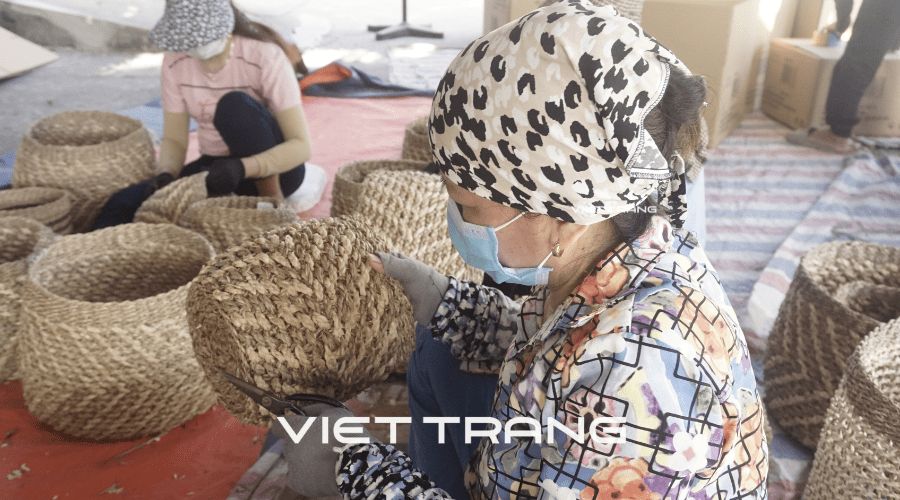
Tell us the shapes, sizes and fibers your table range needs and we will send a sample set, handwoven at our own factory in Nga Son. We are SMETA and BSCI audited and have been weaving in this village for over 50 years.

To receive lots of incentives with dedicated and professional service...
Or view more handwoven product in our
lookbook collection
CONTACT NOW
+84 915 709 666
(WhatsApp available)