What Are Woven Baskets Made Of? A Guide to Natural Fibers
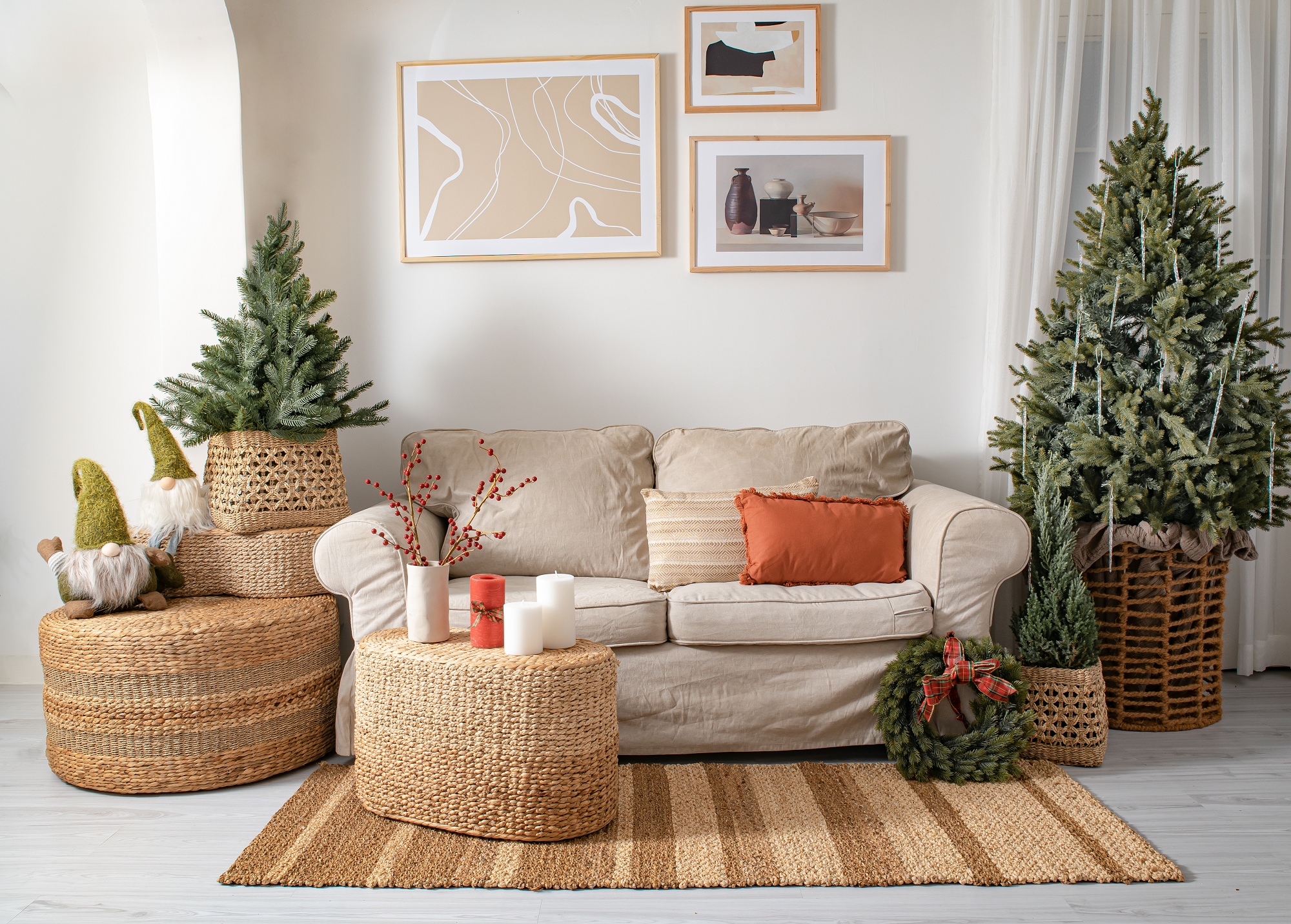
2 Oct 2026Woven baskets are made from plant fibers that are harvested, dried and woven by hand. The most common are seagrass, water hyacinth, rattan, jute, bamboo, willow, corn husk and palm leaf. “Wicker” is not a material but a weaving method that can use several of these fibers. At Viet Trang we work with four of them, seagrass, water hyacinth, corn husk and palm leaf, and we often combine two or more in a single piece.
Key takeaways
- Wicker describes a weaving method, not a fiber. Traditional wicker uses willow, rattan, reed or bamboo.
- Seagrass, water hyacinth, corn husk and palm leaf each bring a different color, texture and character.
- Rattan and jute are also common, but they behave differently: rattan is a solid-stemmed palm, jute is a fiber spun into yarn.
- Mixing fibers in one basket creates tonal stripes and texture that a single fiber cannot.
Is wicker a material?
No. Wicker is a method of weaving used for furniture and baskets, and the word also describes products made that way. Traditional wicker is made from plant materials such as willow, rattan, reed and bamboo, although the term also covers synthetic fibers woven the same way. When a buyer asks for “wicker baskets”, it is worth confirming which fiber they mean, because look, feel and care differ between them. If you are sourcing raw weaving materials rather than finished baskets, see our basket weaving supplies guide.

Seagrass: the fiber of Nga Son
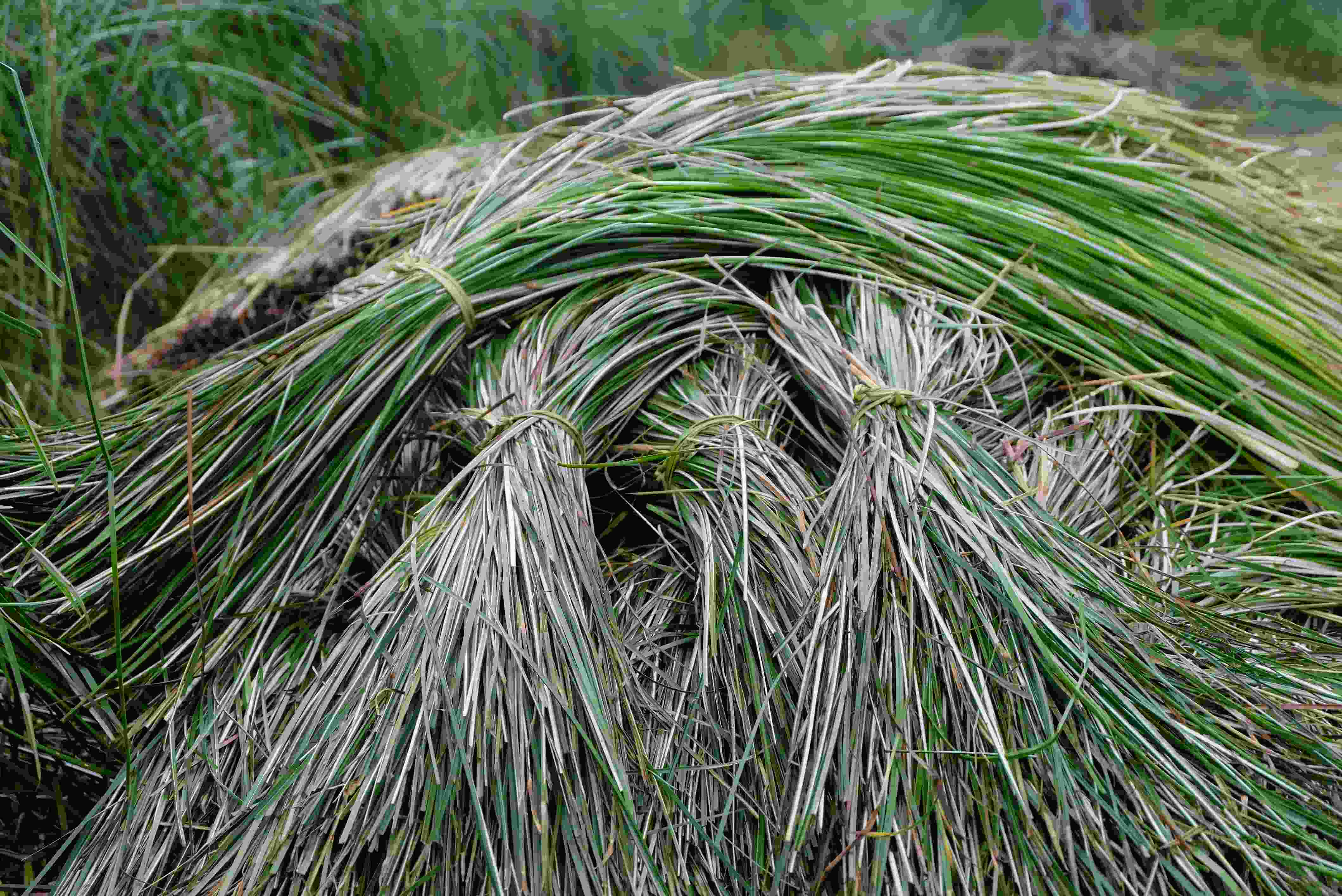
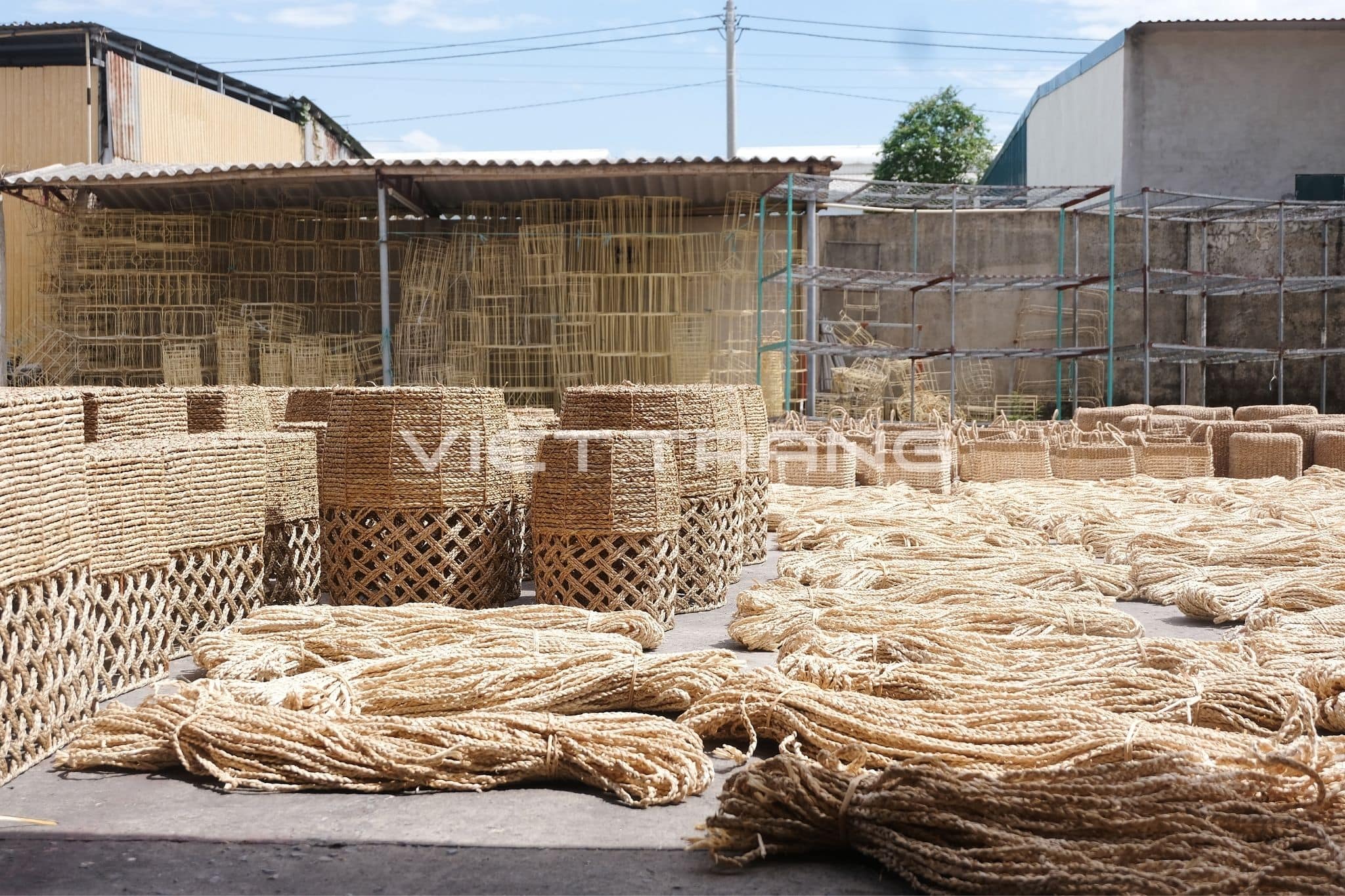
Seagrass is our primary material. It grows locally in Nga Son, Thanh Hoa province, one of Vietnam’s oldest seagrass craft villages and the place where Viet Trang began as a household craft business in the 1970s. After harvest, the stems are dried and processed before weaving. The finished fiber is soft, silky and durable, and its natural color ranges from light straw to warm brown depending on processing.
Seagrass is the backbone of our baskets, rugs, poufs and lampshades. You can read more about the village, its fields and its weavers in our story inside Nga Son.

Water hyacinth: soft, warm and fast-growing
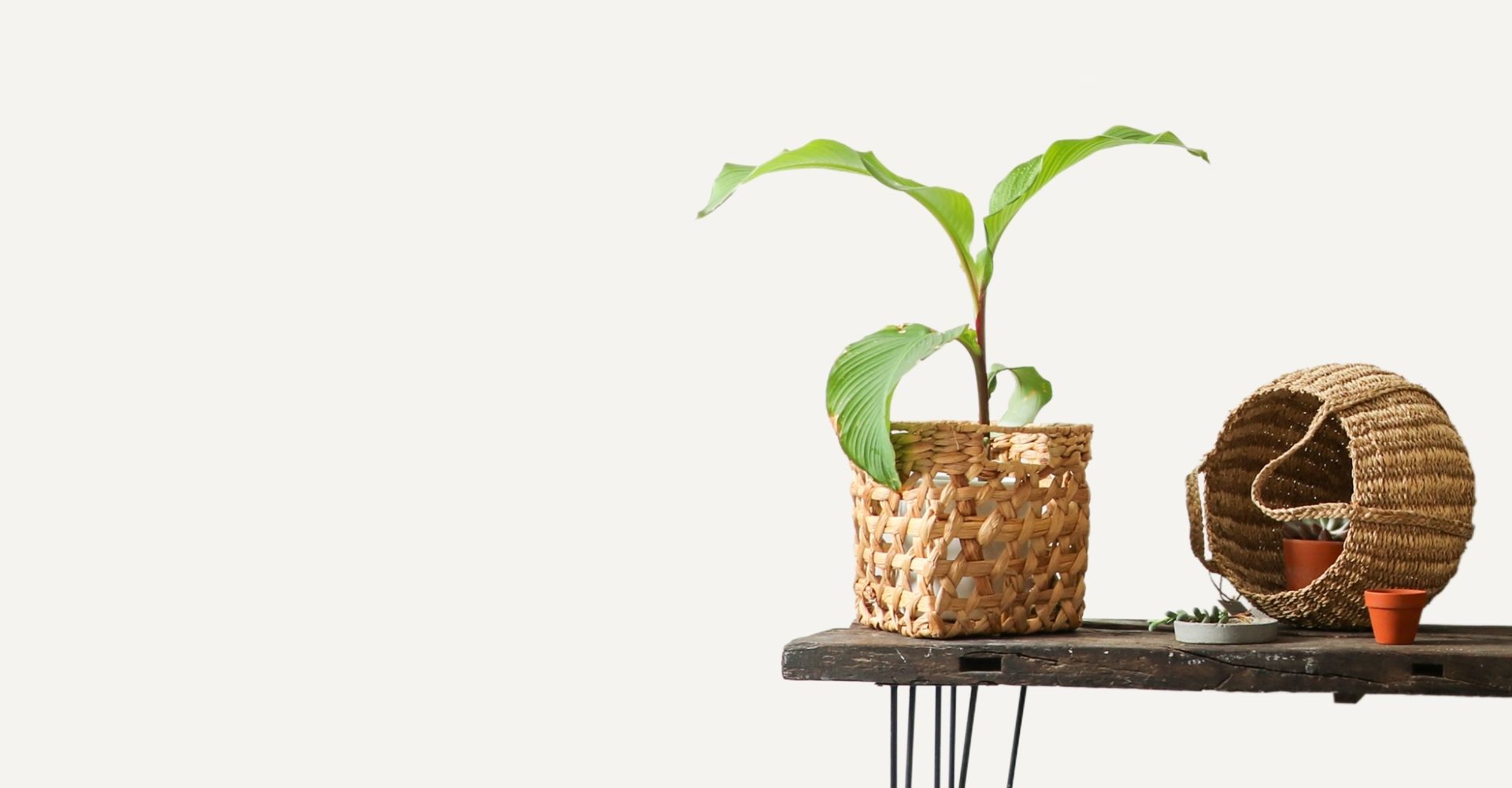
Water hyacinth is a free-floating aquatic plant native to South America that now grows in rivers and lakes across many warm regions. It is among the fastest-growing plants known and is often invasive outside its native range. Its long stems are harvested, dried and woven.
The result is a durable fiber with a distinctive warm brown tone, soft enough for rugs and poufs that people touch every day. It is one of the most popular materials for home handicraft products, especially laundry baskets, storage and seating. For a side-by-side view of the two fibers buyers compare most, see our guide to seagrass vs water hyacinth.
Corn husk: a fiber made from farm leftovers
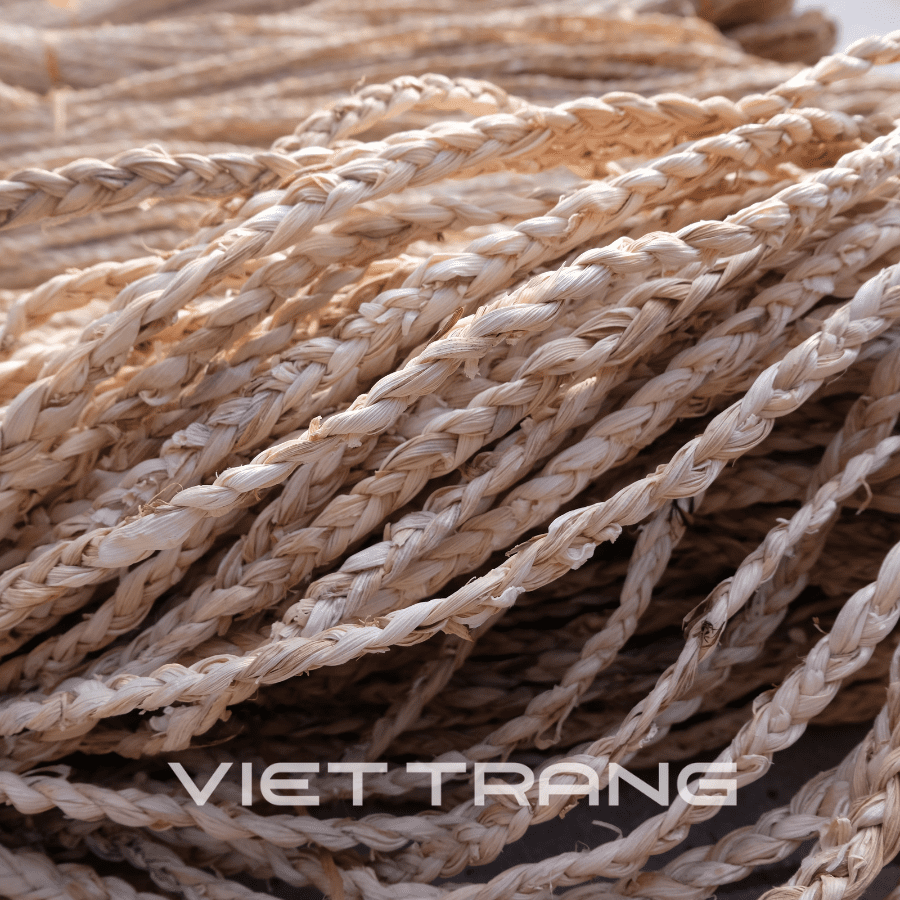
Corn husk leaves are what remains after corn is harvested. Instead of being discarded, the leaves are collected and reused as a weaving fiber, which makes corn husk a waste-utilization material. It has a unique milky, pale color that contrasts well with darker seagrass and water hyacinth, and it is strong and durable enough for baskets, rugs and poufs.
Palm leaf: clean lines and light patterns
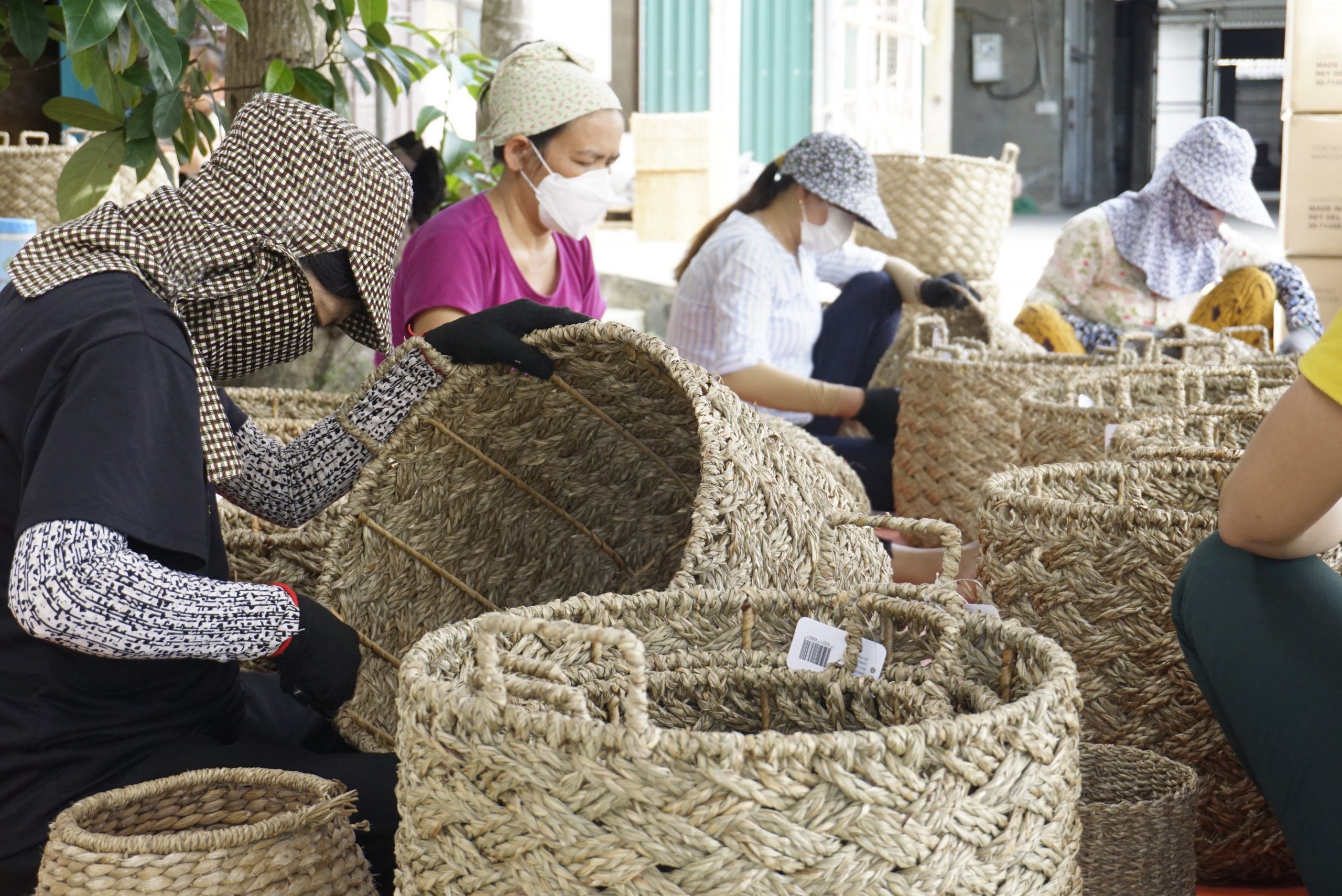
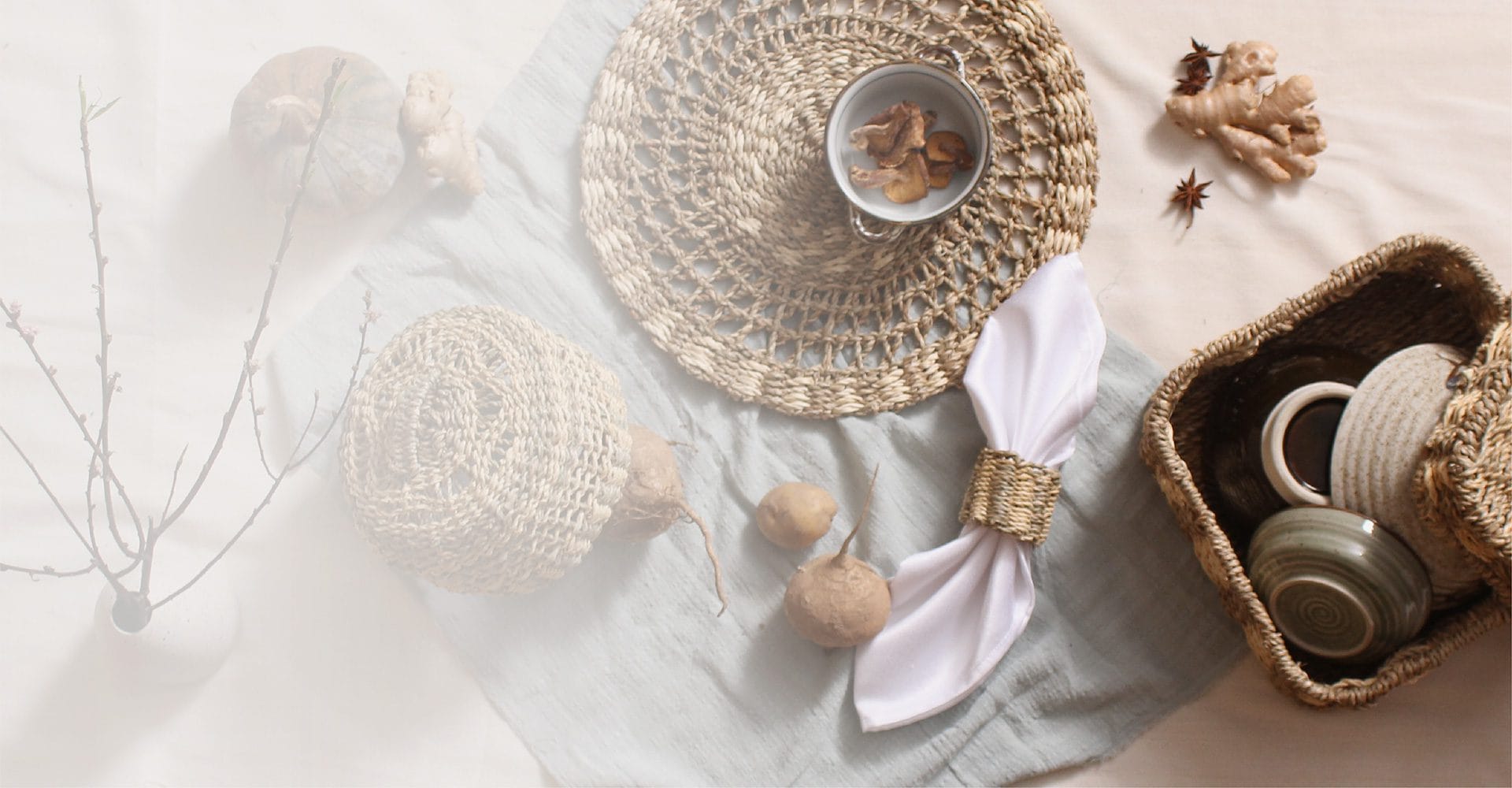
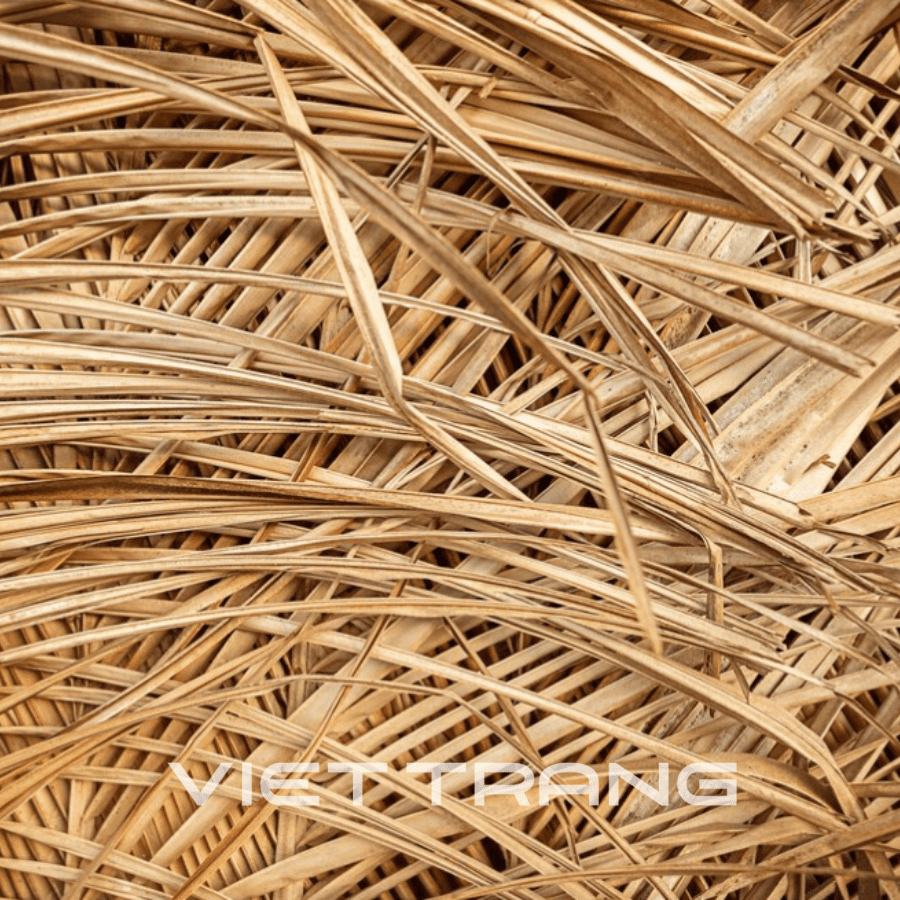
Palm leaves are split, braided and hand-woven using traditional techniques. The finish is smooth, with clean edges, which is why we use palm leaf for white or light-colored patterned details. It is often combined with seagrass, for example in checkered laundry baskets and patterned placemats.
How do rattan and jute compare?
Rattan and jute are two other fibers buyers often ask about. Rattan comes from roughly 600 species of climbing palms, with the greatest diversity in the forests of Southeast Asia. Its stems are solid, not hollow like bamboo, so whole stems can serve as a frame while the outer layers are pared into strips for weaving. That makes rattan a natural choice for mirrors, lampshades and furniture frames.
Jute is a long, shiny bast fiber from plants in the genus Corchorus, produced mainly in India and Bangladesh. It is spun into coarse, strong threads and used for sacks, rugs and braided products, so it behaves more like a textile than a stem.
| Fiber | Plant part used | Look and feel | Typical products |
|---|---|---|---|
| Seagrass | Stems grown in wet fields | Light straw to warm brown, soft and silky | Baskets, rugs, poufs, lampshades |
| Water hyacinth | Stems of an aquatic plant | Warm brown, soft | Laundry baskets, rugs, poufs |
| Corn husk | Leaves left after the corn harvest | Milky and pale, strong | Striped baskets, rugs, poufs |
| Palm leaf | Split and braided leaves | Light, smooth, clean edges | Patterned baskets, placemats, bags |
| Rattan | Solid stems of a climbing palm | Smooth, light golden | Mirrors, lampshades, furniture |
| Jute | Bast fiber spun into yarn | Rough and shiny | Rugs, sacks, braids |
Why do we mix fibers in one basket?
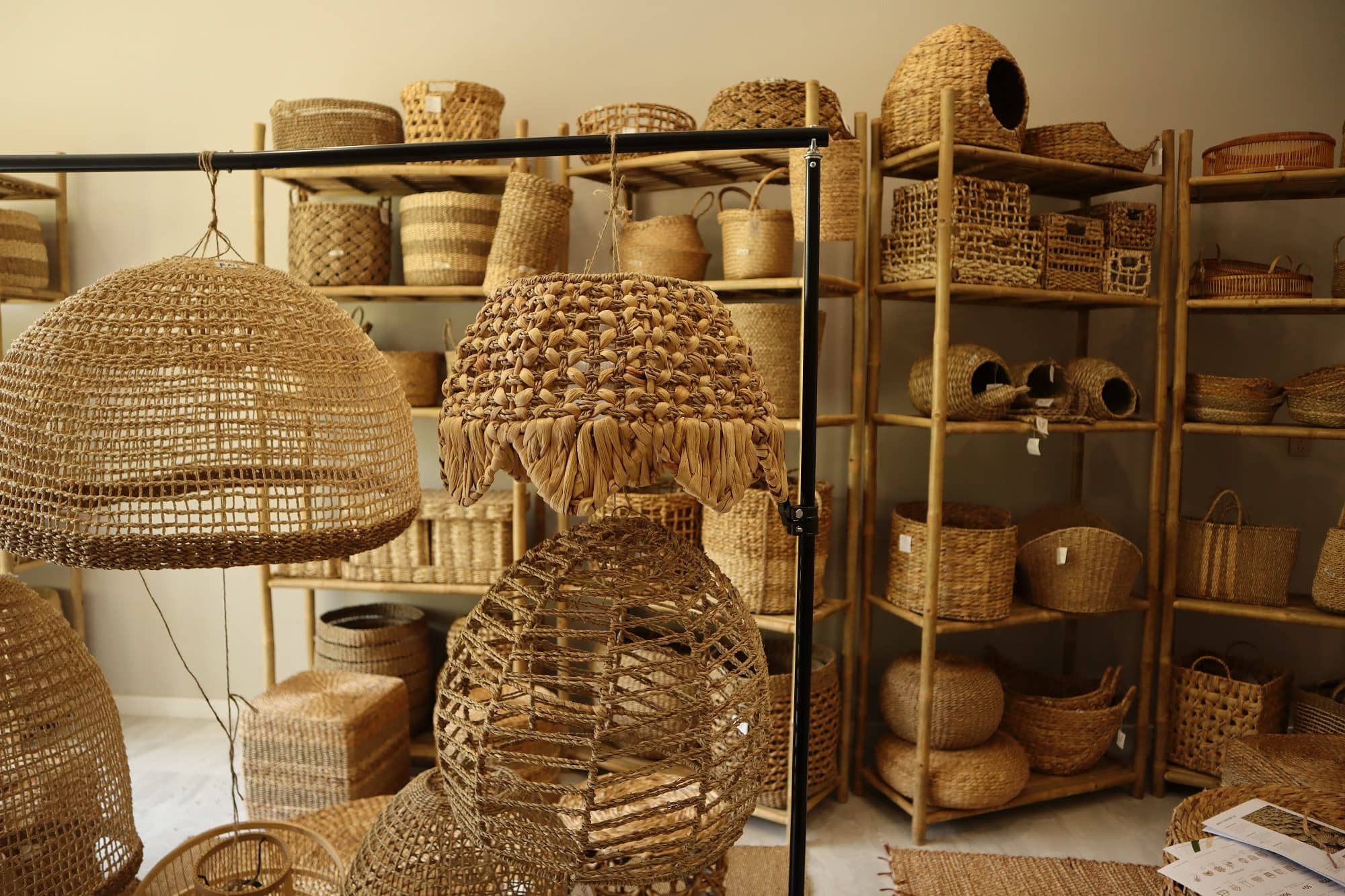
Combining two or more natural fibers in a single product is a Viet Trang design specialty. Seagrass with corn husk, or water hyacinth with seagrass, creates tonal stripe effects and textural contrast, while palm leaf brings a light pattern to a darker base. The result is visual depth that a single fiber cannot achieve, without synthetic dyes: every color comes from the fibers themselves.
Around 800 SKUs are in active production at our 9,000 sqm factory in Nga Son, and new designs are released each quarter through themed collections. To see how raw fiber becomes a finished piece, follow our walk-through from fiber to finished basket.
What should buyers ask a supplier about basket materials?
- Which fiber is it, exactly? Ask for the material name rather than “wicker” or “natural”.
- Is the color natural? Our products use natural hues only, with no synthetic dyes.
- How are the fibers dried? Fibers should be dried before and after weaving. Our four warehouses are equipped with drying machines.
- Can fibers be combined or sizes changed? Custom sizing and new fiber combinations are part of our bespoke design service.
- Who makes it, and is the factory audited? Our factory is SMETA and BSCI audited, and we have exported to more than 30 countries.
See the fibers in real baskets
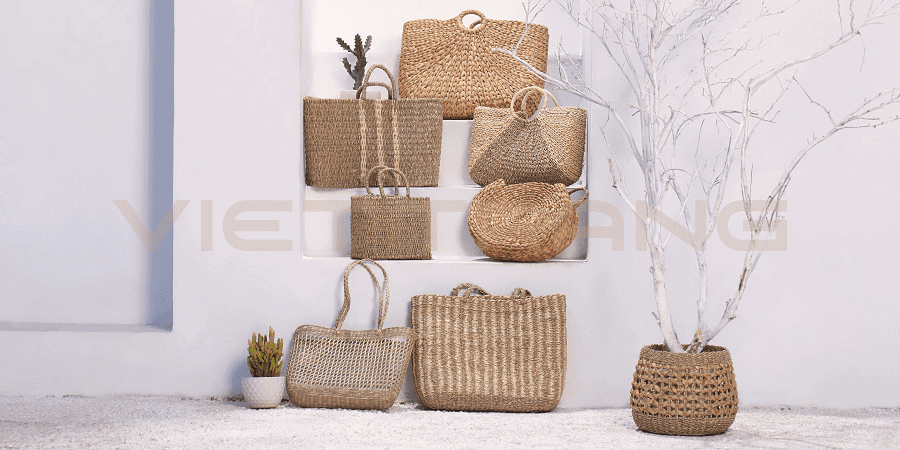
Four baskets, each one named for the fiber it is woven from.


Frequently asked questions
What are woven baskets made of?
Woven baskets are made from natural plant fibers such as seagrass, water hyacinth, rattan, jute, bamboo, willow, corn husk and palm leaf, or from synthetic fibers woven the same way.
What is the most durable natural fiber for baskets?
It depends on the product and how it is used. Seagrass and water hyacinth are both durable choices for everyday baskets when kept dry, while rattan stems are strong enough to act as a frame.
Are seagrass baskets waterproof?
No natural fiber basket is waterproof. Keep baskets away from standing water and let them dry fully if they get damp.
Are natural fiber baskets dyed?
Many are not. At Viet Trang we use natural hues only, and the color variation comes from the fibers themselves and how they are combined.
What is the difference between wicker and rattan?
Rattan is a material, a climbing palm. Wicker is a weaving method that can use rattan, willow, reed, bamboo or synthetic fibers.
Looking for the right fiber for your next range?
Tell us the product, style and quantities you have in mind. We will recommend fibers, send samples and prepare a quotation, or walk you through our materials on a factory video call.

To receive lots of incentives with dedicated and professional service...
Or view more handwoven product in our
lookbook collection
CONTACT NOW
+84 915 709 666
(WhatsApp available)