Meet the Weavers Behind Viet Trang
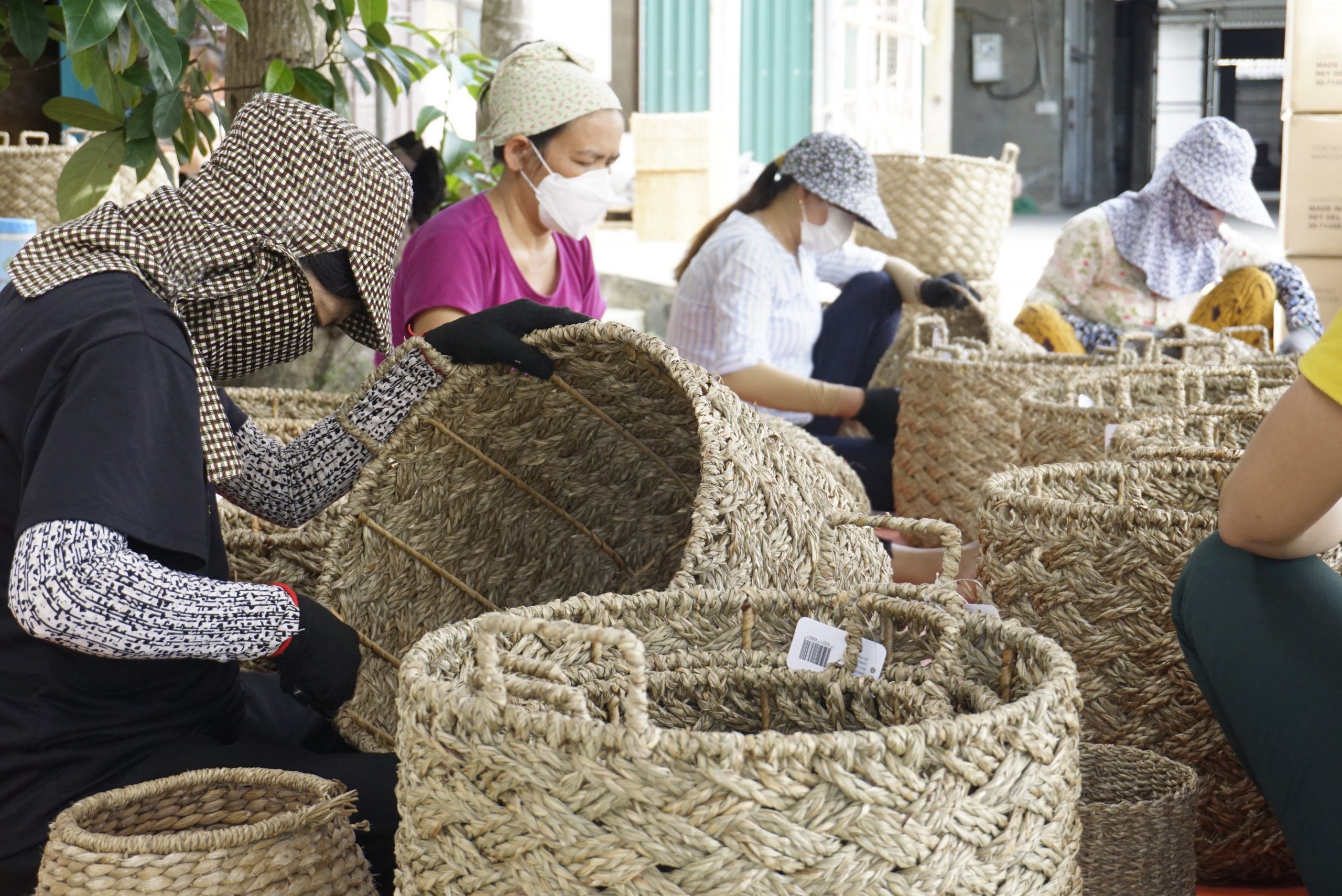
16 Oct 2026The people who weave Viet Trang’s baskets, rugs and lampshades are 500 to 600 seasonal artisans in and around Nga Son in Thanh Hoa province, most of them local women, working alongside 30 full time staff at the factory. Many of them weave at home, between farming seasons, in the same district where the company started as a household craft business in the 1970s. This is who they are, how the work is organised, and why any of it should matter to a buyer choosing between suppliers.
Key takeaways
- Around 500 to 600 seasonal weavers, most of them women from Nga Son and nearby communes, work alongside 30 full time staff.
- Viet Trang began in the 1970s as a household craft business founded by Mrs Tran Thi Viet and registered as a company in 2001.
- When Mrs Tran Thi Viet won gold at the UNCTAD Empretec Women in Business Awards in 2016, the company gave work to 250 weavers. It is now 500 to 600.
- Working conditions are audited to SMETA and amfori BSCI, and vocational training runs twice a year, including for young trainees and people with disabilities.

Who actually weaves a Viet Trang basket?
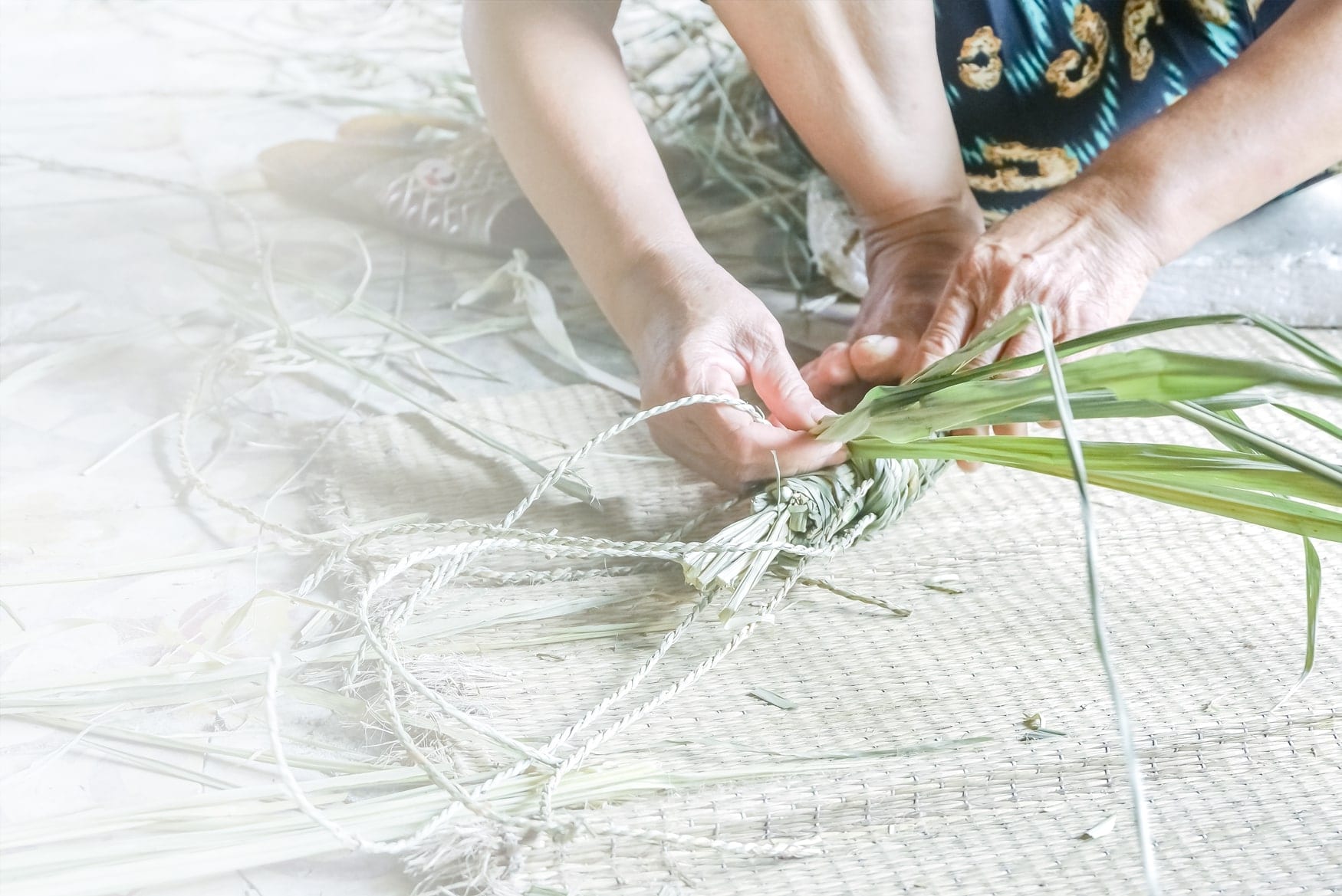
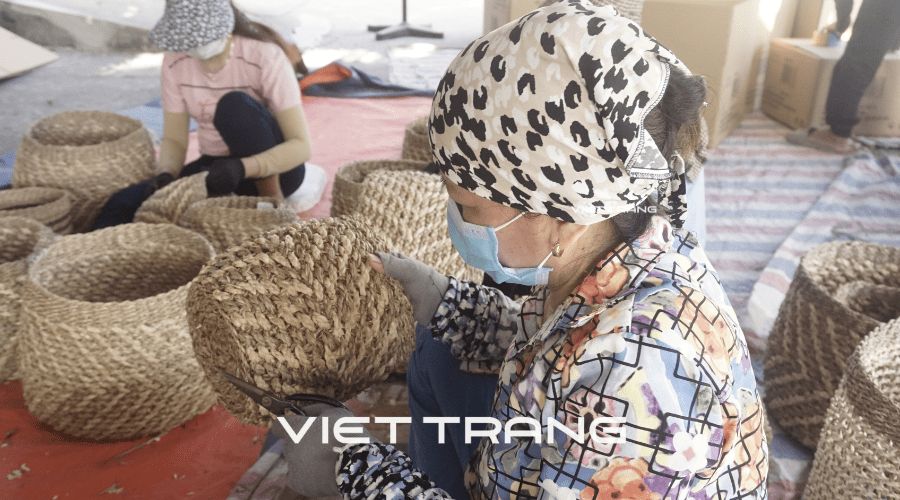
Not a machine, and not a single anonymous production line. A basket passes through several pairs of hands before it is packed, and the weaving itself is done by artisans who live within reach of the factory. Most are women. Most weave seasonally, fitting the work around the farming calendar, which is why the number moves between roughly 500 and 600 across the year rather than sitting at one figure.
Around them sit 30 full time employees handling design, sampling, quality checks, packing and export paperwork. The split matters when you are assessing a supplier. It means the skill base is a village, and the coordination is a company.

Where does the weaving happen?
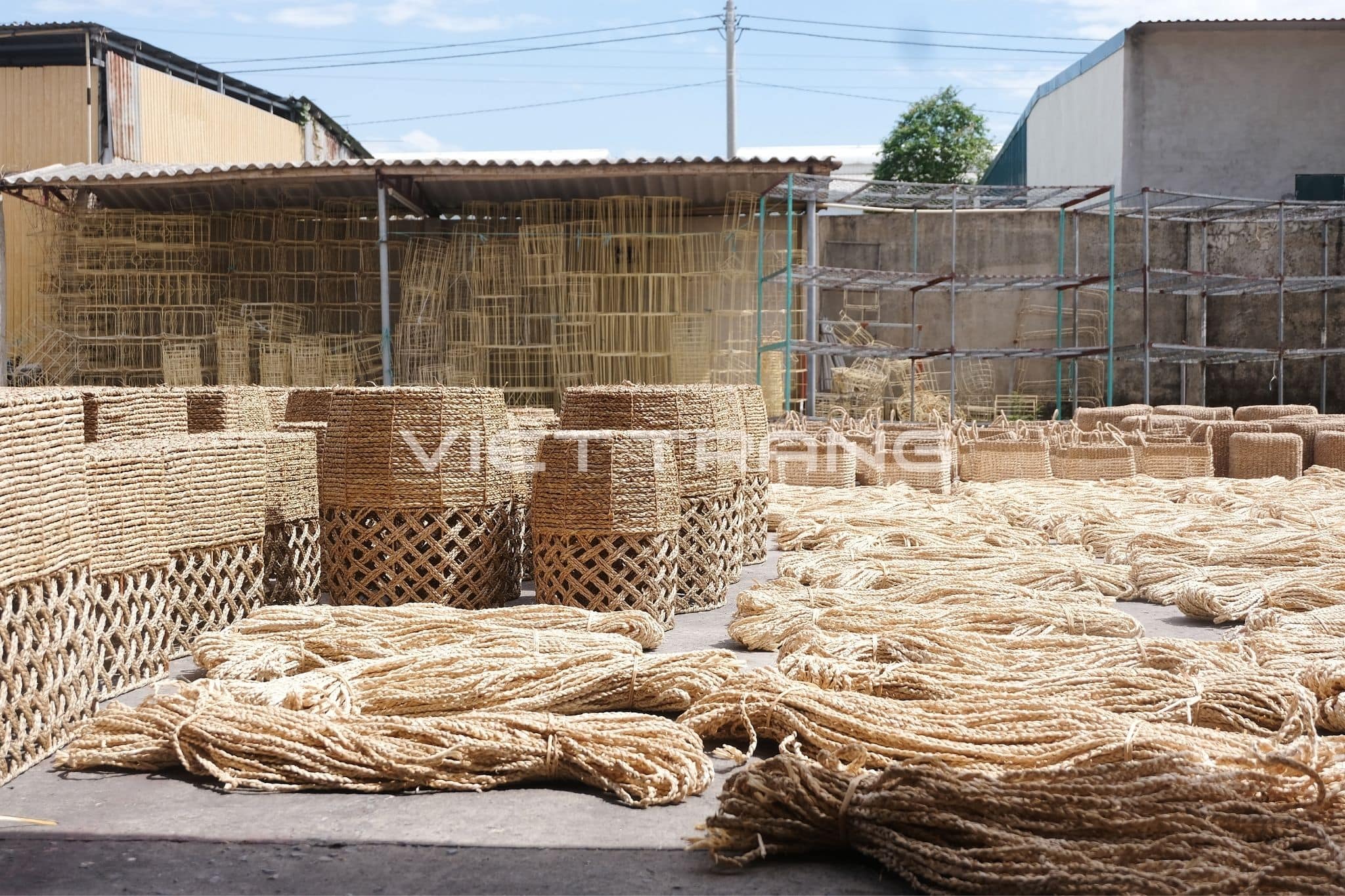
In three places at once. Some weavers work in the factory workshop, some in the yard when the weather is good and a large rug or a floor cushion needs the space, and many work at home. Home weaving is not a compromise here. It is how the craft has always been organised in Nga Son, and it is what lets a weaver take on work around a harvest, a school run or a sick relative.
The factory itself is 9,000 square metres in Nga Son and has been operating since 2001, with four warehouses that hold drying machines. The fiber arrives there, the finished weaving comes back there, and everything is shaped, cleaned, dried, checked and packed under one roof. We described the full route in from fiber to finished basket.

How did a household craft become a 9,000 square metre factory?
Nga Son is one of Vietnam’s oldest seagrass craft villages, historically considered the origin of Vietnamese mat weaving. Viet Trang grew out of that. It started in the 1970s as a household business founded by Mrs Tran Thi Viet, registered formally in 2001, and moved from Asian markets into export. Today the company ships to more than 30 countries across five continents.
In 2016 Mrs Tran Thi Viet won gold at the Empretec Women in Business Awards, held alongside the UNCTAD 14 conference. UNCTAD reported the award and noted that the company provided work for 250 weavers at that time, preserving the region’s weaving culture. Her stated ambition then was to “create more jobs for more local women in our village”. Ten years on, that number has roughly doubled.
The business is now run by the second generation, with Ms Uyen Le leading marketing and Ms Dao Mai leading business development. If you want the place rather than the company, the seagrass fields of Nga Son and inside Nga Son, the seagrass weaving village we come from are both worth reading.
What does the work pay for, and how is it checked?
Weaving provides a stable income for local women in a district where the alternative is seasonal farm work alone. That is the social mission the company states plainly: protect the environment, empower artisans, preserve traditional craftsmanship. The third of those depends on the first two, because a craft only survives if the next generation can make a living from it.
Vocational training runs twice a year for young trainees and for people with disabilities. Conditions on site are audited to SMETA and amfori BSCI, both of which are independent social and ethical audits rather than marketing schemes. If you are building a supplier file, how to vet a handicraft supplier in Vietnam sets out what to ask for and what the audit reports do and do not cover.
What does hand weaving put into the product?
Three things a machine does not. First, variation: no two handwoven pieces are identical, and the small differences in size, shape and tone are a property of the product rather than a fault in it. Second, fiber mixing. Combining two or more natural fibers in one piece, such as seagrass with corn husk, is a Viet Trang signature and it is difficult to do well without a skilled hand controlling tension across the join.
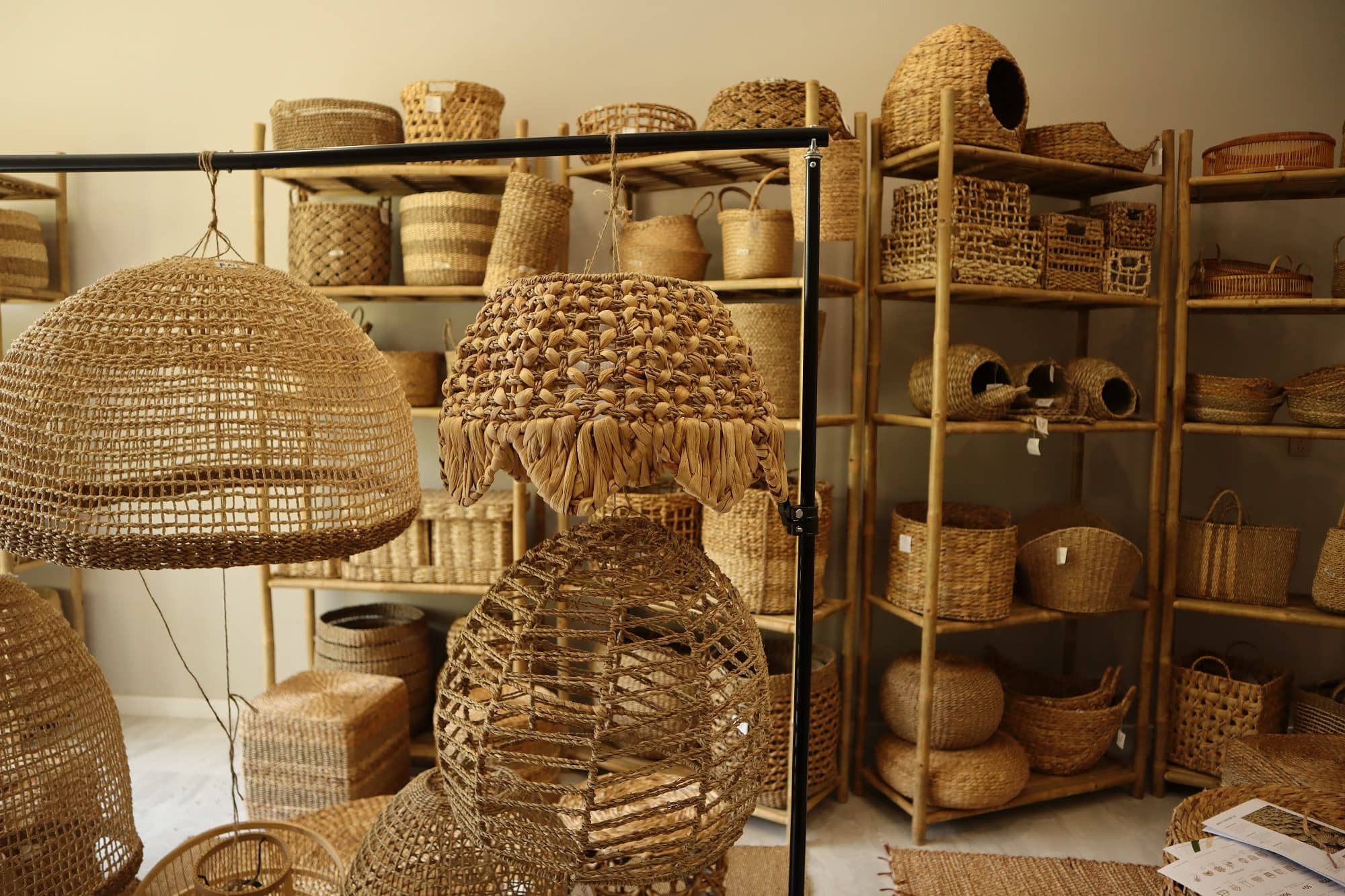
Third, range. There are more than 250 basket designs in production and around 800 active SKUs across all categories, with new collections released quarterly. That pace is only possible because the weavers can pick up a new pattern from a sample rather than waiting for a tool to be made.

Why this matters when you are choosing a supplier
Buyers increasingly have to answer questions about who made a product, not just where it was made. A supplier that can name the district, the number of artisans and the audit standard gives you something concrete to pass on. One that can only say “made in Vietnam” does not.
The practical test is simple. Ask to see the weaving. We can set up a video call from the workshop, send recent photographs of a line in production, or receive you in Nga Son if you are travelling. Any of those three tells you more about a supplier in twenty minutes than a catalogue does in a week.
A few pieces our weavers make
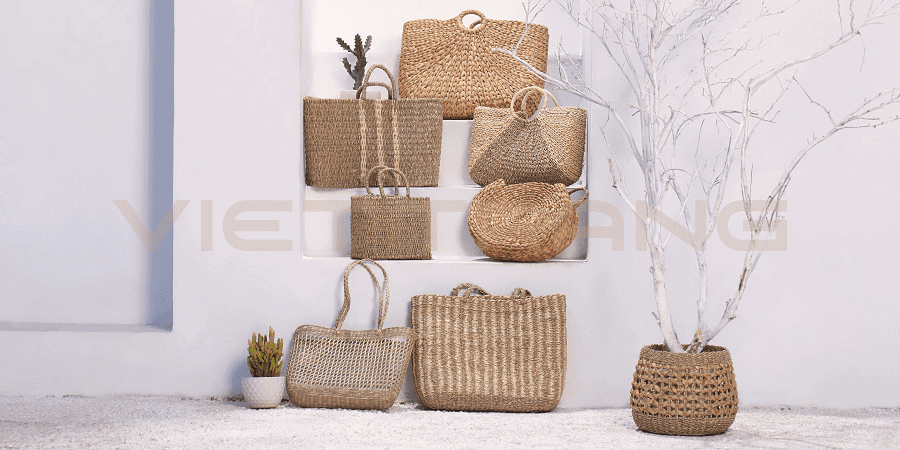
This post is about the people rather than one product type, so this is a general selection from across the range: a basket, a rug, a floor pouf and a set of napkin rings, between them covering all four of the fibers our weavers work with.


Frequently asked questions
How many people make Viet Trang products?
Around 500 to 600 seasonal artisans weave for Viet Trang, alongside 30 full time employees at the factory in Nga Son. The seasonal figure moves across the year because many weavers fit the work around the farming calendar.
Are the weavers employed full time by the factory?
Most are not. They are seasonal artisans, many of whom weave at home, which is how the craft has long been organised in Nga Son. The 30 full time staff cover design, sampling, quality control, packing and export.
Is the working environment independently checked?
Yes. The site is audited to SMETA and to amfori BSCI. Both are independent social and ethical audits of the production site. Ask for the current report and its audit date if you need it for your own supplier file.
Can I see the weavers at work before I place an order?
Yes. We can arrange a video call from the workshop, send current photographs of a production line, or welcome you to the factory and showroom in Nga Son if you are travelling in Vietnam.
Does hand weaving mean the pieces vary?
Slightly, and deliberately. Handwoven pieces carry small differences in size, shape and tone compared with the photographs. Tolerances are agreed at sampling stage so that the variation stays within what your own quality standard allows.
Come and see the weaving
Ask us for a video call from the workshop in Nga Son, a sample of any design in the range such as the seagrass storage basket with wooden handles above, or a quotation for your next season. We will tell you who weaves it and how long it takes.

To receive lots of incentives with dedicated and professional service...
Or view more handwoven product in our
lookbook collection
CONTACT NOW
+84 915 709 666
(WhatsApp available)