Woven Lampshades Wholesale: Sizes, Fittings and Quality Checks
12 Oct 2026A woven lampshade is quoted on five things: the fiber, the shade shape, the overall diameter and height, the size of the top opening that sits over the fitting, and how densely the shade is woven. Send those five details and a maker can price the design in one round instead of three. This guide covers what to put in that first message, how seagrass, rattan and bamboo behave differently once a bulb is lit behind them, and what to look at when the sample reaches your desk.
Key takeaways
- A woven lampshade wholesale enquiry moves fastest when it states fiber, shade shape, overall diameter, height and top opening.
- Catalogue shades at Viet Trang list a minimum of 50 pieces per design, carton packing, and FOB, CFR or EXW terms.
- Weave density decides the night time effect. An open weave throws pattern across the ceiling, a tighter weave diffuses the light.
- Rattan shades in the range are woven over a metal frame, which is what holds a crisp silhouette at larger diameters.

What do I need to tell a supplier to get a lampshade quote?
Most lampshade enquiries arrive with a photo and a question about price. A photo is a good start, but it does not say how wide the shade should be, or whether the top opening matches the fitting the retailer will sell it with. Those two details change the mould, the weaving time and the carton size, so they change the quotation.
The seven lines below cover almost every question a maker needs to answer before quoting. If a detail is not settled yet, say so. A supplier can suggest the common choice for your market rather than wait.

Which fiber should I choose for a woven shade?
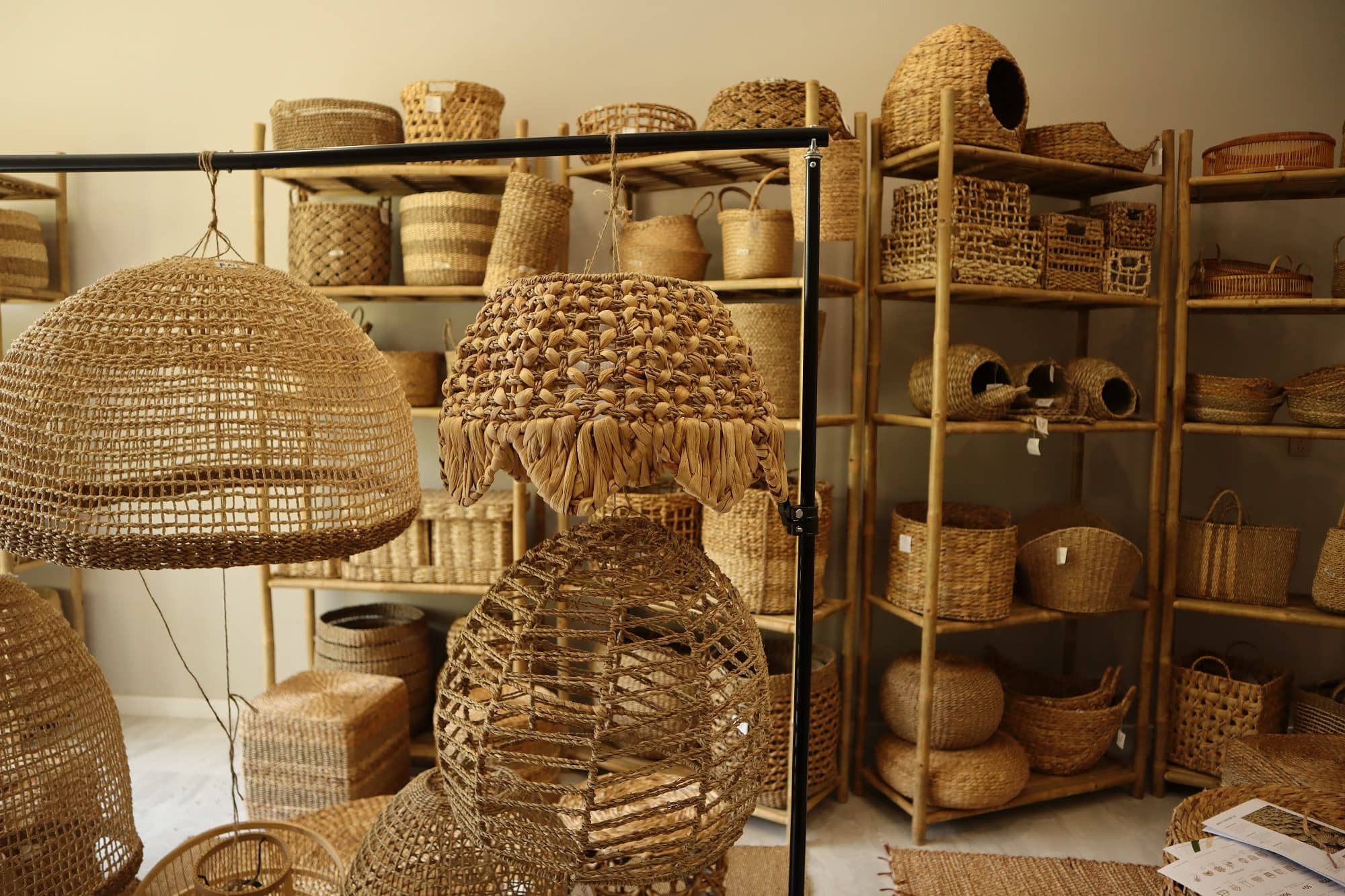
Lighting is the one category where the fiber is judged twice, once by daylight and once by what it does to a lit bulb. Seagrass, rattan and bamboo all read differently in both states. Our lighting designs use seagrass and palm leaf most often, because both let light pass through the weave, while rattan and bamboo give the bolder, more structural shapes.
| Fiber | Look under light | Typical construction | Suits |
|---|---|---|---|
| Seagrass | Warm straw to light brown, with an even glow through the weave | Open weave or tighter spiral weave, self supporting | Bedrooms, dining pendants, hotel rooms |
| Rattan | Crisper lines and a stronger shadow pattern | Woven over a metal frame | Statement pendants and larger diameters |
| Bamboo | Bold, graphic weave with wider gaps | Hand woven cage and rhombus patterns | Feature lighting, cafes, retail display |
| Palm leaf | Paler, whiter patterning in the weave | Split and braided, often combined with seagrass | Mixed fiber designs with tonal contrast |
The range uses natural hues only and no synthetic dyes, so the colour you see in a sample is the fiber itself after drying. If you want the longer comparison of these fibers across products, we set out how each natural fiber behaves in a separate guide.
How does a woven shade fit a light?
A woven lampshade is the shade. The lighting range is designed to work with standard pendant fittings, which is why the top opening diameter matters more than almost any other measurement. Send the fitting you intend to pair the shade with, or the opening size you need, and the weave can be set around it.
Electrical components are a separate question, and a market by market one, because cord sets, lamp holders and bulbs have to meet the standards where the product is sold. Tell us at quotation stage whether you are sourcing those yourself, and we will confirm what we can supply with the shade and what you should plan to buy locally.
Which shapes are selling in woven lighting?
The catalogue covers bell, dome, umbrella, globular, flower and open cage shapes. Interiors coverage for 2026 points in the same direction: Homes and Gardens lists lantern like, organic and sometimes amorphous forms among the year’s lighting trends, alongside mixed material fittings such as a rattan shade on a marble base. Soft silhouettes and textured finishes, rather than polished metal, are doing the work.
For a retail range, a practical spread is one tall bell shape for over a dining table, one wide dome for a living area, and one small shade that works on a table lamp base. We looked at why woven pendants moved from holiday range to core range in an earlier journal piece, and the full lampshade range shows the shapes currently in production.

How much light does a woven lampshade let through?
That depends almost entirely on weave density, not on the fiber. An open weave shade, such as the OS-LS04 open weave seagrass shade at Dia 28 x H30 cm, throws a clear pattern of light and shadow onto the ceiling and walls. A tighter weave holds more of the light inside the shade and gives a softer pool below it.
No maker can give you a reliable light transmission figure for a handwoven shade, because the weave varies slightly by hand. The honest test is to hang the sample with the bulb type you plan to sell, in a dark room, and photograph it. Buyers who do this once rarely skip it again.
What should I check on the sample?
Five checks catch most of what goes wrong between a sample and a production run.
The top opening. Measure it, do not trust the drawing. It should be round, firm and the same diameter all the way around, because this is the part that carries the weight of the shade.
The rim and edge binding. Run a finger around the bottom edge. The binding should be continuous with no loose ends, and no strand should lift when you pull it gently.
Weave tension. Press the side of the shade. A well woven shade springs back. If it stays dented, the weave is too loose and the shape will not survive stacking in a carton.
The frame, where there is one. On rattan designs the weave sits over a metal frame. Check the frame is not visible through the weave at the joints, and that there is no sharp end near the opening.
Moisture. Natural fiber that was packed before it was fully dry is the single most common cause of complaints after a sea crossing. We cover how to prevent and treat mold on natural fiber in detail, and the same rules apply to shades.

How do woven lampshades pack and ship?
Catalogue shades list carton packing with FOB, CFR or EXW terms, and a minimum of 50 pieces per design. Shipping volume is driven by the shade shape, since a wide dome takes far more space than a narrow bell of the same height. Send your target quantity and the shapes you want, and the carton plan and container loading can be confirmed with the quotation rather than guessed at.
Custom sizing is available across most categories, and the bespoke design service works from your references, sketches or mood boards, with a sample approved before production starts.
Woven lampshades from our range
Four handwoven shades currently in production, one in seagrass, two in rattan and one in bamboo. Each product page lists the code, size and minimum order.


Frequently asked questions
What is the minimum order for woven lampshades?
Catalogue designs list a minimum of 50 pieces per design. A custom shape or size is quoted on its own, so send the design and the quantity you have in mind and we will confirm both together.
Do the shades come with a cord set or a bulb?
What we weave is the shade. Cord sets, lamp holders and bulbs have to meet the electrical standards of the market where the product is sold, so tell us at quotation stage what you need and we will confirm what can be supplied with the shade.
Will a woven shade fit a standard pendant fitting?
The lighting range is designed to work with standard pendant fittings. The detail that matters is the top opening diameter, so send that measurement or the fitting you plan to use.
Can you make a lampshade in a custom size?
Yes. Custom sizing is available across most categories, and the bespoke design service develops a sample for approval from your references, sketches or mood boards before production begins.
How are woven lampshades packed for export?
Carton packing, with FOB, CFR or EXW terms listed on catalogue designs. Because volume depends heavily on the shade shape, the carton plan is confirmed with the quotation once the shapes and quantities are known.
Send us a shape and a size
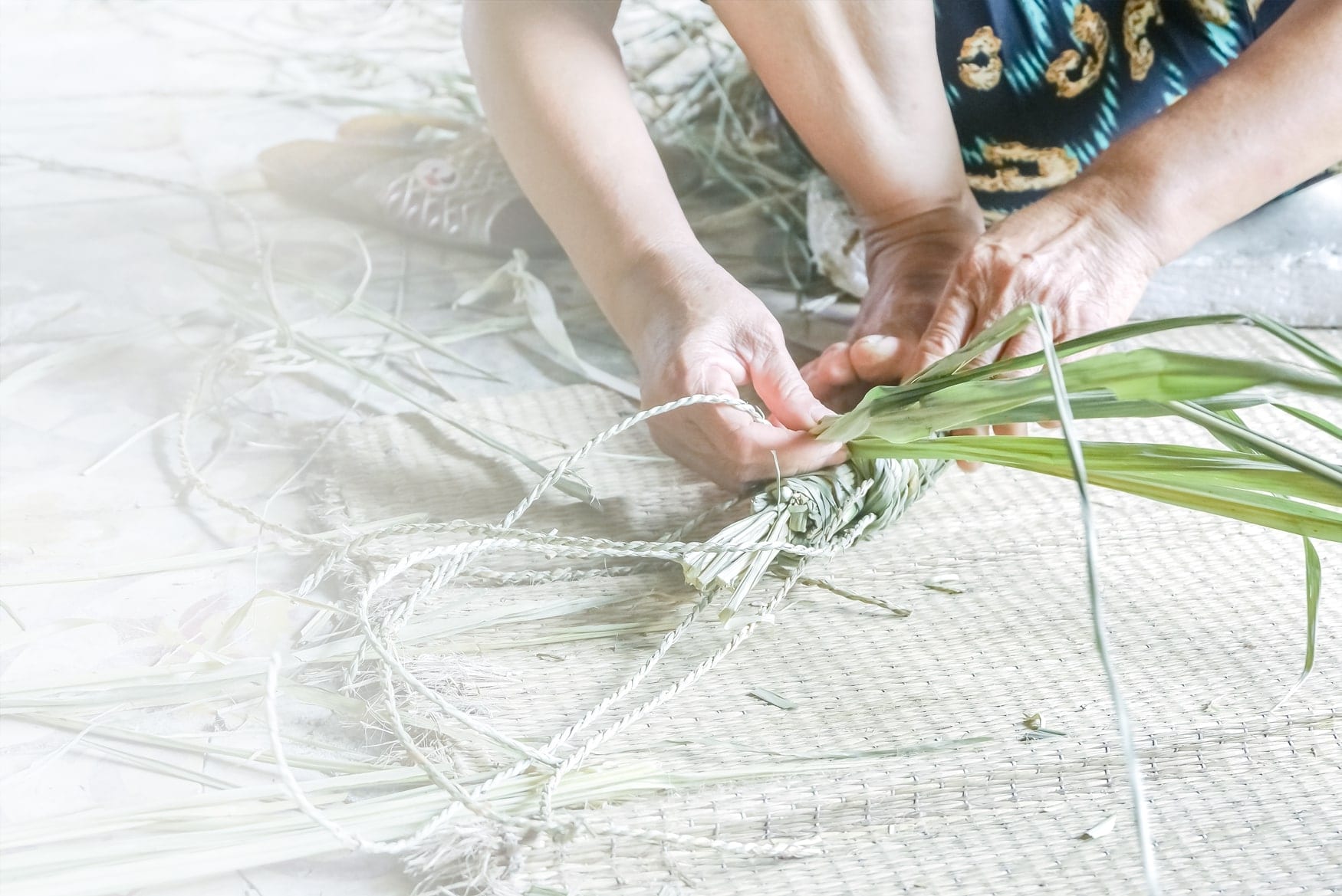
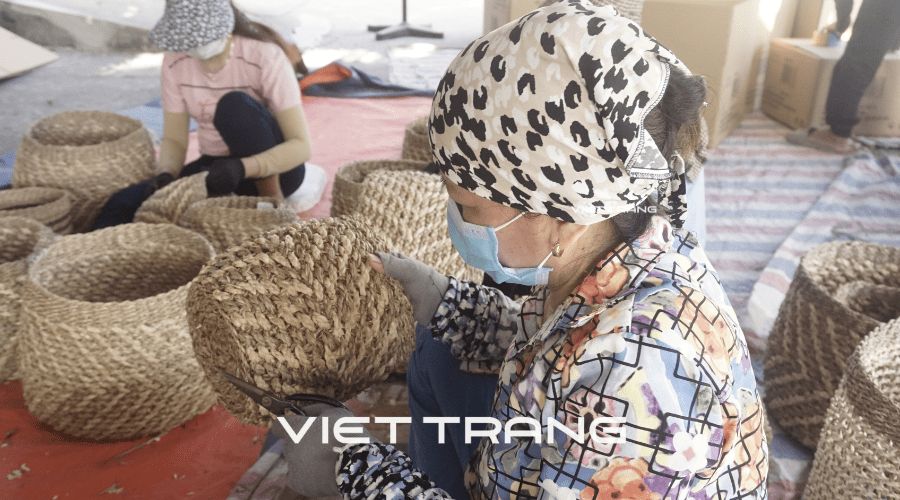
Tell us the fiber, the shape and the diameter you are looking for, and we will come back with a quotation and a sample plan. If you would rather see the weaving first, we can set up a video call from the workshop in Nga Son.

To receive lots of incentives with dedicated and professional service...
Or view more handwoven product in our
lookbook collection
CONTACT NOW
+84 915 709 666
(WhatsApp available)