Seagrass Bags Wholesale: Styles Retail Buyers Are Stocking
9 Oct 2026Seagrass bags are handwoven carry bags made from dried seagrass, sold at wholesale as shopping totes, beach totes, rectangle straw bags and structured shoulder styles. Buyers stock them for summer accessory ranges and, increasingly, as a year-round natural alternative to synthetic totes. We weave them in Nga Son, Thanh Hoa, where the seagrass is harvested, and list them at a minimum of 50 pieces per design.
Key takeaways
- Four styles cover most wholesale demand: the open-weave shopping tote, the beach tote, the rectangle straw bag and the structured shoulder bag.
- Seagrass gives the pale straw look, water hyacinth a warmer brown, palm leaf the pale patterned detail.
- A bag sample lives or dies at the handle join, the rim binding and the base; check all three with weight in the bag.
- Listings run at MOQ 50 per design, carton packed, on FOB, CFR or EXW terms, with linings and labels available on request.
What is a seagrass bag?
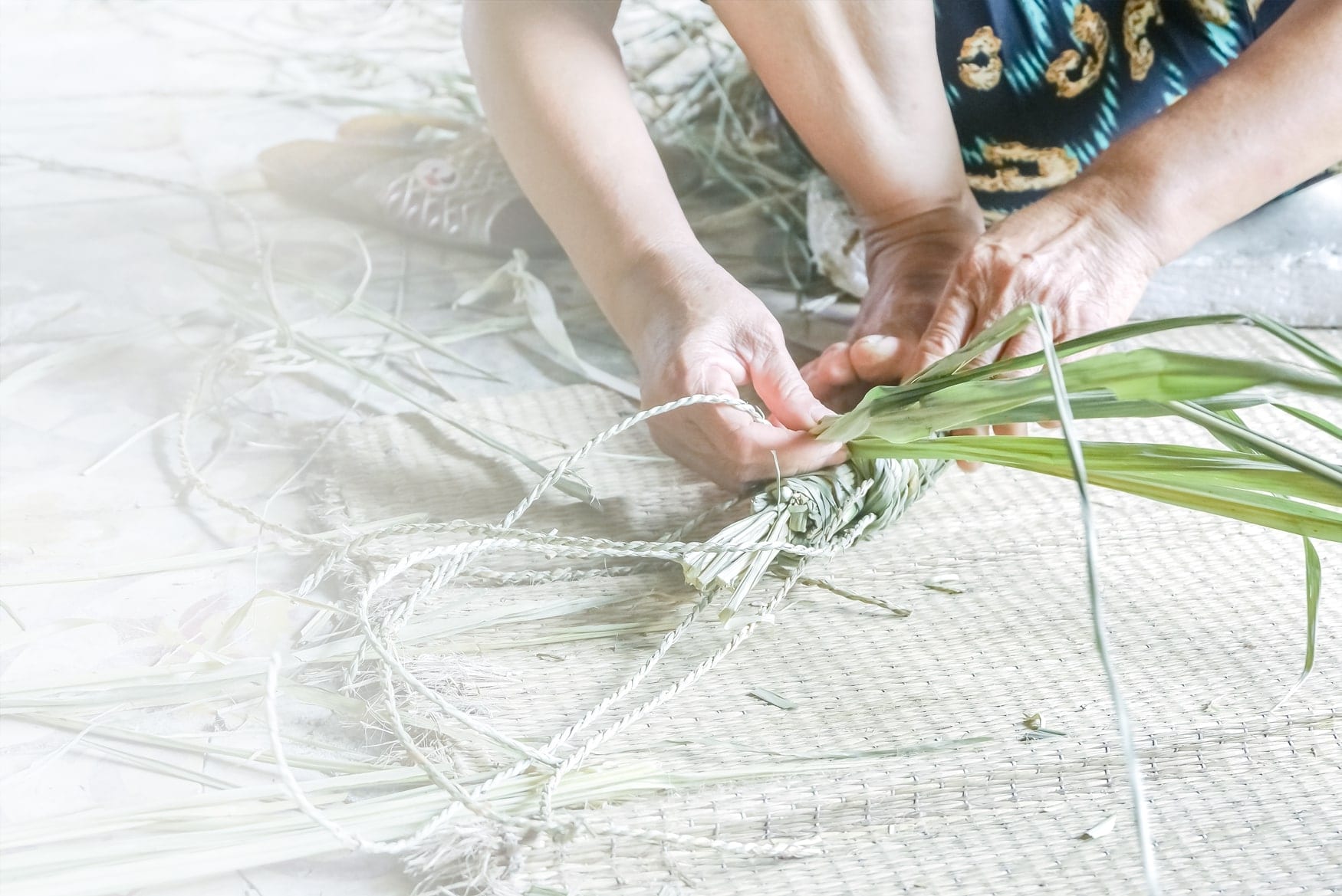
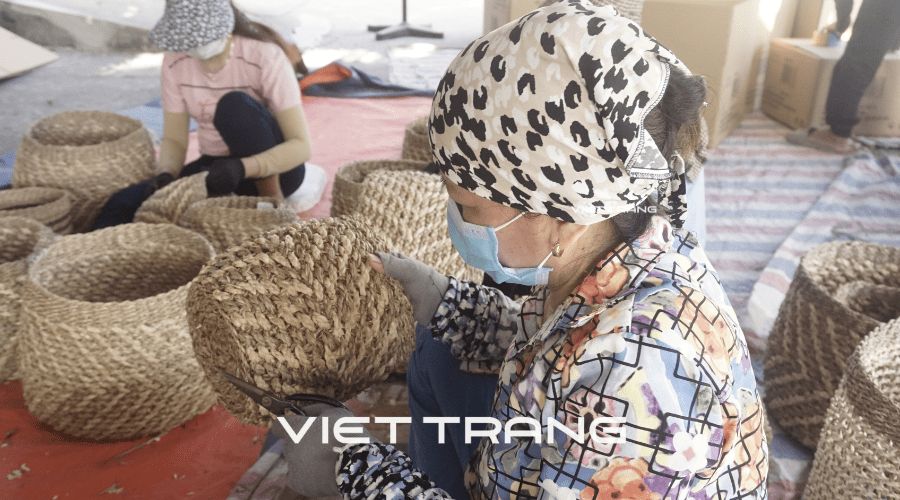
A seagrass bag is woven from the same fiber we use for our baskets and rugs: seagrass harvested from the Nga Son fields, dried, then twisted or laid flat depending on the weave. It is the fiber our company was built on, which is why the bag range sits naturally alongside the rest of the catalogue rather than being bought in.
Seagrass is high quality, durable, soft and silky in the hand, and runs from light straw to warm brown depending on how it is processed. That pale straw tone is what buyers mean when they ask for a straw bag look without using synthetic raffia. We work in natural hues only, with no synthetic dyes. If you want to see where the fiber comes from, our piece on Nga Son, the seagrass weaving village is written from inside it.

Which seagrass bag styles are retail buyers stocking?
The straw bag has moved a long way from the beach shop. Through 2026 the category has been taken up at the top of the fashion market, with basket totes, structured totes, bowling shapes and shoulder bags all appearing in luxury summer collections, and trade coverage has been explicit that woven from straw or raffia no longer reads as casual. For a wholesale buyer that matters in one practical way: the woven bag now earns a place in the main accessory range, not only in a seasonal end-cap.
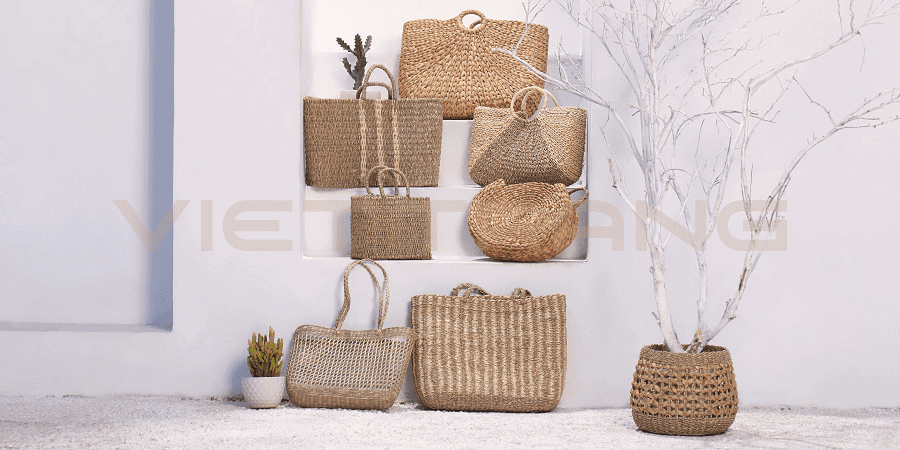
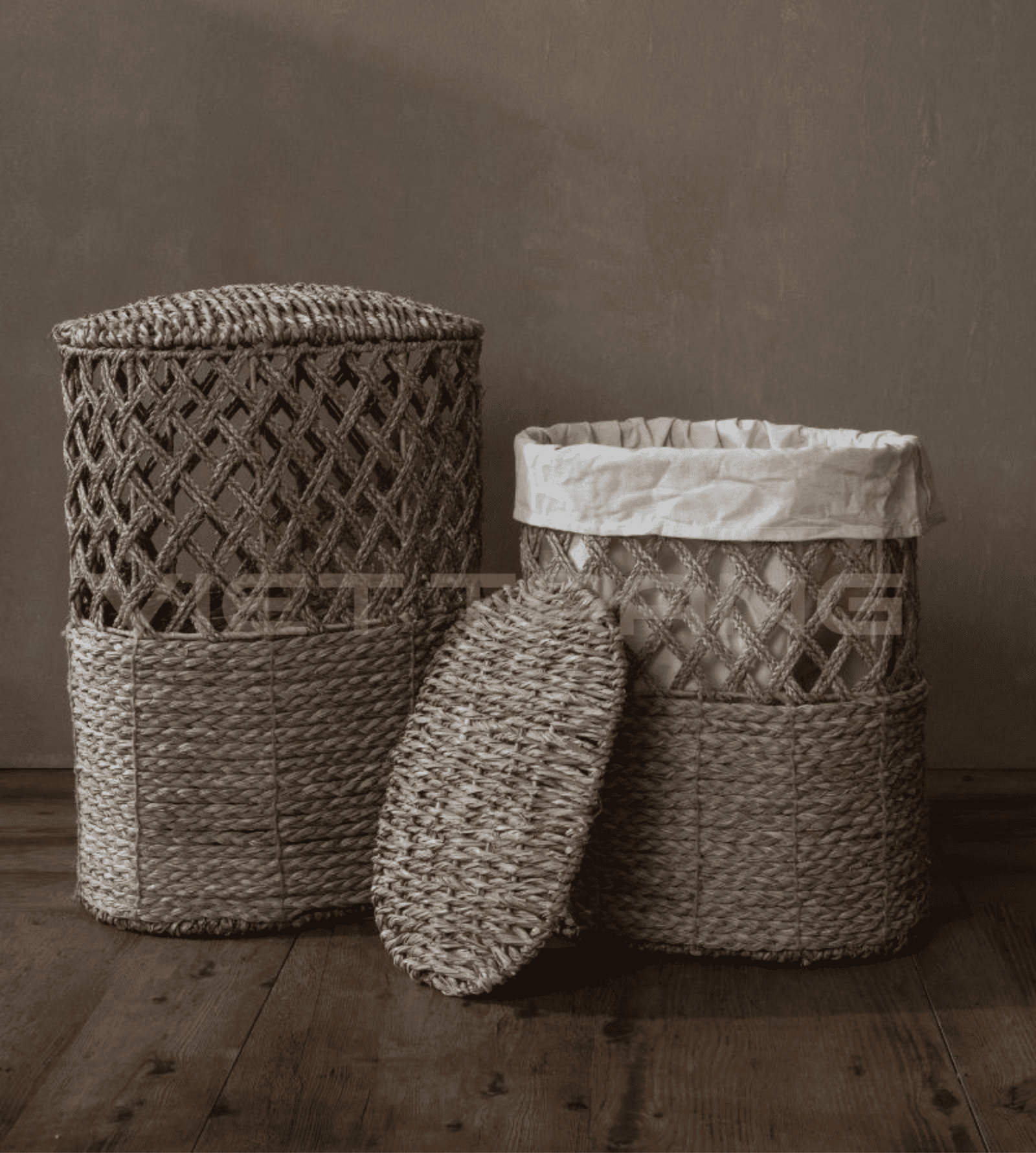
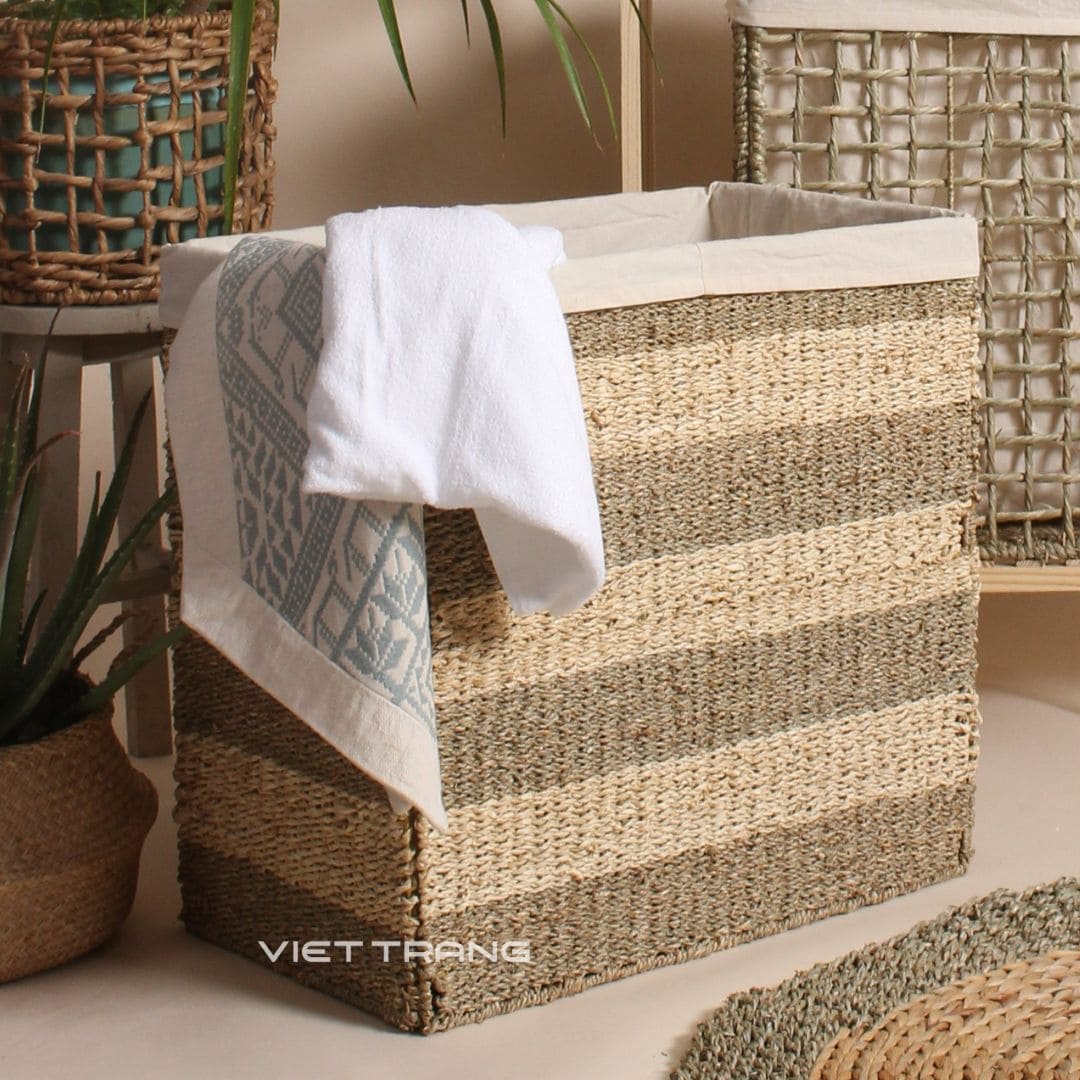
Four styles carry most of our volume. The open-weave shopping tote is the large, airy lattice bag with braided handles, bought as a market and grocery bag. The beach tote is wider and softer, often striped. The rectangle straw bag is the structured, golden-weave shape that photographs well and sells as an everyday handbag. The round or box shoulder bag is the smallest and the most fashion-led of the four.
Within our accessories range the handbags are positioned as an extension of the handwoven line rather than a standalone fashion collection, which is why most styles are offered in sets of two or three sizes. That gives you a price ladder inside one design rather than forcing you to buy three unrelated bags. The Seagrass Summer Bag is one of the styles buyers come back to most often.

Seagrass, water hyacinth or palm leaf for bags?
All three are woven in the same workshops, so the choice is about look and handle rather than about quality. The table below is the short version of the conversation we usually have at sampling stage.
| Fiber | Colour | Handle and body | Typical use |
|---|---|---|---|
| Seagrass | Light straw to warm brown | Smooth and silky, holds a crisp open weave | Shopping totes, beach totes, rectangle straw bags |
| Water hyacinth | Distinct warm brown | Softer and chunkier, slouches more | Slouchy totes, cluster and fan weave shapes |
| Palm leaf | Pale with white patterning | Split and braided flat, smooth edges | Patterned detail and contrast panels |

Mixing two of them in one bag is where the range gets interesting. A seagrass body with a palm leaf band, or a water hyacinth base under a seagrass top, gives tonal contrast that a single-fiber bag cannot. Our article on natural fiber in contemporary interiors covers the same contrast principle across the wider range.
What should you check in a bag sample?
A bag carries weight, which a tray or a placemat does not, so the sample check is a load test more than a visual one. Fill the sample with something heavy and awkward, then work through these five points.

The handle join is where almost every woven bag fails first, and it is the hardest thing to judge from a photograph. Pull the handle up firmly with the bag loaded and watch the point where it enters the rim: there should be no give, no gap opening and no creaking. The base is the second place to look. A bag that sags into a point when loaded has no base reinforcement, and it will not stand on a shop shelf. If you want to see how the weaving and finishing stages actually run, our piece on how our homeware is made, from fiber to finished piece walks through the process.
What can be customised: linings, handles and labels?
Most of what buyers ask to change on a bag is possible. Handle length and style, body dimensions, weave pattern and the combination of fibers can all be specified. Custom sizing is available across most of our categories, and our bespoke design service is built for partners who want an exclusive or private-label version rather than a catalogue piece.
Linings, closures and labelling are the three details worth settling before you sample rather than after. A lined bag behaves differently from an unlined one, both in how it hangs and in what it costs, so tell us at the quotation stage whether you want one. The design team works from your references, sketches or mood boards and develops a sample for approval before anything goes into production.
What do MOQ, packing and lead time look like?
Our bag listings show a minimum order quantity of 50 pieces per design, carton packing, and FOB, CFR or EXW terms. The large seagrass shopping handbag is listed in natural green with braided handles and an open lattice weave; most other styles run in natural brown or the pale straw tone of the fiber.
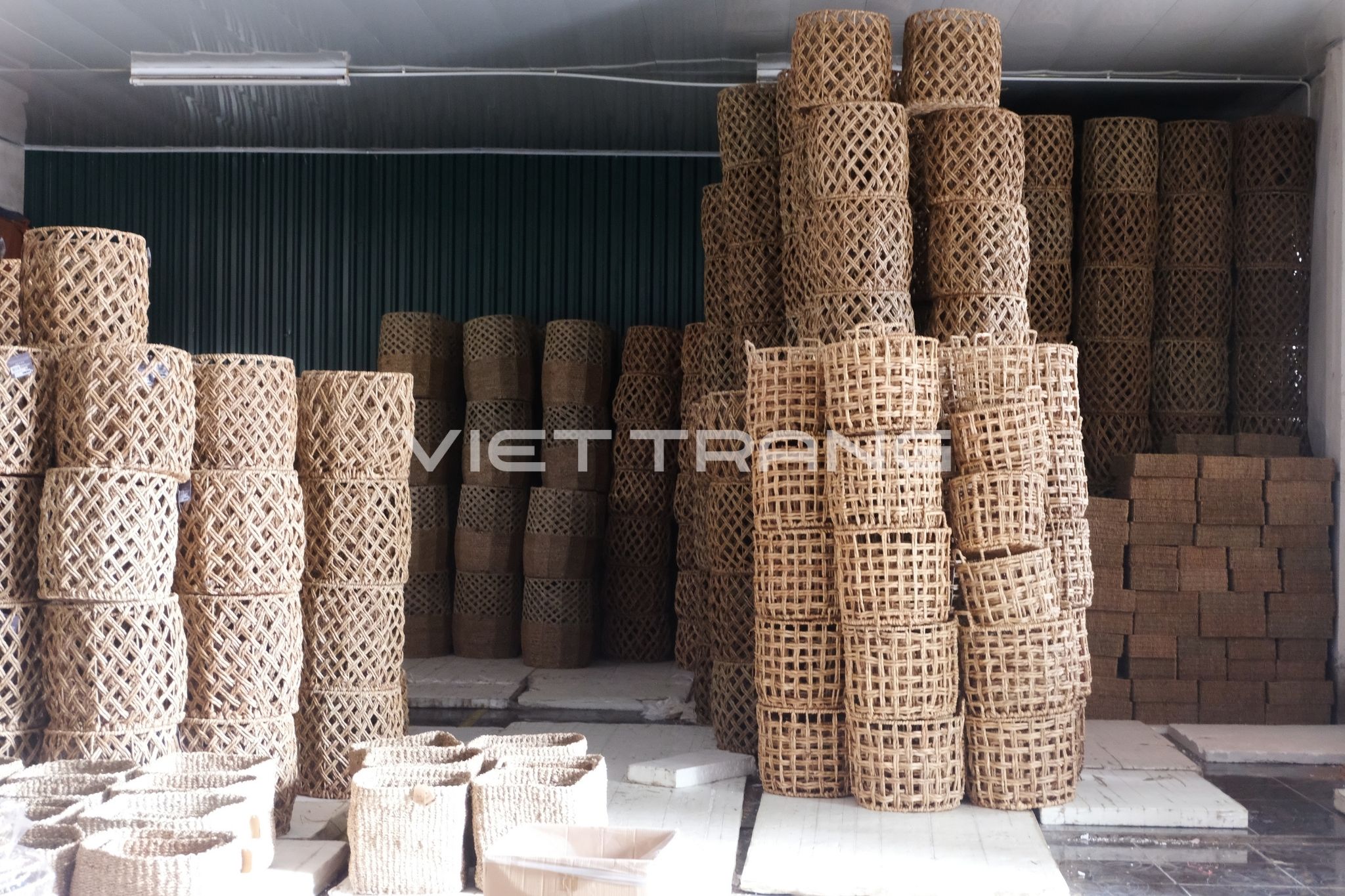
Lead time depends on the design, the quantity and where the order falls in the production calendar, so we confirm it with your quotation rather than quoting a flat figure. Because every bag is handmade from a natural material, each piece carries slight differences in size, shape and colour from the sample photographs. Our capacity runs to around 20 containers a month from a 9,000 square metre factory with 500 to 600 seasonal weavers, so volume is rarely the constraint; the sampling round usually is.
Seagrass bags from our range
Four seagrass bags we weave, in the shopping, beach and rectangle styles described above. Each product name states the fiber.


Frequently asked questions
What is the minimum order for wholesale seagrass bags?
Our bag listings show a minimum order quantity of 50 pieces per design. If you want several styles or several sizes within one style, send the full list and we will confirm the combination on a single quotation.
Can seagrass bags be lined?
Yes, linings are available on request. Tell us at the quotation stage whether you want a lining, and in what fabric, because it changes how the bag hangs as well as the price.
Are seagrass bags strong enough for grocery shopping?
The open-weave shopping totes are made for exactly that use and are woven with braided handles and a reinforced base. We always recommend load testing the sample yourself with the weight your customers will actually carry, so the specification matches your market.
How do you clean a seagrass bag?
Brush off dry dirt and wipe with a barely damp cloth, then let the bag dry fully in open air before storing it. Do not soak it or machine wash it. Stuffing the bag with paper while it dries helps it keep its shape.
Can you put our own label on the bags?
Yes. Private-label and bespoke work is part of what we do, covering custom shapes, sizes, weave patterns and material combinations as well as labelling. Send us your artwork and specification and we will come back with a sample proposal.
Start with a sample set
Tell us which bag styles and sizes your range needs and we will weave a sample set at our own factory in Nga Son. We are SMETA and BSCI audited and export to buyers in more than 30 countries across five continents.

To receive lots of incentives with dedicated and professional service...
Or view more handwoven product in our
lookbook collection
CONTACT NOW
+84 915 709 666
(WhatsApp available)