Eco Friendly Baskets: Which Natural Fiber Is Most Sustainable?
14 Oct 2026There is no single most sustainable basket fiber. Corn husk is leftover leaf from corn farming, water hyacinth is cut from rivers and lakes where it often grows as an invasive weed, seagrass is a field crop harvested and dried in Nga Son, and palm leaf is split and braided from palm fronds. What separates a genuinely low impact basket from a vaguely green one is not the plant. It is what happens after the harvest: dyes, coatings, linings, packing, and whether the supplier can put any of it in writing.
Key takeaways
- Judge an eco friendly basket on fiber origin, finishing, packing and audit evidence, not on the name of the plant alone.
- Water hyacinth is among the fastest growing plants and is invasive in many regions, where mats can double in one to two weeks and block waterways. Weaving is a documented use for the harvested plant.
- Corn husk is an agricultural residue, so it uses a leftover rather than a crop grown for fiber.
- In the European Union, from 27 September 2026, generic wording such as eco friendly or biodegradable is not allowed on its own. Say what you can prove, in the same place as the claim.

What makes a woven basket eco friendly?
Four things, in roughly this order of weight. Where the fiber comes from and whether growing or cutting it does harm. What is added to the fiber afterwards, meaning dyes, coatings, glues and linings. How the finished basket is packed and shipped. And how the people who wove it were treated, which is a sustainability question even though it is not an environmental one.
A basket can fail on any one of those and still look natural on a shelf. A seagrass bin sprayed with a synthetic coating, lined with a bonded plastic backing and shipped in individual polybags has lost most of what made the fiber a good choice in the first place.
Which natural fiber has the strongest sustainability story?
Each of the four fibers we weave answers a different part of the question, which is why the honest answer to “which is most sustainable” is “for what, and compared with what”.
| Fiber | Where it comes from | Why it counts | What to check |
|---|---|---|---|
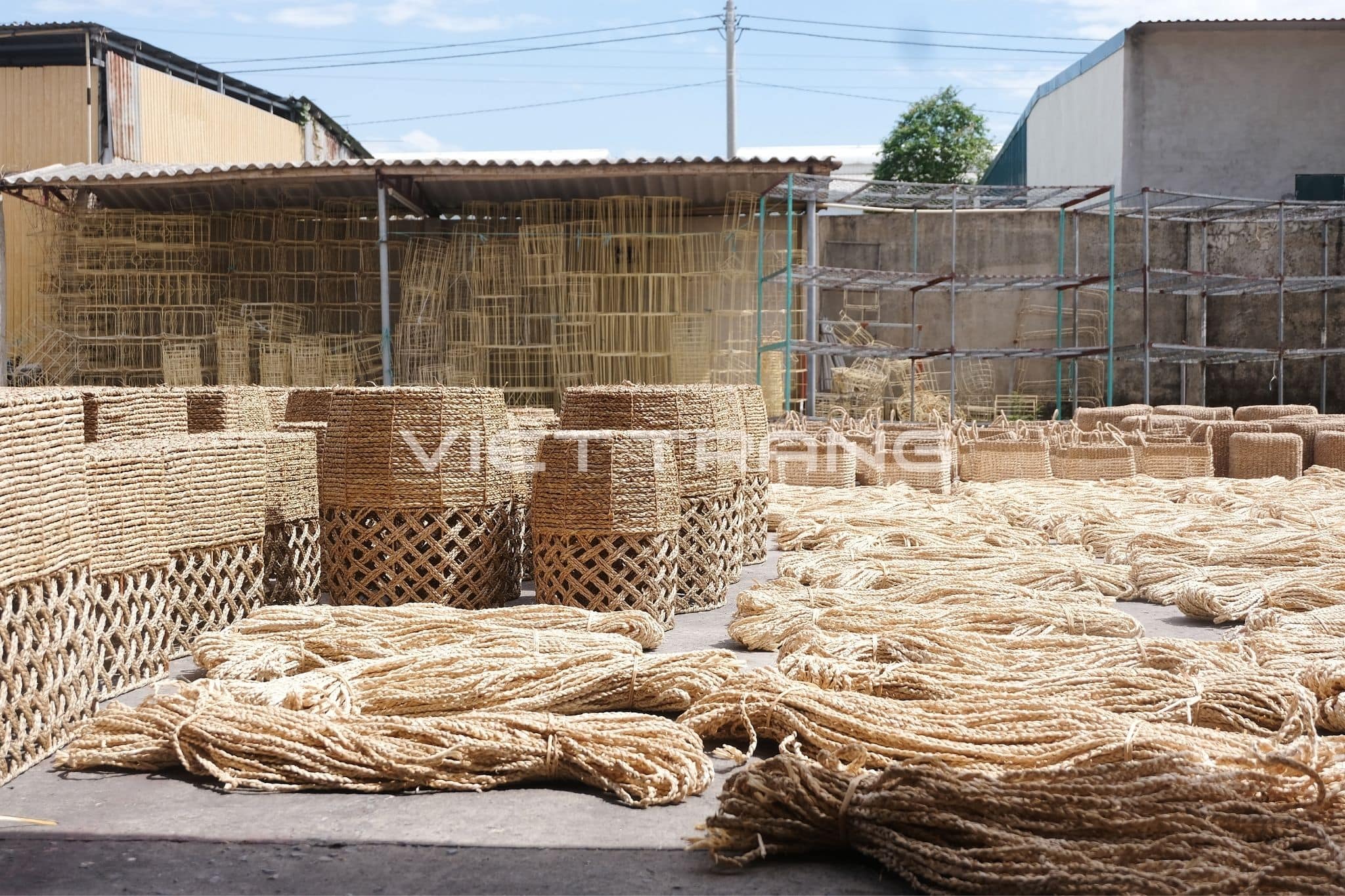
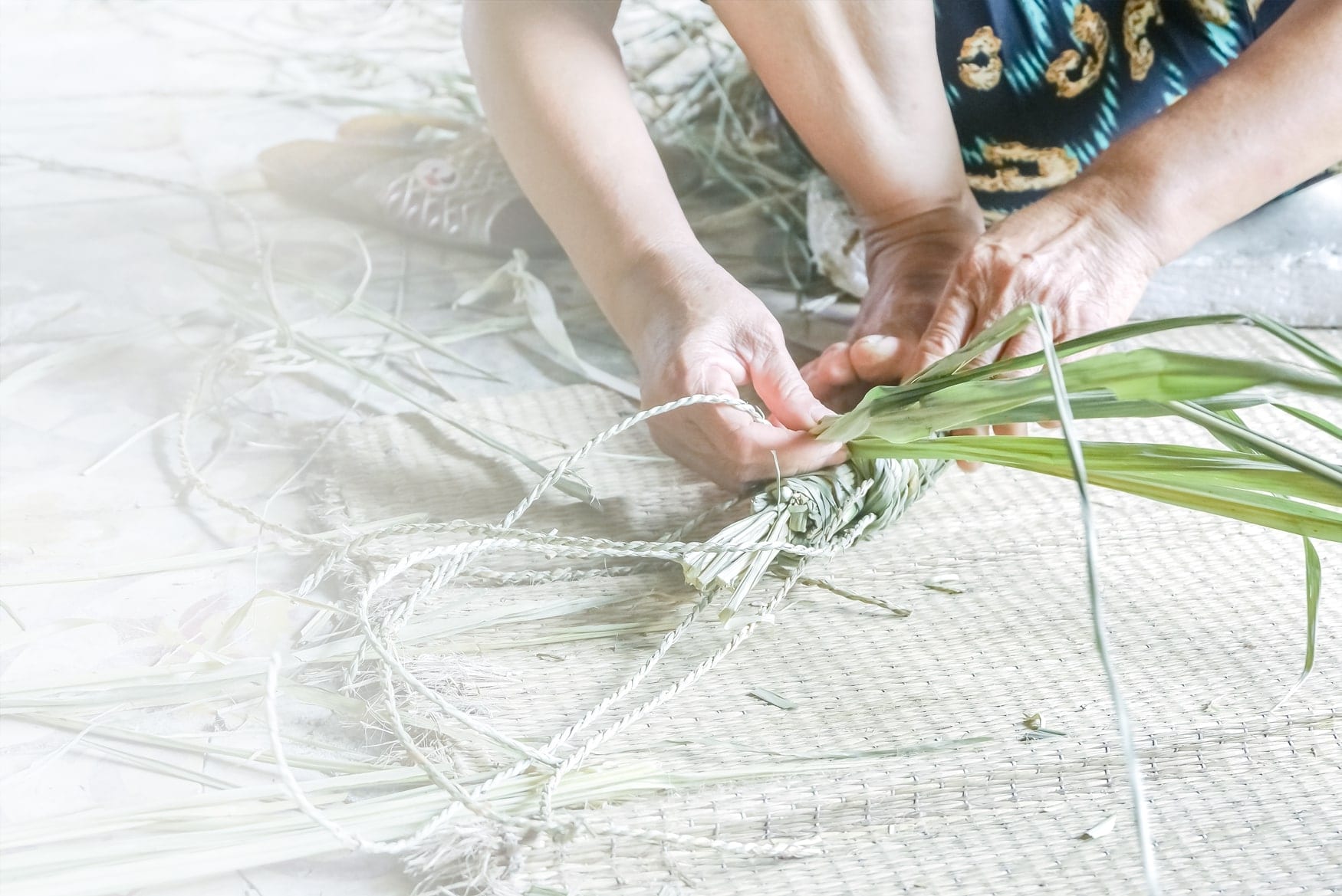
| Seagrass | Harvested and dried in the fields of Nga Son, Thanh Hoa | A local crop, cut and dried a short distance from the weaving village | Ask whether anything is applied during finishing |
| Water hyacinth | Cut from rivers and lakes | Grows extremely fast and is invasive in many regions. Weaving is a documented use for the harvested plant | Drying. Stems packed before they are fully dry invite mold in transit |
| Corn husk | Leftover leaves from corn farming | Uses an agricultural residue rather than a crop grown for fiber | Ask what share of the piece is corn husk before you put it on the pack |
| Palm leaf | Split and braided palm fronds | Gives white and pale patterning. The range uses natural hues only, so the tone is the leaf itself | Edge quality, since braiding standards vary between workshops |
Water hyacinth deserves a word of its own. It is native to tropical South America and is now naturalised across most of the world, where dense mats block boats and fishing, cut the light to plants below and strip oxygen from the water as they decay. Cutting it for weaving does not solve that problem, but it does turn a plant that has to be removed anyway into something with a use. That is a specific, defensible point, and it is more useful to a buyer than the word green.

Can I still call a basket eco friendly in Europe?
Not on its own. From 27 September 2026, Directive (EU) 2024/825, which amends the Unfair Commercial Practices Directive, bans generic environmental claims in the European Union unless the trader can show recognised excellent environmental performance that is relevant to the claim. The directive names wording such as environmentally friendly, green, ecological and biodegradable as examples. A claim is not treated as generic if the specification behind it is set out clearly and prominently in the same place.
Two related practices are also prohibited from the same date. Displaying a sustainability label that is not based on a recognised certification scheme or set by a public authority. And making a claim about a whole product or a whole business when it relates to only one aspect of it.
For a retail buyer this is a copywriting change more than a sourcing change. “Eco friendly storage basket” becomes “handwoven from water hyacinth cut in Vietnam, with no synthetic dye”. The second version is more specific, more persuasive and easier to defend. We are a Vietnamese manufacturer and not your legal adviser, so check your own wording with the people who sign it off, but the direction of travel is clear.
Do SMETA and amfori BSCI prove a product is sustainable?
No, and it is worth being precise about this, because the two things get mixed up often. SMETA and amfori BSCI are social and ethical audits of a site. SMETA is built on two pillars, labour standards and health and safety, with a four pillar version that adds environment and business ethics. Neither is a product certification and neither tells you what a basket is made of.
What they do tell you is that an independent auditor has walked the factory. Viet Trang is audited to both. If you intend to reference an audit in your own materials, ask for the report and its date rather than the logo, and read what SMETA and BSCI actually cover before you write anything on pack.
What quietly undermines a natural basket’s credentials?
Synthetic dye. Colour is the most common one. Our range uses natural hues only and no synthetic dyes, which is a specific thing you can ask any supplier to confirm in the finishing specification.
Coatings and lacquers. A sprayed finish can make a fiber look better in a photo and make the piece much harder to describe honestly afterwards. Ask what, if anything, is applied.
Bonded linings. A fabric liner that lifts out is a separate material the end customer can remove. A liner glued or bonded to the weave is not, and it changes what you can say about the basket as a whole.
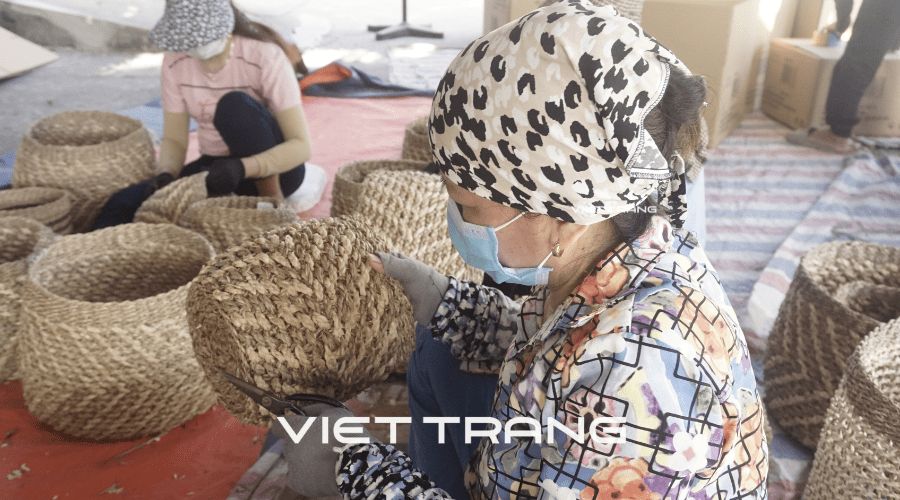
Packing. Individual polybags undo a surprising amount of goodwill. Carton packing is standard across our listings, and the inner packing is worth specifying at order stage rather than discovering on arrival.
Mold treatment. Baskets that arrive damp get treated, and treatment usually means chemicals. Proper drying before packing avoids the whole problem. Our mold prevention guide covers what to ask for, and the how to clean and care for seagrass and water hyacinth homeware guide is the one to hand on to your own customers.
What should I ask a supplier for?
Claims are only as strong as the paperwork underneath them. The table below pairs the six things buyers most often want to say about a woven basket with the specific evidence that supports each one.

If a supplier cannot answer the right hand column, that is useful information in itself. If you want the fiber by fiber background first, our guide to what woven baskets are made of sets out how each one looks, feels and wears.
Baskets in the four fibers compared above
Four handwoven baskets currently in production, one for each fiber compared above. The corn husk basket is woven with seagrass as well, so seagrass appears in two of the four. Each product page lists the code, size and minimum order.


Frequently asked questions
Which basket material is the most sustainable?
There is no single answer, because the fibers are strong on different points. Corn husk uses an agricultural residue, water hyacinth uses a plant that often has to be removed from waterways anyway, and seagrass is a local crop grown close to the weaving village. Choose on the point you intend to communicate, then ask for the evidence behind it.
Is water hyacinth genuinely a sustainable choice if the plant is invasive?
The invasiveness is the reason it is interesting. Water hyacinth is among the fastest growing plants, mats can double in one to two weeks, and they block waterways and reduce oxygen in the water. Harvesting for weaving is a documented use for the cut plant rather than a solution to the infestation, and that is how it is honest to describe it.
Can I describe a seagrass basket as biodegradable?
Be careful in the European Union. Biodegradable is named as an example of a generic environmental claim under Directive (EU) 2024/825, which applies from 27 September 2026, so it needs the specifics set out alongside it. Start by asking the supplier for the finishing specification, because what has been applied to the fiber matters more than the fiber itself.
Does a SMETA or amfori BSCI audit make a product eco friendly?
No. Both are social and ethical audits of a production site, not product certifications. SMETA’s four pillar version adds environment and business ethics to the two core pillars of labour standards and health and safety. Ask for the report and its date if you intend to reference it.
What packing should I ask for on a natural fiber order?
Carton packing is standard on our listings. Specify the inner packing too, since individual plastic bags are often added by default. Ask for the baskets to be fully dried before packing, which is the single most effective way to avoid mold on a long sea crossing.
Ask us for the specification, not just the price
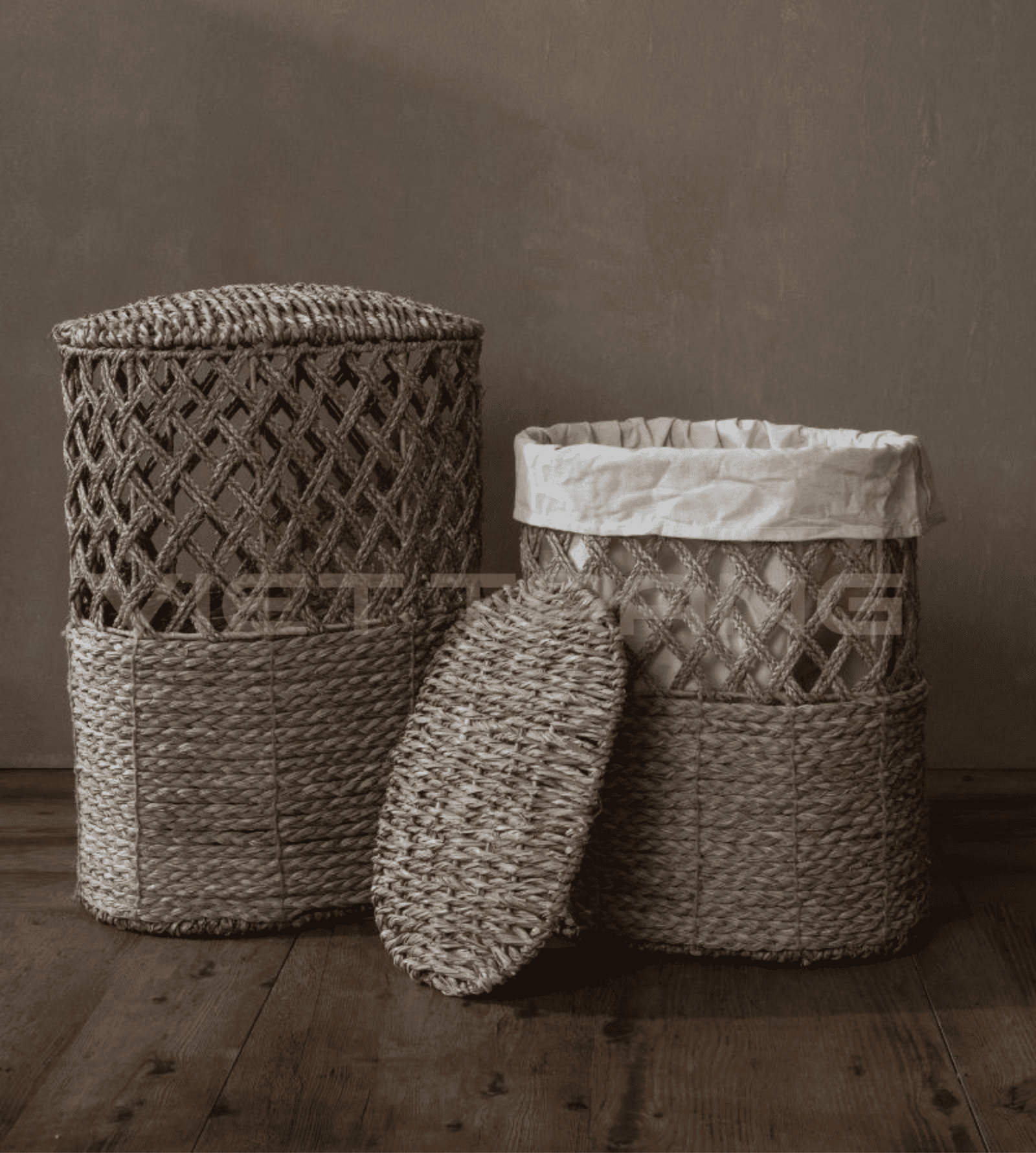
We will send the fiber origin, the finishing specification and the packing plan for any design in the range, including the seagrass storage basket with a lid shown above. Request a quotation or a sample and tell us what you need to be able to say about the product.

To receive lots of incentives with dedicated and professional service...
Or view more handwoven product in our
lookbook collection
CONTACT NOW
+84 915 709 666
(WhatsApp available)