From Fiber to Finished Basket: How Our Homeware Is Made
31 Jul 2026A handwoven natural fiber basket is made in five main stages. First, the fiber, such as seagrass or water hyacinth, is harvested locally. Second, it is processed: cleaned, sorted by length and sun-dried until it is ready to weave. Third, artisans hand-weave the basket over a form, shaping the body, base and any handles. Fourth, it is finished: trimmed, shaped, cleaned and dried again to lock in its form. Fifth, it is quality-checked, packed and prepared for shipping. Every basket passes through many pairs of hands, which is what gives handwoven homeware its character and consistency.
Key takeaways
- Making a basket runs in five stages: harvest, process, weave, finish, pack.
- The fiber is sun-dried carefully, which is central to durability and mould resistance.
- Weaving is done by hand, so skill and consistency come from the artisans.
- Finishing and quality control are what make an order arrive uniform and ready to sell.
More work than it looks
A finished basket looks simple, and that is the point of good craft: it hides the effort. But between a field of seagrass and a basket ready for a retail shelf sit many careful steps and many pairs of hands. Understanding that process explains why handwoven homeware feels the way it does, and why where and how it is made matters so much to quality. Here is how a basket comes to be, from fiber to finished piece.
Step one: harvesting the fiber
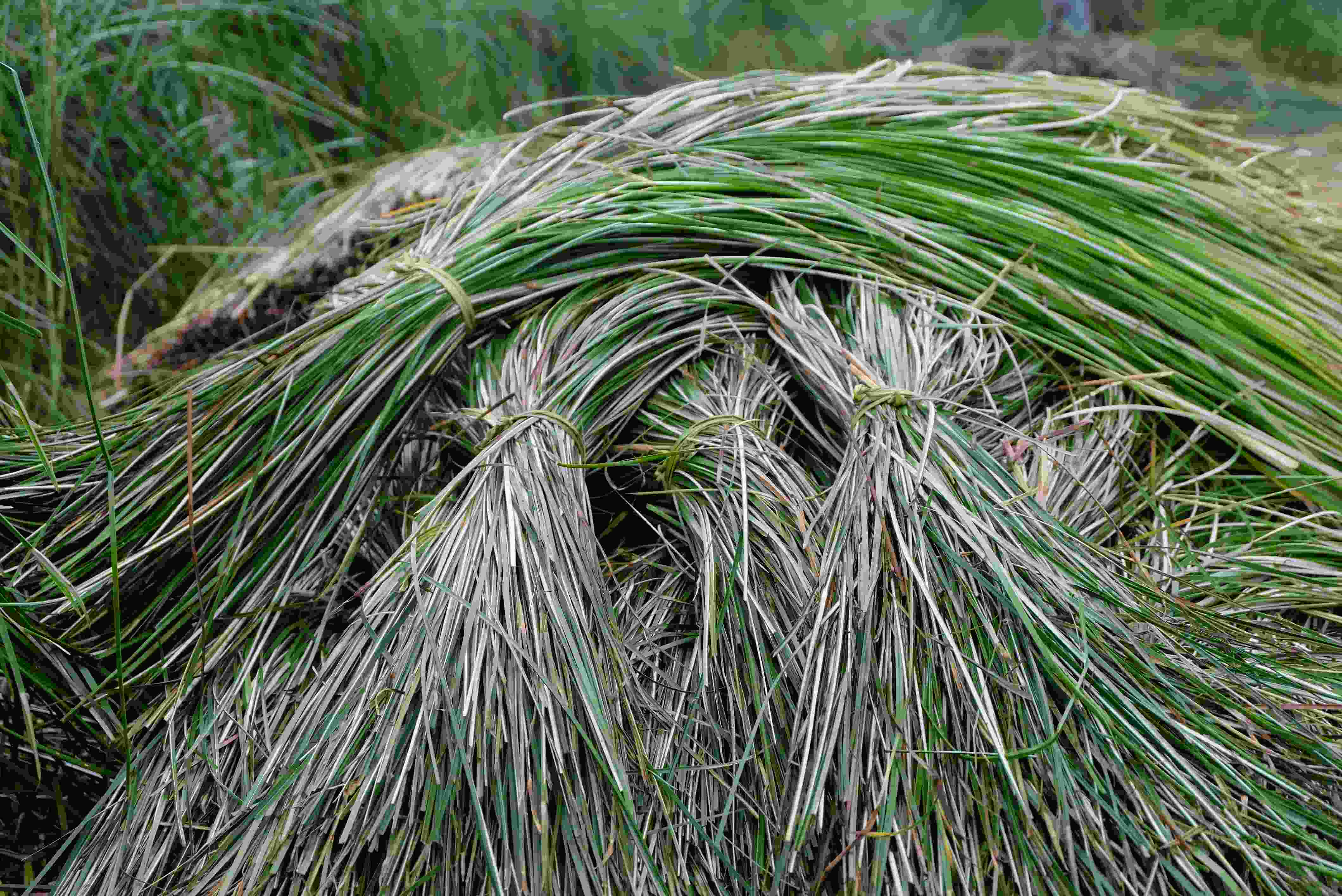
It starts in the field and the water. Seagrass is grown and hand-harvested in the coastal areas around Nga Son, the region where we are based. Water hyacinth is gathered from local rivers and lakes. Corn husk arrives as a by-product of nearby farming, a leftover material we put to use rather than waste. Because these fibers grow close to our workshop, they reach us fresh and we can control their quality from the very start.
At harvest, the stems are sorted by length and the dead or too-short pieces removed. Timing and careful handling already shape the final product: fiber cut and gathered well behaves better at every later stage.
Step two: processing and drying
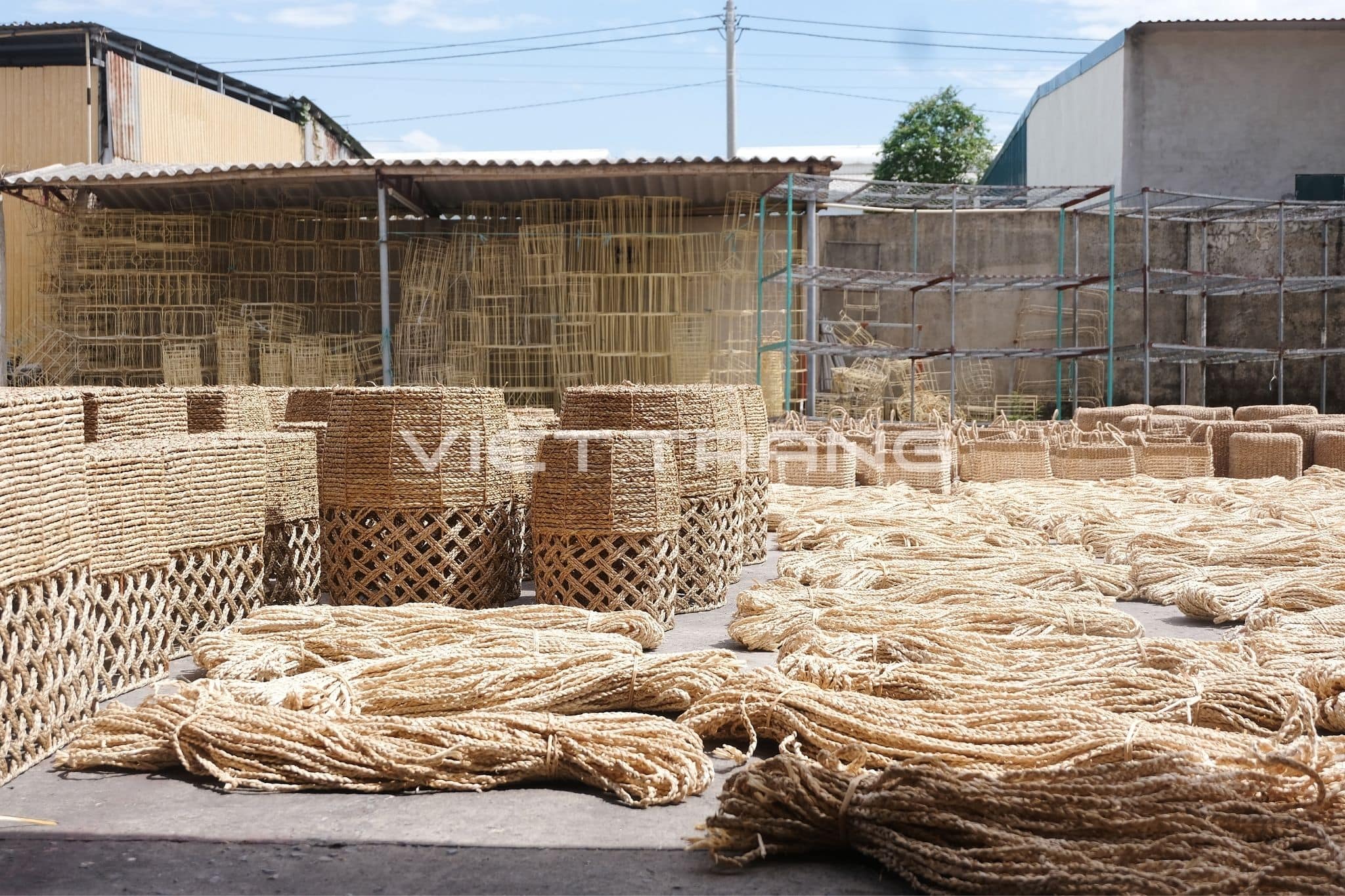
Raw fiber is not ready to weave. It has to be cleaned, sorted and, most importantly, dried. Seagrass is typically split into thinner strands and then sun-dried for a couple of days until its moisture content drops low enough to weave and store safely. Drying is one of the most decisive steps in the whole process. Properly dried fiber weaves consistently, holds its shape and resists mould later on, while poorly dried fiber causes problems that show up long after the basket has left the factory.
We treat drying as a dedicated stage, using warehouses with drying machines so the fiber reaches the right, stable condition before anyone begins to weave. Only natural hues are used throughout, with no synthetic dyes.

Step three: weaving
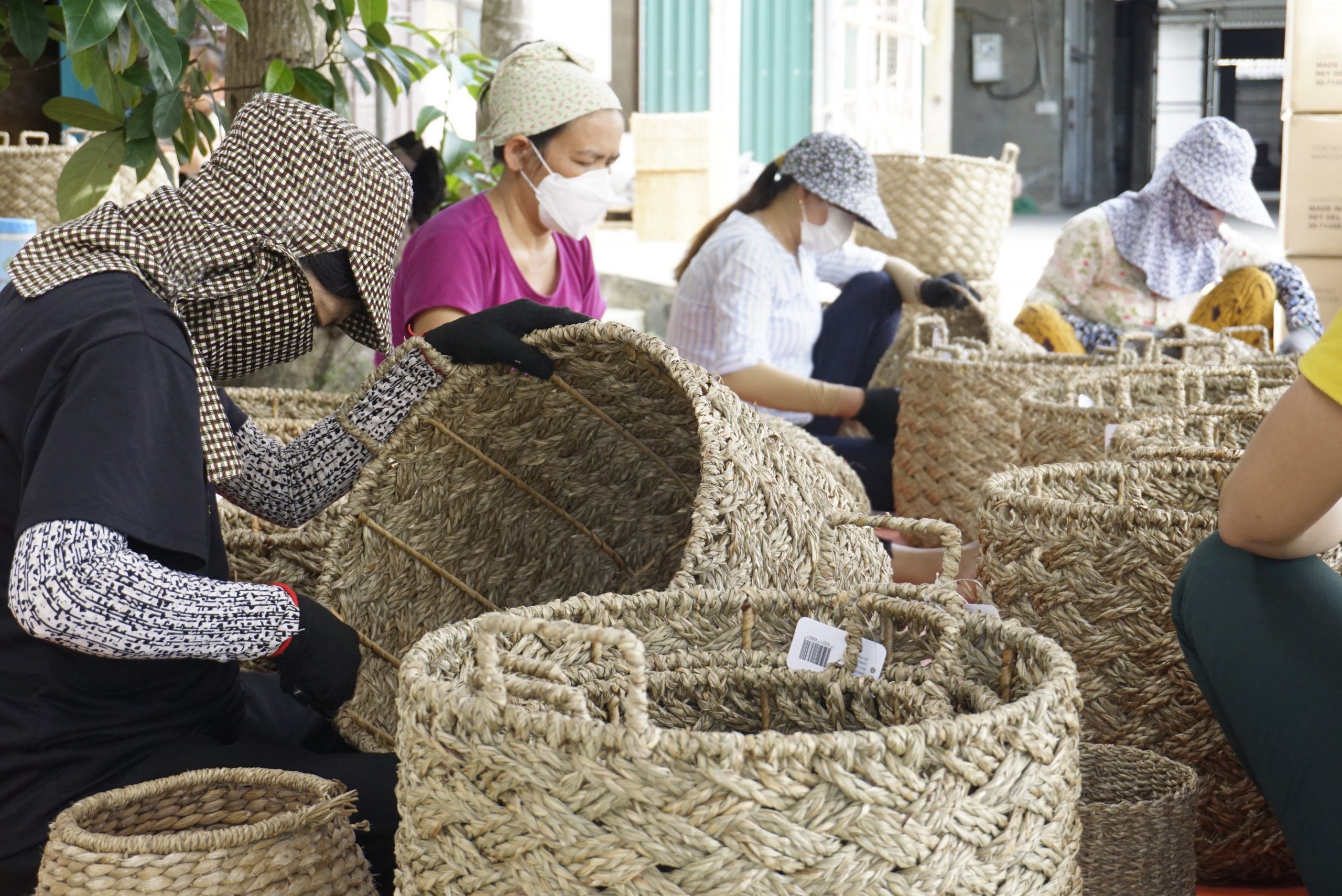
This is the heart of the craft, and it is done by hand. An artisan works the prepared fiber over a form or frame, building the base, the body and any handles, keeping the tension even and the pattern true. Weavers use different techniques depending on the design, from coiled and wrapped weaves to simpler split-strand weaves, each giving a different surface and structure. For many designs, two or more fibers are woven together, combining seagrass, water hyacinth, corn husk or palm leaf to create the tonal stripes and textures that are a Viet Trang signature.
The skill here cannot be rushed or automated. An even, tight weave from an experienced hand is what separates a basket that keeps its shape for years from one that sags. This is where generations of village knowledge become a physical object.

Step four: finishing
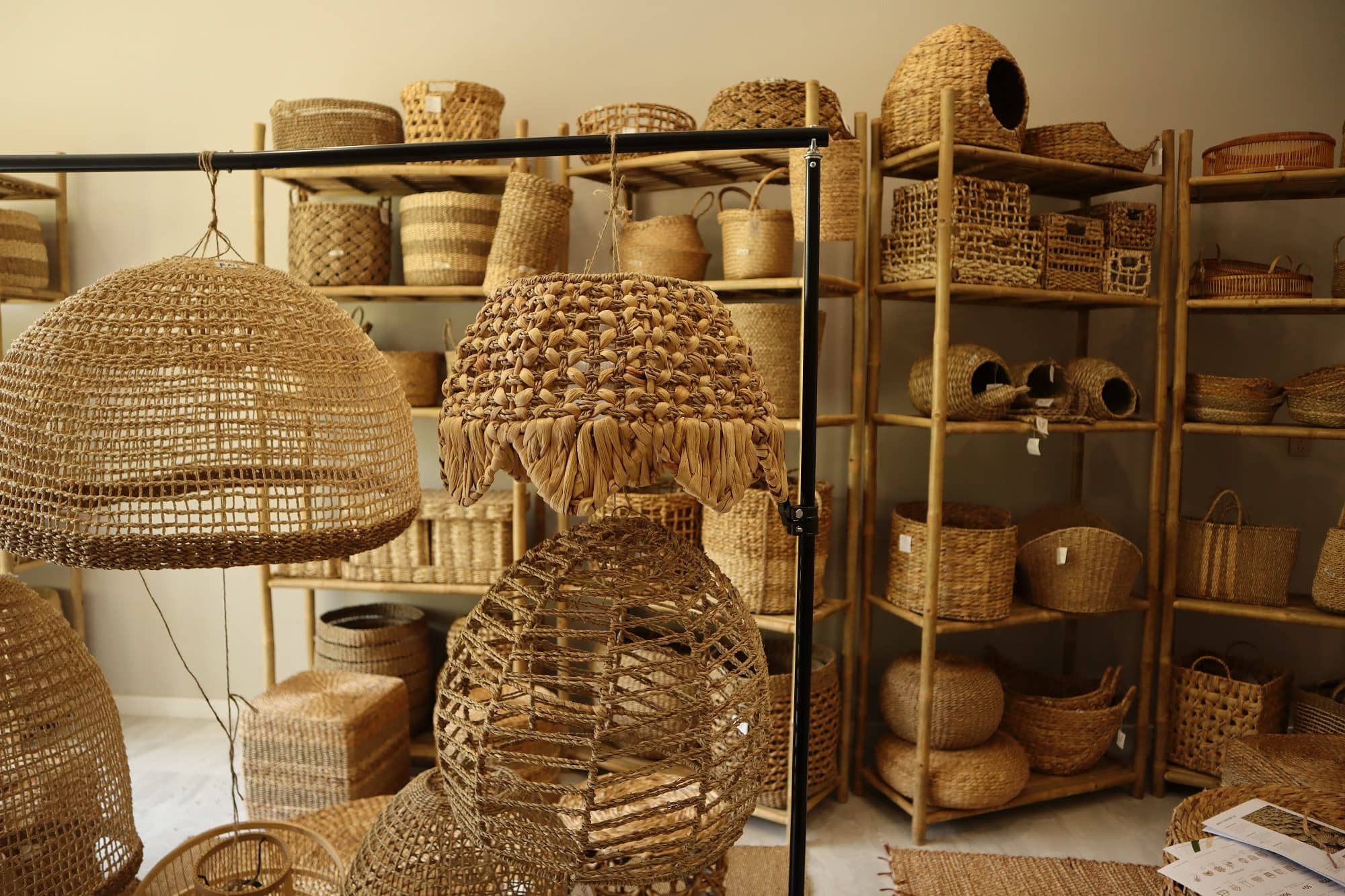
A basket off the loom is not quite done. Finishing brings it to a sellable standard: trimming loose ends, shaping the form so it stands correctly, cleaning the surface, and drying again to set everything in place. Details like rims, liners and handles are completed here. This stage is quiet but essential, because it is the difference between a rough woven object and a refined product a retailer can put straight on a shelf.
Step five: quality control, packing and shipping
Before anything ships, it is checked. Quality control catches inconsistencies in weave, shape, size and finish so that an order arrives uniform rather than varied. Approved pieces are then packed, with drying and breathable packing kept in mind so products travel well through long, humid ocean transit and reach the buyer in the condition they left in. From our workshop, that can mean up to twenty containers a month heading out to more than thirty countries.

Why the process is the product
When you understand these five stages, a handwoven basket stops being a mystery and becomes a record of careful work: local fiber, proper drying, skilled hands, real finishing and honest quality control. That is also why sourcing from the actual maker matters. You are buying the process, not just the object, and a maker who runs every stage in one place can stand behind all of it.
At Viet Trang, all of this happens in and around Nga Son, from a 9,000 square metre workshop, with the fiber grown nearby and the craft carried by local weavers. If you would like to see it rather than read about it, ask us for a sample or a walkthrough of how your products would be made.
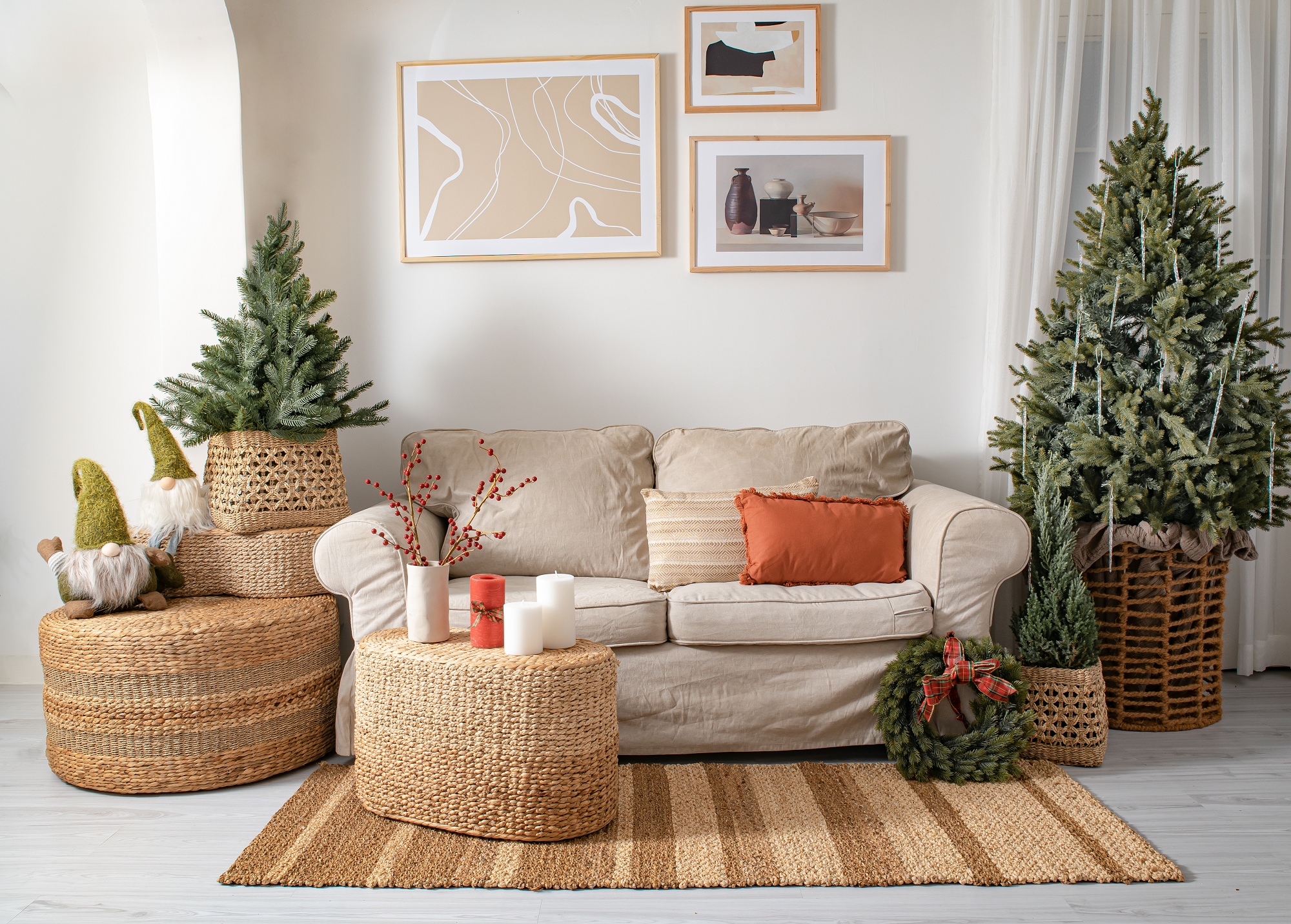
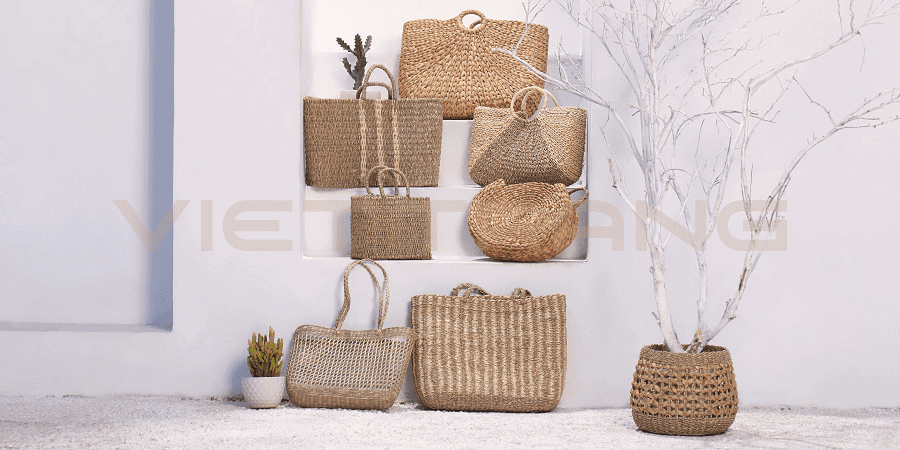
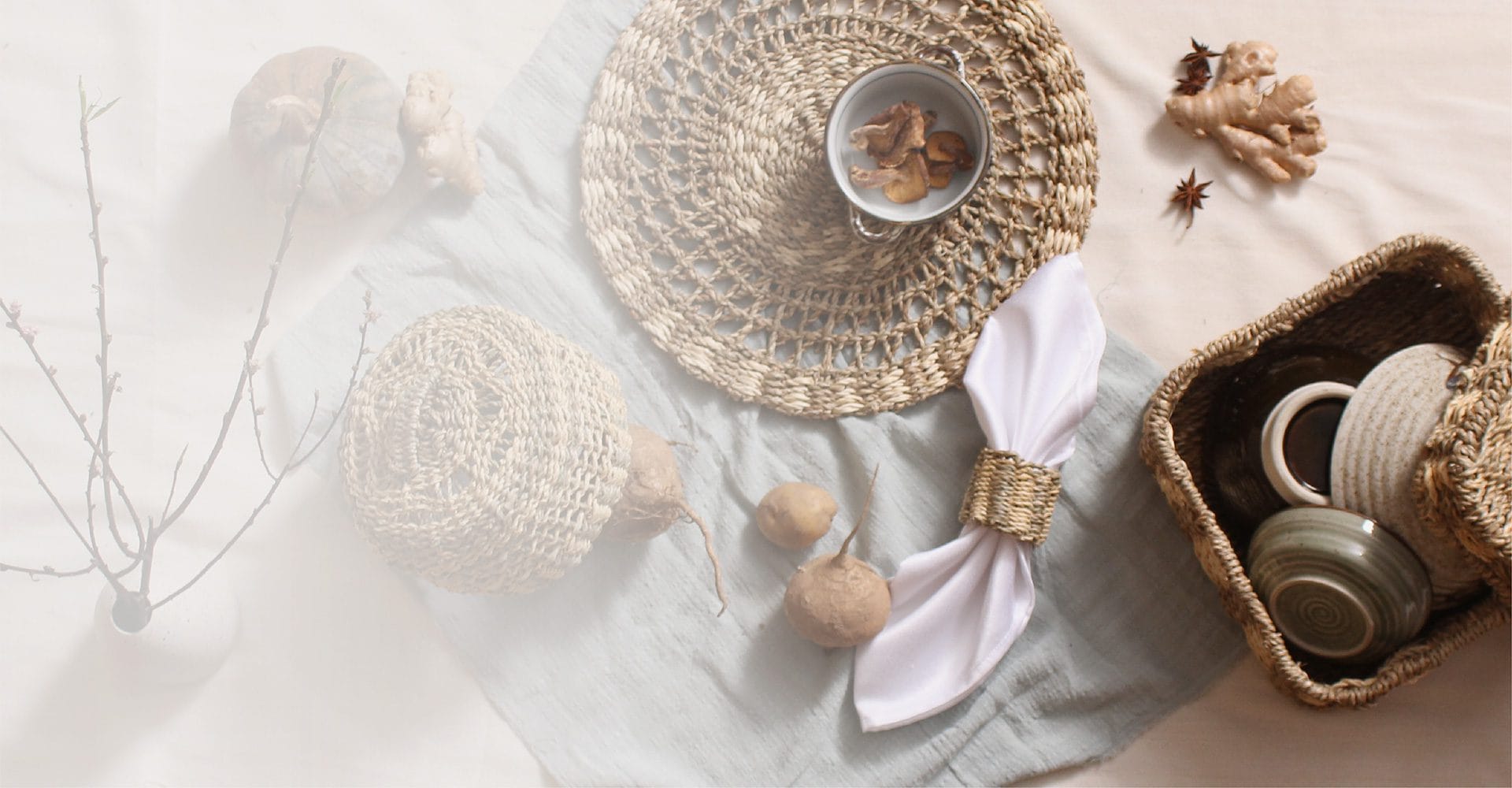
Finished baskets from our workshop
The end of the process: a few finished designs from our range.


Frequently asked questions
How are seagrass baskets made?
In five main stages: the seagrass is harvested locally, then cleaned, sorted and sun-dried; artisans hand-weave it over a form to build the basket; the piece is finished by trimming, shaping and drying; and finally it is quality-checked, packed and shipped.
Why is drying so important in making baskets?
Properly dried fiber weaves consistently, holds its shape and resists mould, while poorly dried fiber causes problems later. Drying is a decisive, dedicated stage, done with drying machines before weaving begins.
Are the baskets really woven by hand?
Yes. Weaving is done by hand by skilled artisans who keep the tension even and the pattern true, using techniques such as coiled, wrapped and split weaves. This craft cannot be automated, and it is what gives each piece its consistency and character.
What fibers are used and can they be combined?
Seagrass, water hyacinth, corn husk and palm leaf are the main fibers. Combining two or more within one piece creates tonal stripes and textures, which is a Viet Trang signature.
How are baskets prepared for export?
After quality control, pieces are packed with drying and breathable packing in mind so they travel well through long, humid ocean transit and arrive in the condition they left the workshop.
Ready to source with Viet Trang?
Want to see the process for yourself? Ask us for a sample or a workshop walkthrough.

To receive lots of incentives with dedicated and professional service...
Or view more handwoven product in our
lookbook collection
CONTACT NOW
+84 915 709 666
(WhatsApp available)