How Bespoke and Private-Label Natural Fiber Homeware Works
31 Jul 2026Bespoke and private-label natural fiber homeware means a maker produces items to your own design, size or brand rather than selling from a fixed catalog. The process usually runs in five stages: you share a brief, sketch or reference; the maker’s design team develops it into a workable weaving design; a sample is woven and sent for approval; you request adjustments until it is right; then it goes into production under your specification, often with your own labeling or packaging. It lets retailers and brands offer exclusive products instead of the same items every competitor can buy.
Key takeaways
- Bespoke means made to your design; private-label means made to your brand. Often they go together.
- In industry terms: OEM (you own the design), ODM (you adapt the maker’s design), private label (the maker’s product under your brand).
- The path from idea to sample is collaborative: brief, design, sample, approval, production.
- Custom sizes, weave patterns, fiber combinations and full new concepts are all possible with a maker that has an in-house design team.
OEM, ODM and private label, defined
Three terms come up constantly, and buyers often use them loosely. They describe different levels of design ownership.
OEM (original equipment manufacturer) means you own the design and provide the specification, and the maker produces exactly what you instruct. ODM (original design manufacturer) means the maker already has designs, and you select and adapt one to fit your brand. Private label is closest to ODM: you take a maker’s product, apply your own brand name and packaging, and sell it as yours.
Most natural fiber homeware partnerships live in the ODM and private-label space, with true bespoke (a genuinely new design) sitting at the OEM end. Knowing which one you actually want makes the first conversation with a supplier far more productive.
Bespoke and private-label: what they mean in practice
The two terms often travel together but they are not the same thing. Private-label means a product is made to carry your brand: your label, your packaging, your name on the tag, even when the underlying design is close to an existing one. Bespoke means the design itself is developed for you, whether that is a new size, a new weave pattern, a different fiber combination or an entirely new product concept.
Many partners want both. They want a product no competitor is selling, and they want it presented under their own brand. A maker with an in-house design team can deliver that combination, which is harder for a trading company that only resells a catalog.
Who this is for
Bespoke and private-label work suits a few kinds of buyer. Importers and brands who want exclusive products they can own rather than shared catalog items. Retailers with specific size, color or packaging requirements for their shelves. Interior designers and hospitality buyers with a project that needs something made to spec, in a set quantity, to a particular look.
If you have ever looked at a standard product and thought “this is close, but I need it a little taller, in a two-fiber stripe, with my label,” that is exactly what this service exists for.

What can actually be customized
With handwoven natural fiber, more is adjustable than people expect, because the product is built by hand rather than stamped by a machine.

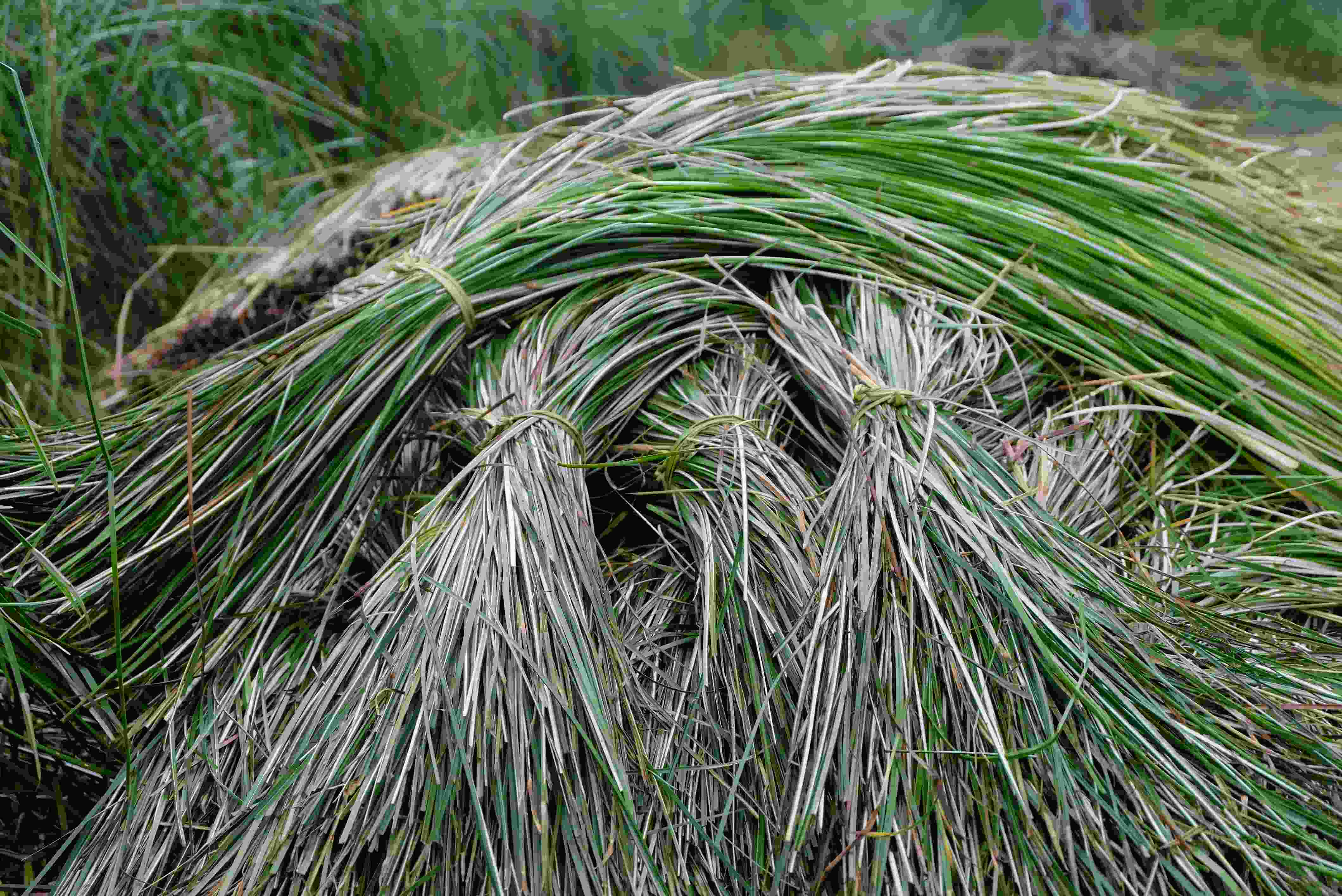
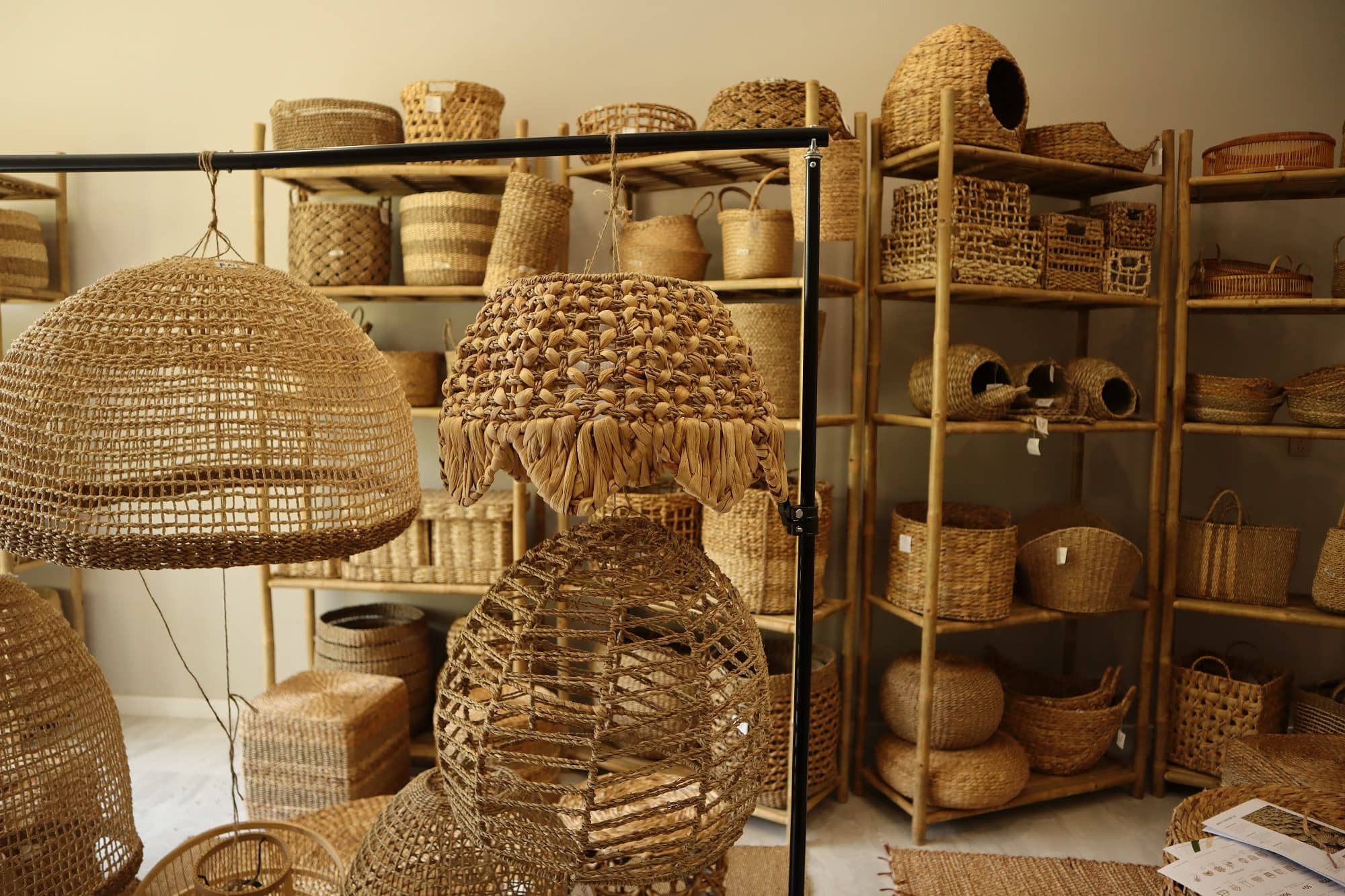
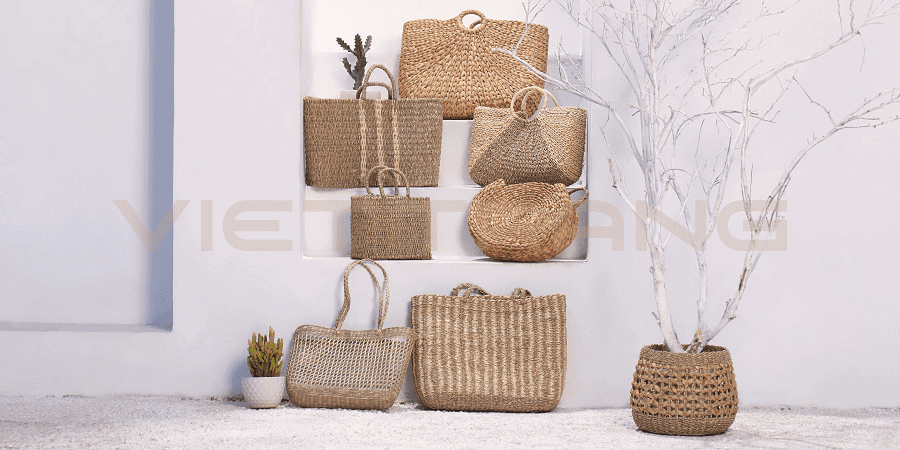
Size and proportion can be changed to fit a shelf, a set or a specific use. Weave pattern and texture can shift from tight and structured to loose and open. Fiber choice and fiber mixing is a real lever: combining seagrass, water hyacinth, corn husk and palm leaf creates different tones and stripe effects, and mixing fibers within one piece is a Viet Trang signature. Finishing details such as handles, liners, rims and shapes can be specified. And entirely new concepts can be developed from scratch when nothing in the existing range fits.
The design-to-sample process, step by step
Good bespoke work follows a clear path so there are no surprises.
First, the brief. You share whatever you have: a sketch, a competitor photo, a mood board, dimensions, a target use. Even a rough idea is enough to start.
Second, design development. Our in-house design team turns your input into a workable weaving design, flagging anything that needs a practical adjustment so the piece holds its shape and can be made consistently at volume.
Third, sampling. A physical sample is woven and sent to you. This is the moment the idea becomes something you can hold, press and photograph.
Fourth, approval and revisions. You review the sample and request changes: a little taller, a tighter weave, a different handle. Samples are refined until you sign off. Getting this right before production is what protects the whole order.
Fifth, production. Once the sample is approved, the design goes into full production under your specification, with your labeling or packaging if it is a private-label order, and ships on the agreed lead time.

What to prepare before you enquire
You do not need a finished technical drawing. You do need a clear starting point. The most useful things to bring are a reference image or sketch, the dimensions or capacity you want, the quantity you are planning, any fiber or color direction, and your packaging or labeling needs if it is private-label. The more of this you can share up front, the faster the first sample gets close to right.
Why work with the maker directly
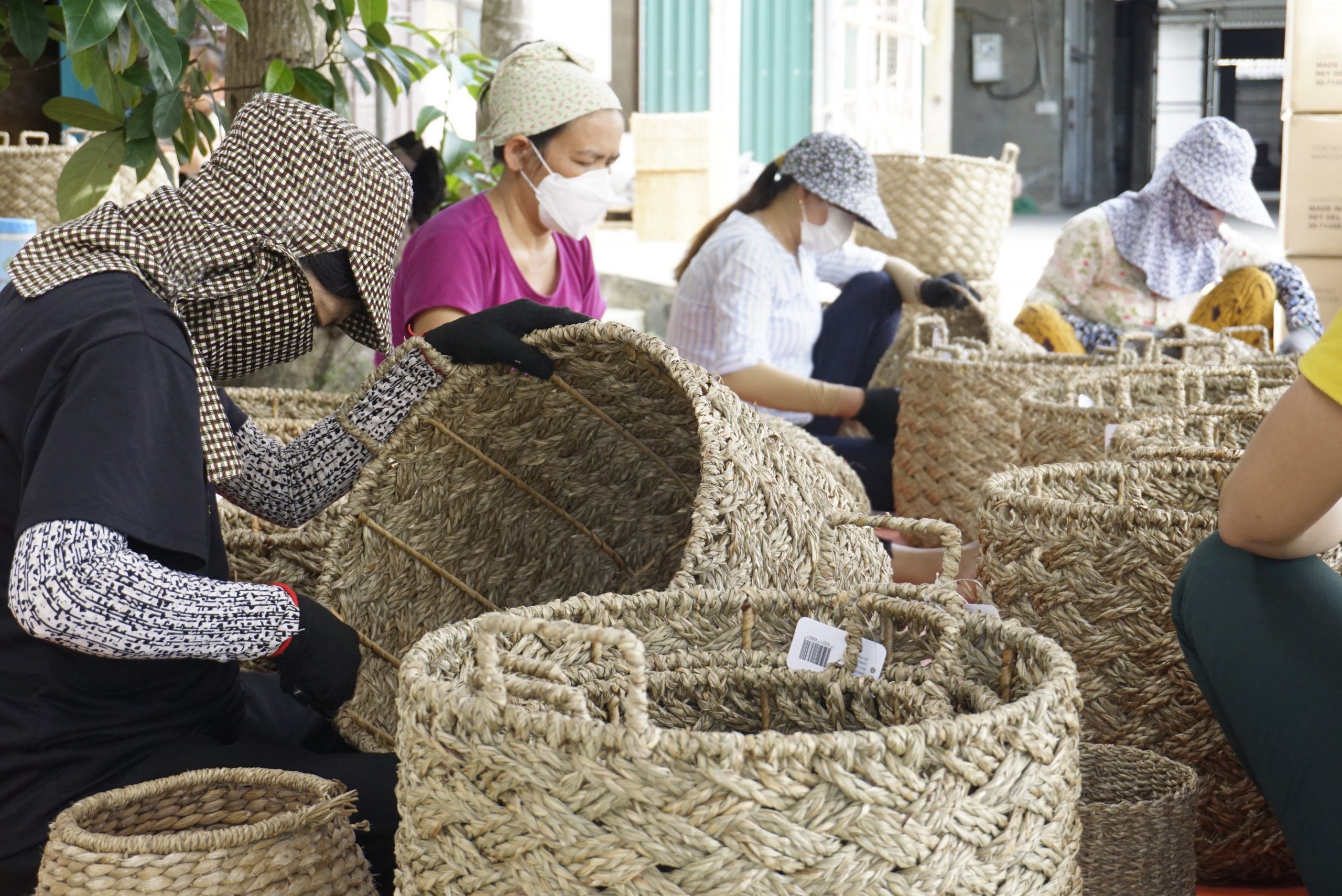
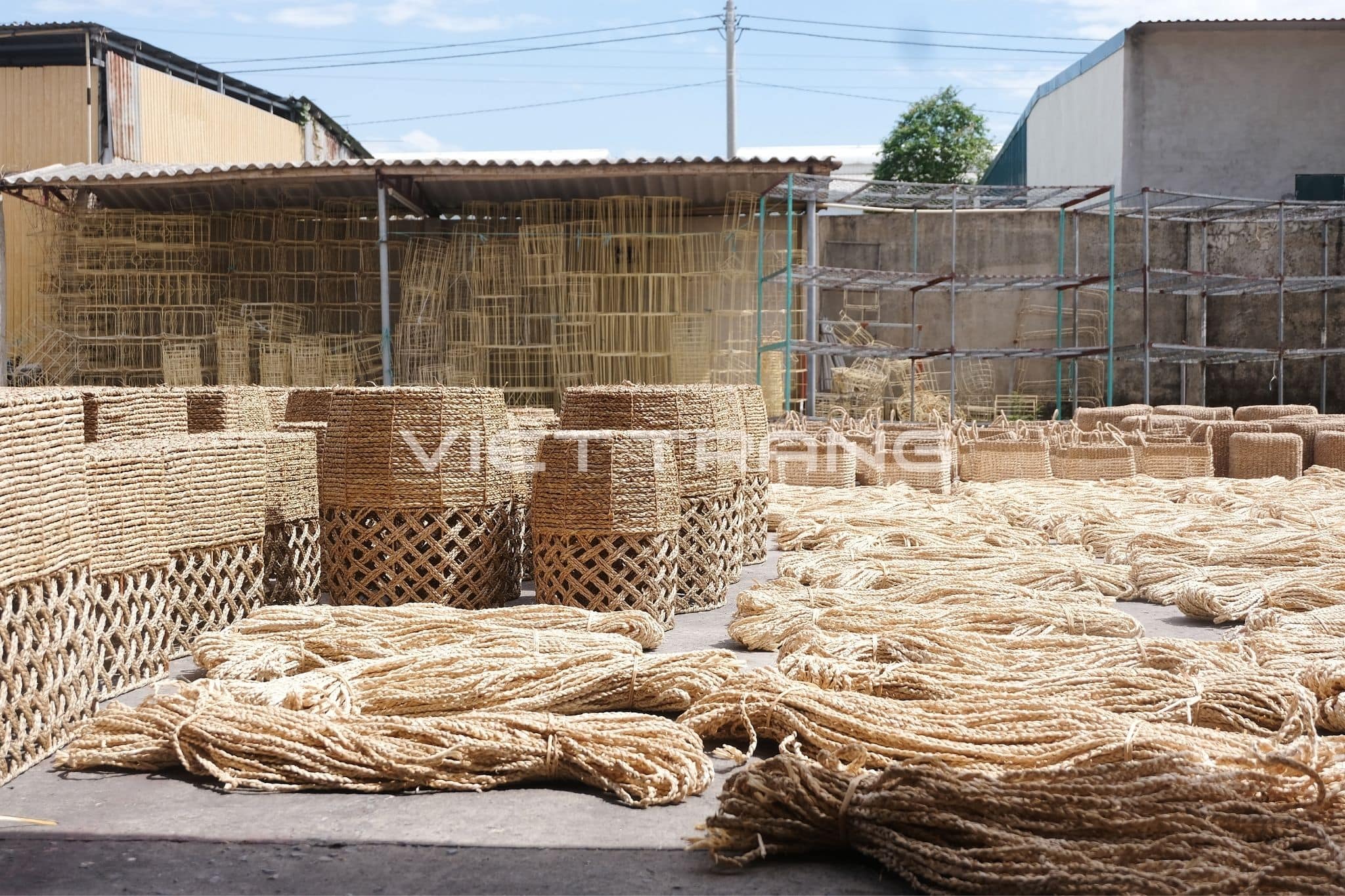
The real advantage of developing bespoke and private-label products with the actual manufacturer is control and clarity. You are talking to the people who weave the product, so feedback goes straight to the loom rather than through a middleman. You can see workshop photos, you can test real samples, and you get a truthful answer about what is and is not practical to make well.
At Viet Trang, our in-house design team develops samples from partner references, sketches and mood boards before anything goes into production, and we release new themed collections every quarter, so design is part of how we work rather than an add-on. The simplest way to begin is to send us what you have in mind.
Designs we can adapt for your brand
Start from an existing design and change size, fiber mix or color.


Frequently asked questions
What is the difference between bespoke and private-label homeware?
Bespoke means the product is designed specifically for you, such as a custom size, weave or new concept. Private-label means a product is made to carry your brand, label and packaging. Many orders combine both.
What is the difference between OEM and ODM?
With OEM you own the design and the maker produces to your specification. With ODM the maker already has designs and you adapt one to your brand. Private label is a form of ODM where you sell the maker’s product under your own name and packaging.
Can you make natural fiber baskets to my own design?
Yes. With a sketch, photo or mood board plus your dimensions, our design team develops a workable weaving design, produces a sample for your approval, and then moves to production once it is signed off.
How does the sampling process work?
You share a brief, the design team develops the design, a physical sample is woven and sent to you, you request revisions until it is right, and only then does the order go into production.
Do I need a technical drawing to start?
No. A reference image or rough sketch, your target size or capacity, the planned quantity and any color or fiber direction are enough to begin.
Ready to source with Viet Trang?
Send a sketch or a reference and we will develop a sample.

To receive lots of incentives with dedicated and professional service...
Or view more handwoven product in our
lookbook collection
CONTACT NOW
+84 915 709 666
(WhatsApp available)