Natural Fiber Home Decor in 2027: What the Market Says
11 Nov 2026Going into 2027 the global home decor market is forecast to be worth about USD 753.9 billion, up from USD 716.5 billion in 2026, on the way to USD 955.3 billion by 2032. Those figures come from Mordor Intelligence, published in November 2026, and they describe a market that is growing steadily rather than dramatically. For buyers of natural fiber homeware the more useful detail sits underneath the headline: where the demand is, what is pushing buyers toward plant fibers, and which categories are moving.
Key takeaways
- The home decor market is forecast to grow at 4.85 per cent a year between 2027 and 2032.
- North America held the largest regional share in 2026 at 41.81 per cent, and Asia-Pacific is named the fastest growing region.
- Sustainability has moved from a selling point to an expectation, with buyers asking for responsibly sourced materials by name.
- Skilled hand weaving is becoming the constraint, which makes supplier capacity a real planning question for 2027.
How big is the home decor market going into 2027?
The numbers below are the ones worth having in a planning document. They are a single forecaster’s view, so treat them as a direction of travel rather than a guarantee, but they are current and they are specific.

Two related forecasts from the same source help put the natural fiber part in context. Global textile home decor is put at USD 137.47 billion in 2026 rising to USD 180.07 billion by 2031, a 5.56 per cent annual rate, and global home furniture at USD 529.39 billion in 2026 rising to USD 646.86 billion by 2031, a 4.09 per cent rate. Soft furnishing and decorative categories are growing a little faster than furniture.
Where is the demand?
North America is still the largest single market, with 41.81 per cent of the total in 2026. Asia-Pacific is described as the fastest growing region, which the forecast attributes to wider digital retail access and better delivery coverage rather than to any change in taste.
The same report is candid about the places where demand softened. High borrowing costs and tighter household budgets weakened durable goods demand in Brazil, and household furniture and equipment retail sales were softer in South Africa. That matters for assortment planning: a global growth figure does not mean every market you sell into is growing.

What is actually driving the move to natural materials?
Three forces show up repeatedly, and they are not the same thing.
The first is procurement policy. The shift toward sustainable furnishings is pushing suppliers to use recycled, certified and responsibly sourced materials, and buyers increasingly ask for the evidence rather than the claim. For us that means audit reports. Viet Trang is SMETA and amfori BSCI audited, and buyers ask for both earlier in the conversation than they did a few years ago.
The second is the look itself. Woven texture has had a sustained run in interiors media through 2026. Homes & Gardens, writing in July 2026, put the appeal plainly: woven pieces catch the light, soften hard edges and make a room feel layered and inviting in a way polished surfaces do not. That is a design argument rather than an environmental one, and it tends to be the one that sells through. We looked at this in more detail in our 2026 trends piece and in the woven pendant lighting trend.
The third is supply. The same market report names limited artisanal skills as a production challenge that adds pressure on supplier margins. Hand weaving does not scale the way a machine process does. If a category depends on skilled hands, capacity is a planning question and not just a price question.
Which categories are buyers asking about?
Across the enquiries we see, the movement is toward pieces that do a job in the home as well as look right. The table below is our own read of where natural fiber sits inside the broader product segments the market report uses.
| Segment | Where natural fiber fits | What buyers ask us for |
|---|---|---|
| Floor coverings | Flatwoven and braided rugs, runners, doormats | Custom sizes and fiber combinations that give tonal stripes |
| Wall decor and accessories | Mirrors, wall baskets, trays, desk storage | Sets and nested groups that merchandise well together |
| Lighting | Pendant and table lampshades in open weave | Shades that fit standard fittings in their market |
| Textiles and soft goods | Poufs, floor cushions, placemats and table pieces | Pieces that pair with an existing textile range |
| Storage | Baskets, bins, hampers, collapsible formats | Formats that ship efficiently and stack on a shelf |

What this means for a 2027 assortment
A 4.85 per cent market does not reward a scattergun range. It rewards a coherent one. Three practical implications follow from the numbers above.
Build depth in the categories your customers already buy, rather than width across everything. Our guide to building a natural homeware assortment works through how to do that across categories from one supplier.
Plan capacity earlier than you used to. If skilled weaving is the constraint, the orders that get made on time in 2027 are the ones placed with the production calendar in mind, including the Tet shutdown in Vietnam.
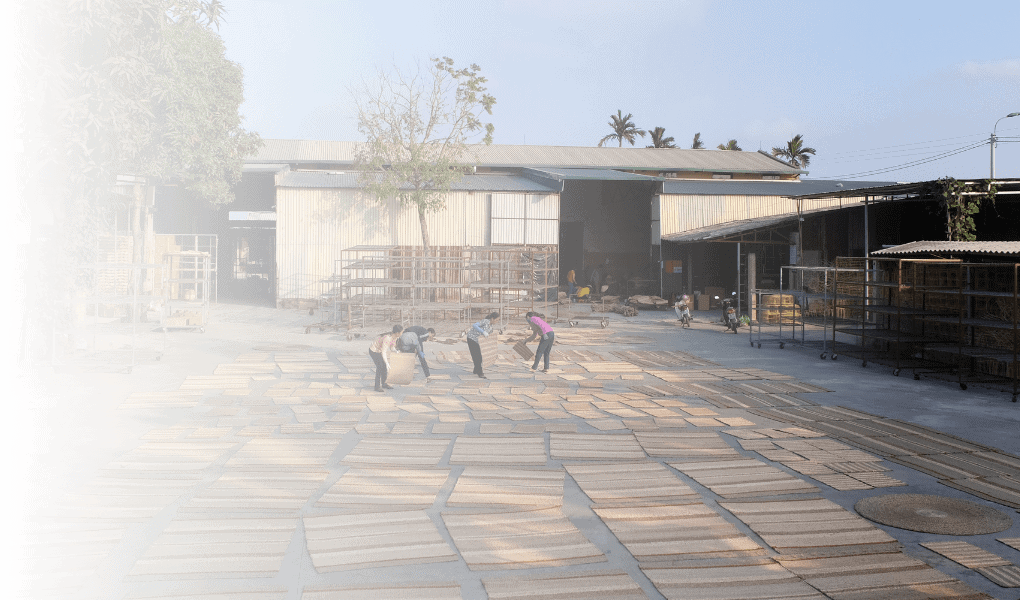
Ask for the proof, not the adjective. Certifications, a named factory, a named village and a photograph of the workshop are things a buyer can verify. The word sustainable on its own is not. Our piece on what makes a basket genuinely eco friendly covers the questions that separate the two.
What to ask a supplier before you commit for 2027
- Do you own the factory, and can we see it on a video call?
- Which audits have you completed, and when were they last renewed?
- Where does the fiber come from, and who grows it?
- What is your production calendar for the year, including holiday shutdowns?
- Can the range be made in our sizes, and what does that do to the timeline?
For the record on ours: a 9,000 square metre factory in Nga Son, Thanh Hoa, thirty full time staff and between 500 and 600 seasonal weavers, SMETA and amfori BSCI audited, four natural fibers and no synthetic dyes anywhere in the range.
A few pieces from across our range
This article is about the market rather than one product type, so the selection below is a general one, drawn from four different parts of our range: lighting, small furniture, tableware and planters.


Frequently asked questions
How big is the home decor market in 2027?
Mordor Intelligence, publishing in November 2026, forecasts the global home decor market at USD 753.9 billion in 2027, rising to USD 955.3 billion by 2032 at a compound annual rate of 4.85 per cent.
Which region buys the most home decor?
North America, with 41.81 per cent of the global market in 2026 according to the same forecast. Asia-Pacific is named as the fastest growing region over the forecast period.
Is natural fiber home decor still a growth category?
The evidence points that way. Decorative and soft furnishing segments are forecast to grow slightly faster than furniture, and the shift toward responsibly sourced materials is described as a supplier-wide pressure rather than a niche.
What certifications should we ask a natural fiber supplier for?
SMETA and amfori BSCI are the two most commonly requested social compliance audits in this category. Ask for the report date as well as the certificate, because an audit is a point in time.
How far ahead should we plan a 2027 natural fiber order?
Earlier than for a machine made product. Hand weaving capacity is finite, and the Vietnamese production calendar includes a Tet shutdown. Tell us your delivery window and we will tell you honestly what is achievable.
Planning your 2027 range?
Send us the categories you are working on and we will put together a quote, a sample set or a video call from the factory in Nga Son.

To receive lots of incentives with dedicated and professional service...
Or view more handwoven product in our
lookbook collection
CONTACT NOW
+84 915 709 666
(WhatsApp available)