What Makes Vietnamese Woven Baskets Different
4 Nov 2026Vietnamese woven baskets are handwoven from four natural fibers: seagrass, water hyacinth, corn husk and palm leaf. What sets them apart from woven baskets made elsewhere is that the fiber is usually grown, dried and woven inside the same district, often by the same farming households, and that two or more fibers are frequently combined in a single piece to create tone and texture without any dye.
For a buyer comparing suppliers across Asia, that matters in practical terms: it shapes the colour you get, the seasons when material is available, and how much of the process one supplier can actually answer for. This article explains the four fibers, where the craft is concentrated, how the work is done, and what to ask about before you order.
Key takeaways
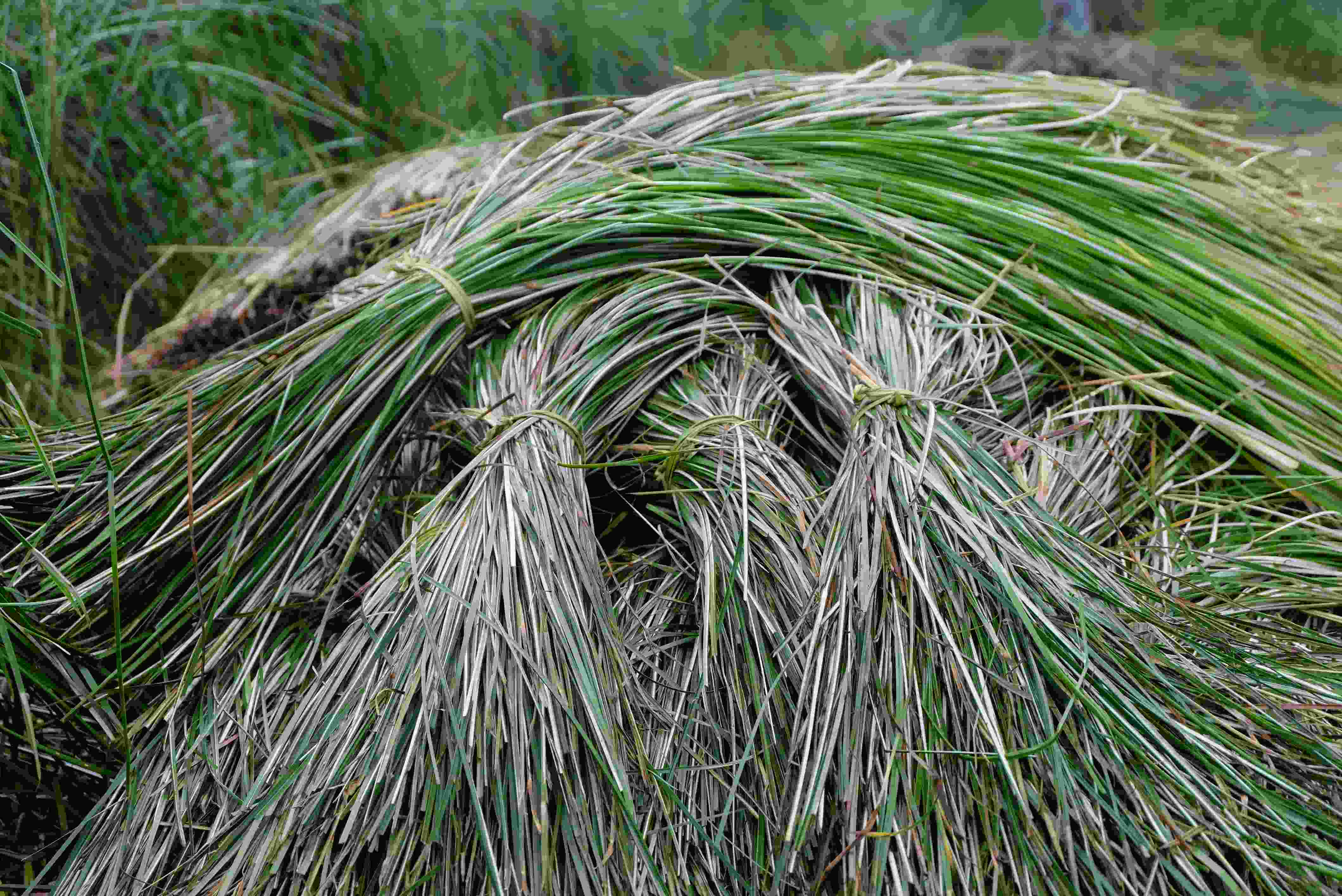
- The fiber sold internationally as seagrass is a sedge grown in coastal fields, not a marine plant. Vietnam grows it in brackish soil along the coast.
- Three districts are widely associated with the craft: Nga Son in Thanh Hoa, Kim Son in Ninh Binh and Hoi Village in Thai Binh.
- Colour comes from the fiber and the drying, never from dye in our range, so tonal variation between pieces is normal.
- Combining two fibers in one basket, such as seagrass with corn husk, is a Vietnamese design habit rather than a cost saving.
What are Vietnamese woven baskets made from?
Four fibers do almost all the work, and each one behaves differently under the hand. Seagrass is smooth and firm and holds a shape. Water hyacinth is softer and thicker, which is why it suits larger baskets and poufs. Corn husk is a waste fiber recovered from corn farming and comes out a pale milky cream. Palm leaf is split and braided by hand and gives the cleanest, flattest white edge of the four.

None of these takes synthetic dye in our range. What you see is the natural tone of the plant after drying, which is why a pale basket and a darker basket of the same design can sit in the same carton. Buyers who have only worked with dyed rattan sometimes read this as inconsistency. Our note on what woven baskets are made of goes through the fibers one by one if you want the longer version.
Why does so much of it come from Nga Son?
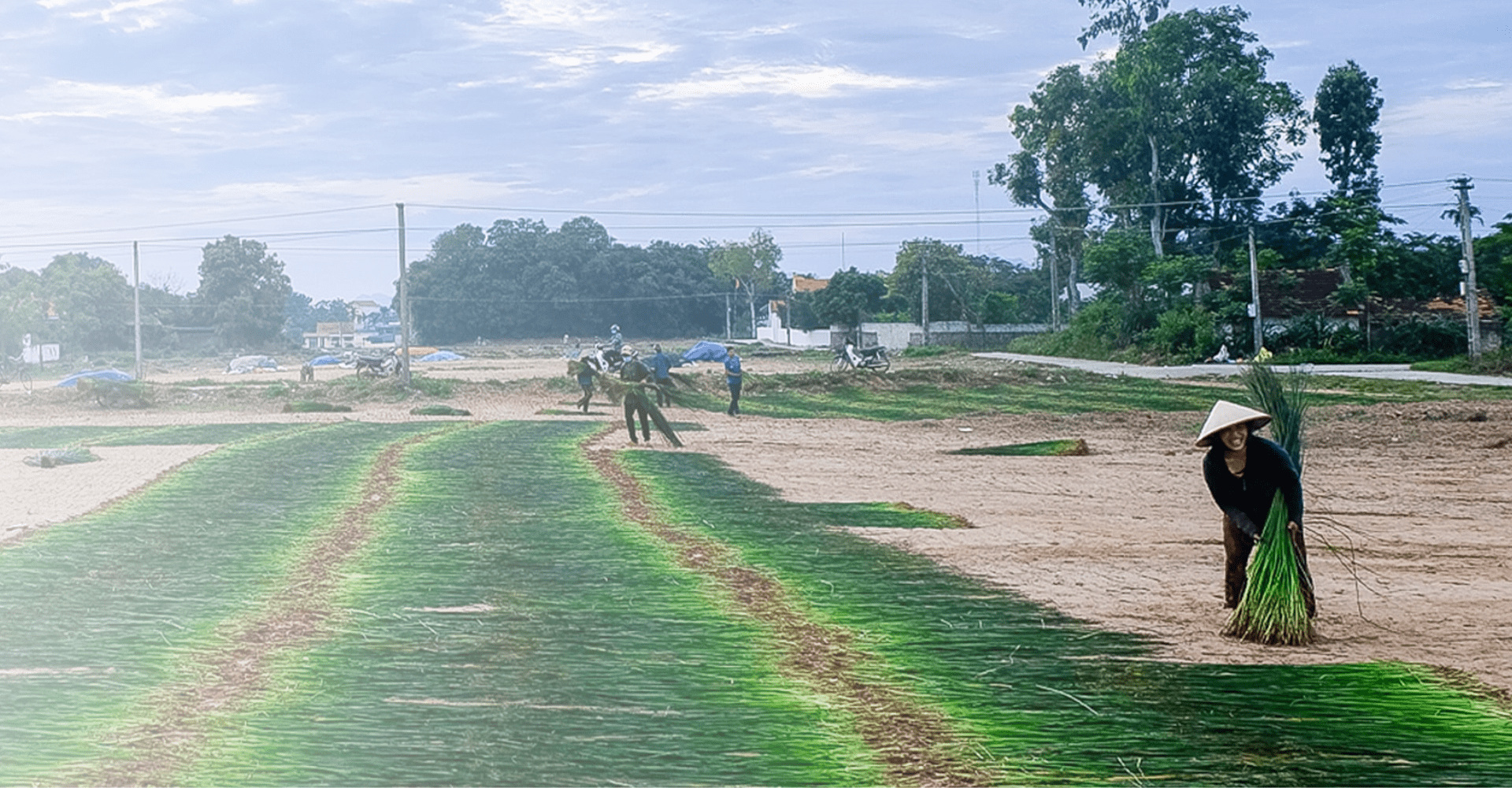
Nga Son is a coastal district in Thanh Hoa province, in the north central coast region of Vietnam. It covers roughly 151 square kilometres, is mostly flat plain, and has about 20 kilometres of coastline. Local accounts describe the sedge growing in a nutrient rich coastal environment where moderately salty soil produces fibers that are thin, long, soft and strong, with a natural golden tone.

The craft there is old. Local accounts place its origins around the seventeenth to eighteenth centuries and describe more than 150 years of continuous development, with Nga Son mats chosen as royal tribute during the feudal period alongside mats from Kim Son. Before 1991 the district exported mats to the Soviet Union and parts of Eastern Europe, and the locality has been working to register a collective trademark for Nga Son sedge. Eight coastal communes are known as the growing area.
This is the district our own company comes from. We started there as a household craft business in the 1970s and still buy fiber from farming households in the same area. If you want to see what the village looks like rather than read about it, our piece inside the Nga Son seagrass village is a walk through it.
How is the fiber harvested and prepared?
Published accounts of the craft differ on timing, which is worth knowing if you are planning a calendar. One account of sedge crafting describes a single harvest in September, with the dried material stored high and drawn down over the following months. A Nga Son account describes two harvests a year, around the fourth and tenth months of the lunar calendar. Both describe the same preparation: the stems are cut, split lengthways, dried in the sun for several days, then sorted before anything is woven.
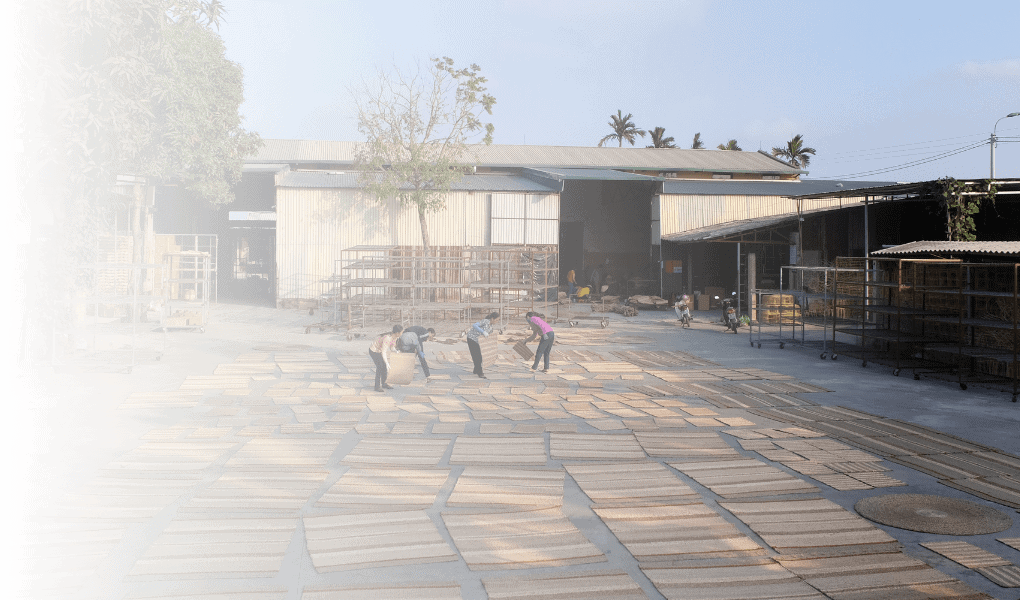
The practical consequence for a buyer is that fiber availability is seasonal even though production is not. A factory holds dried material and works through it, so the question to ask is not when the harvest is but how much dried fiber a supplier holds and how they store it. Fiber packed or woven before it is fully dry is the single most common cause of musty baskets arriving in a container.
How are the baskets actually woven?
Most of this work is done by hand, in pairs or small groups, and it is slow. In traditional mat weaving two people work together on a loom, one guiding the sedge through and the other pressing the edge to hold the sides and form the pattern. Baskets are built up by hand around a shape rather than on a loom, but the same logic applies: one person controls tension while the weave grows.

Tension is what separates a basket that holds its shape from one that sags on a shelf after a month. It cannot be inspected from a photograph, which is why samples matter more in this category than in most. Our walkthrough of the process, from fiber to finished basket, shows each stage.
We work with 30 full time staff and between 500 and 600 seasonal weavers, and we are audited under SMETA and amfori BSCI. Asking a supplier how its weavers are engaged, and whether the factory has been audited, tells you a great deal about whether capacity claims are real.
What does combining two fibers in one basket do?
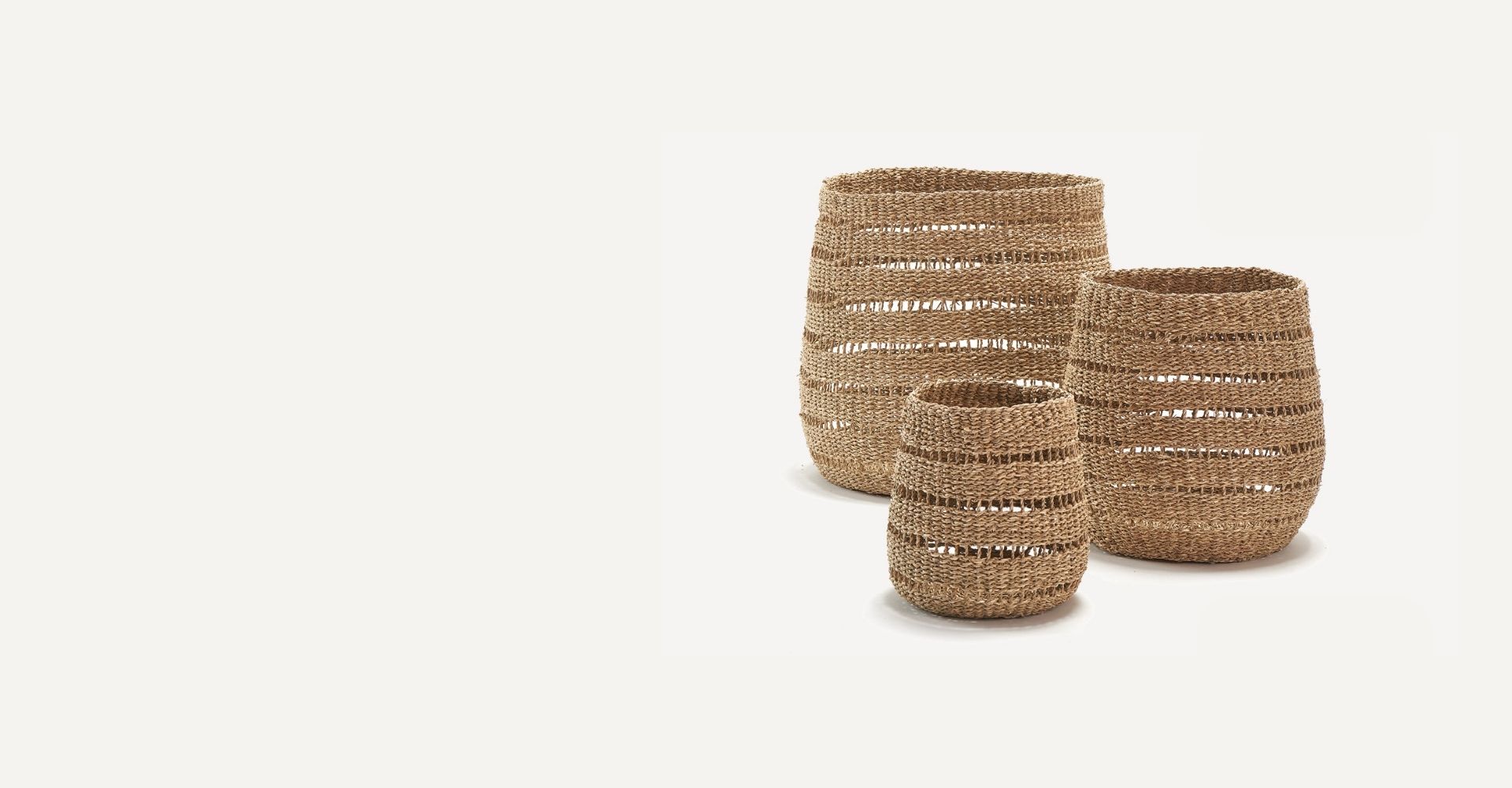
Mixing fibers is one of the more distinctive habits in Vietnamese weaving and it is a design decision rather than an economy. Pale corn husk against darker seagrass gives a stripe or a band with real contrast, without a drop of dye. Palm leaf against seagrass gives a white patterned detail on a straw coloured body. Water hyacinth brings depth where a piece needs weight.

The commercial argument for it is simple. A shelf of single fiber baskets reads flat. One or two mixed fiber pieces in the same tonal family give a display a focal point while still matching everything around it. Across our own range of more than 250 basket designs, the mixed fiber pieces are consistently the ones buyers photograph first.
What should a buyer ask a Vietnamese basket supplier?
Where does your fiber come from? A supplier that buys through several layers of agents will struggle to answer this, and will struggle more when you ask about consistency between orders.
Is anything dyed? If the answer is yes, ask what with. If the answer is no, expect and accept natural tonal variation.
How is the fiber dried and stored? Covered drying, drying machines and dry warehousing are what stop mould in transit. We run four warehouses with drying machines at our 9,000 sqm factory for exactly this reason.
Which fibers can you actually weave? Many factories handle one. If your assortment needs a pale basket and a dark one that still look related, a single supplier working across fibers is simpler than two.
Can you combine fibers in one piece? This is harder than it sounds, because the two materials behave differently under tension. A piece like our rectangular seagrass basket is a straightforward single fiber build, while a two fiber band needs the weave planned from the start.
Water hyacinth sits slightly apart from the other three because it is gathered from rivers and lakes rather than farmed. Our article on what water hyacinth material actually is covers where it comes from and how it behaves.
Baskets in each of the four fibers
One basket from our range in each of the four fibers described above, including a mixed fiber piece that combines seagrass with corn husk.


Frequently asked questions
Is seagrass the same thing as the seagrass that grows in the sea?
No. The fiber the homeware trade calls seagrass is a sedge grown in brackish coastal fields and harvested like a crop. It is not the marine plant of the same common name.
Which Vietnamese regions are known for woven baskets?
Nga Son in Thanh Hoa, Kim Son in Ninh Binh and Hoi Village in Thai Binh are the three areas most often named in accounts of the craft. Nga Son is where our own factory is.
Are Vietnamese woven baskets dyed?
Ours are not. The colour you see is the natural tone of the fiber after drying, which is why pieces vary slightly. Some suppliers do dye, so it is worth asking directly.
Can two fibers really be woven into one basket?
Yes, and it is a Vietnamese speciality. The usual combinations are seagrass with corn husk for contrast stripes, or seagrass with palm leaf for white patterned detail.
Can you weave our own design rather than a catalogue item?
Yes. We develop bespoke designs from sketches, references or mood boards, produce a sample for approval, and only then move to production.
See the fibers for yourself
We can send samples in each fiber so you can compare colour and hand feel before you commit to a design. Tell us which formats you are considering and we will put a sample set together, or walk you through the factory on a video call.

To receive lots of incentives with dedicated and professional service...
Or view more handwoven product in our
lookbook collection
CONTACT NOW
+84 915 709 666
(WhatsApp available)