What Is Water Hyacinth? A Material Guide for Homeware Buyers
19 Oct 2026Water hyacinth is a floating freshwater plant whose dried stems are braided or twisted into a weaving fiber. As a homeware material it is warm brown, a little chunky in the weave, soft enough for rugs and poufs and strong enough for baskets, lanterns and pet beds. The plant is cut from rivers, lakes and canals, dried in the sun and then woven by hand. For a buyer, the water hyacinth material question is really three questions: where the fiber comes from, how it behaves once it reaches your market, and what belongs in your specification.
Key takeaways
- Water hyacinth is one of the fastest growing plants known. Mats can double in size in one to two weeks, and dense mats block boats and reduce fishing, so cutting the plant is usually welcome on the water.
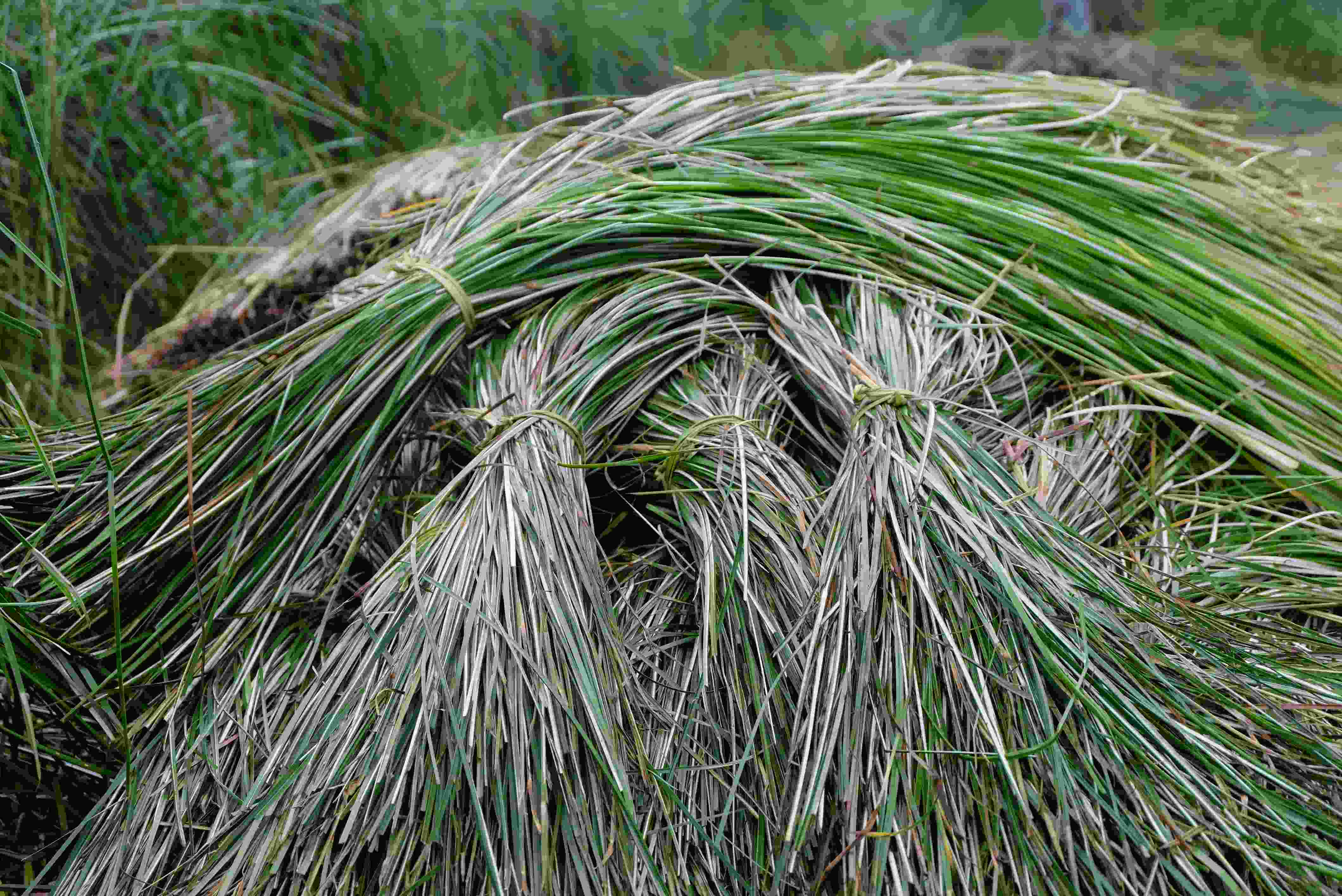
- The stems become the weaving material, not the leaves or the roots. They are trimmed, sorted by length, dried, then braided or twisted into a cord the weaver can work with.
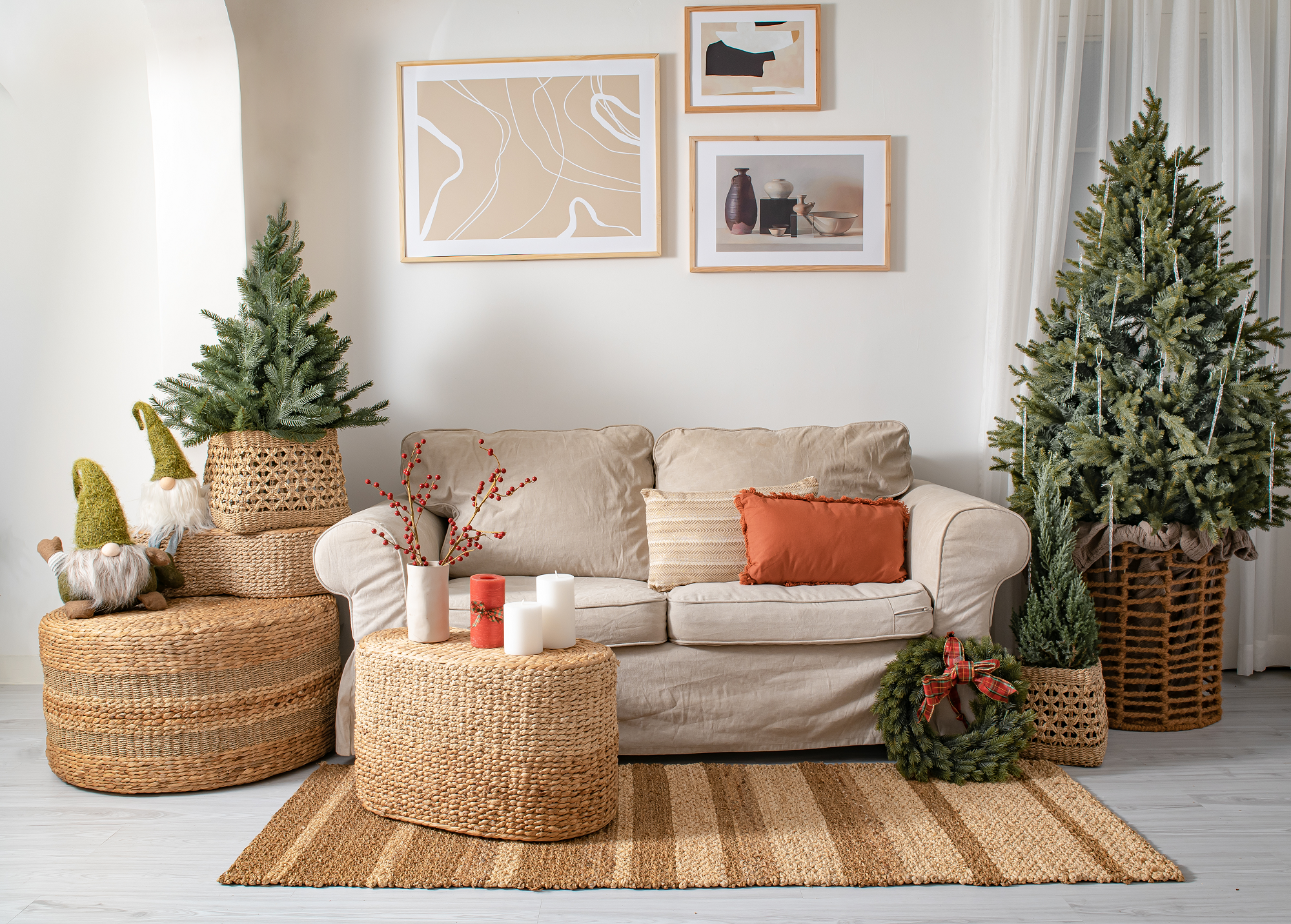
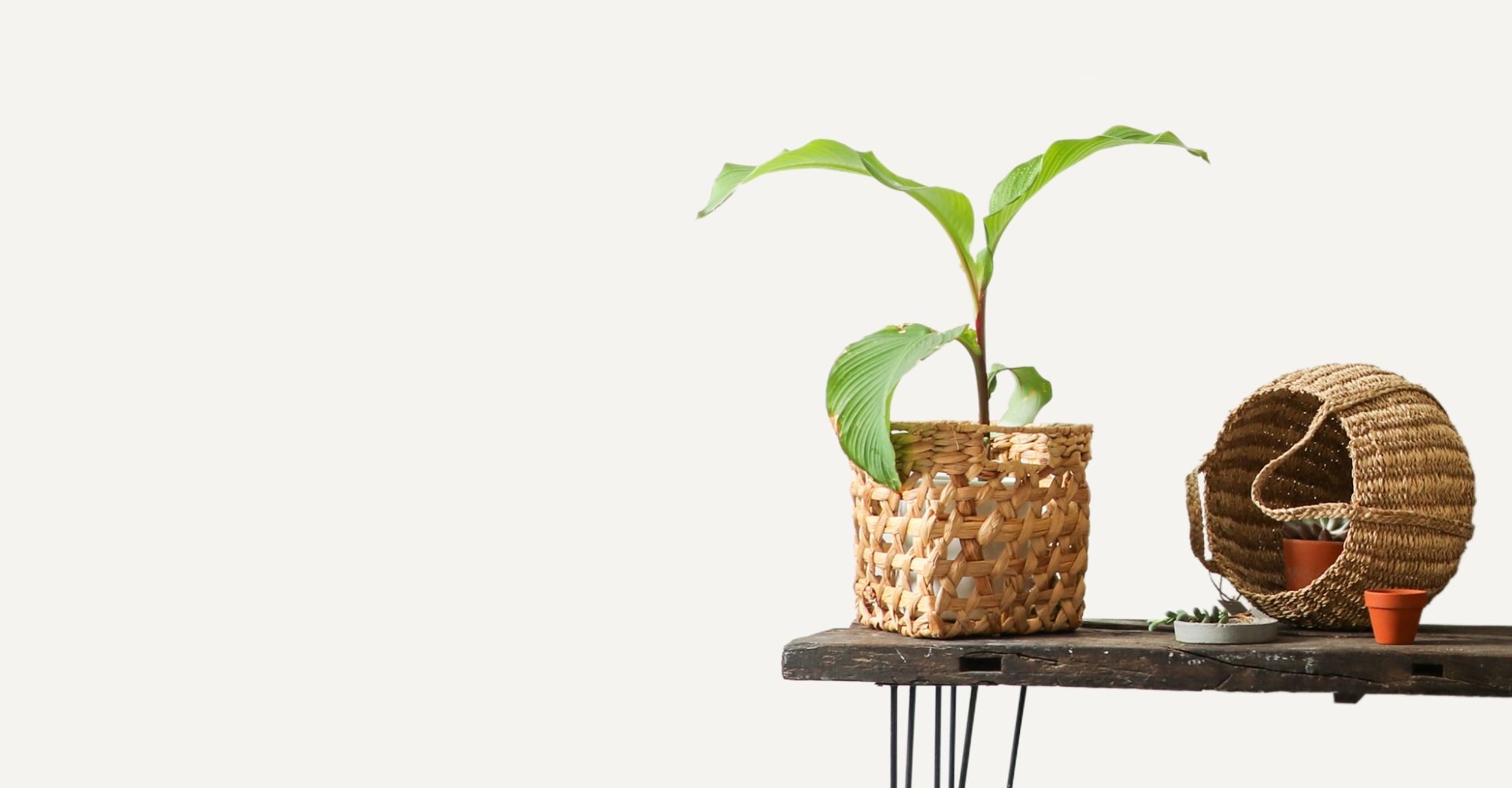
- Finished water hyacinth is warm brown, soft to the touch and slightly chunky in the weave. That is why it suits rugs, poufs, storage baskets and pet beds.
- It is an indoor material. Keep it dry and ventilated, out of constant direct sun, and put that on the care label you give your own customers.
What is water hyacinth?
Water hyacinth, Pontederia crassipes, is native to tropical and subtropical South America and is now naturalised across North America, Europe, Asia, Africa and Australia. It floats on buoyant, bulb like nodules at the base of its stems, carries broad glossy leaves 10 to 20 cm across, and can rise up to a metre above the water.
It is also one of the fastest growing plants on record. Mats can double in size in one to two weeks. Where they take hold, they block boating, shipping and transport, reduce fishing, shade out the plants below them, and strip oxygen from the water as the old growth decays, which can kill fish.
That is the part buyers rarely hear, and it matters. Harvesting water hyacinth is not taking something scarce out of a forest. It is clearing a plant that communities are often trying to control anyway. IKEA says the same thing about its own water hyacinth place mat, which is woven in Vietnam from plants growing in the Mekong River: harvesting keeps the waterway passable for the people living along the banks.
How does water hyacinth become weaving material?
Five stages sit between a plant on the water and a finished piece in a container. None of them is mechanised in the way a buyer might expect.

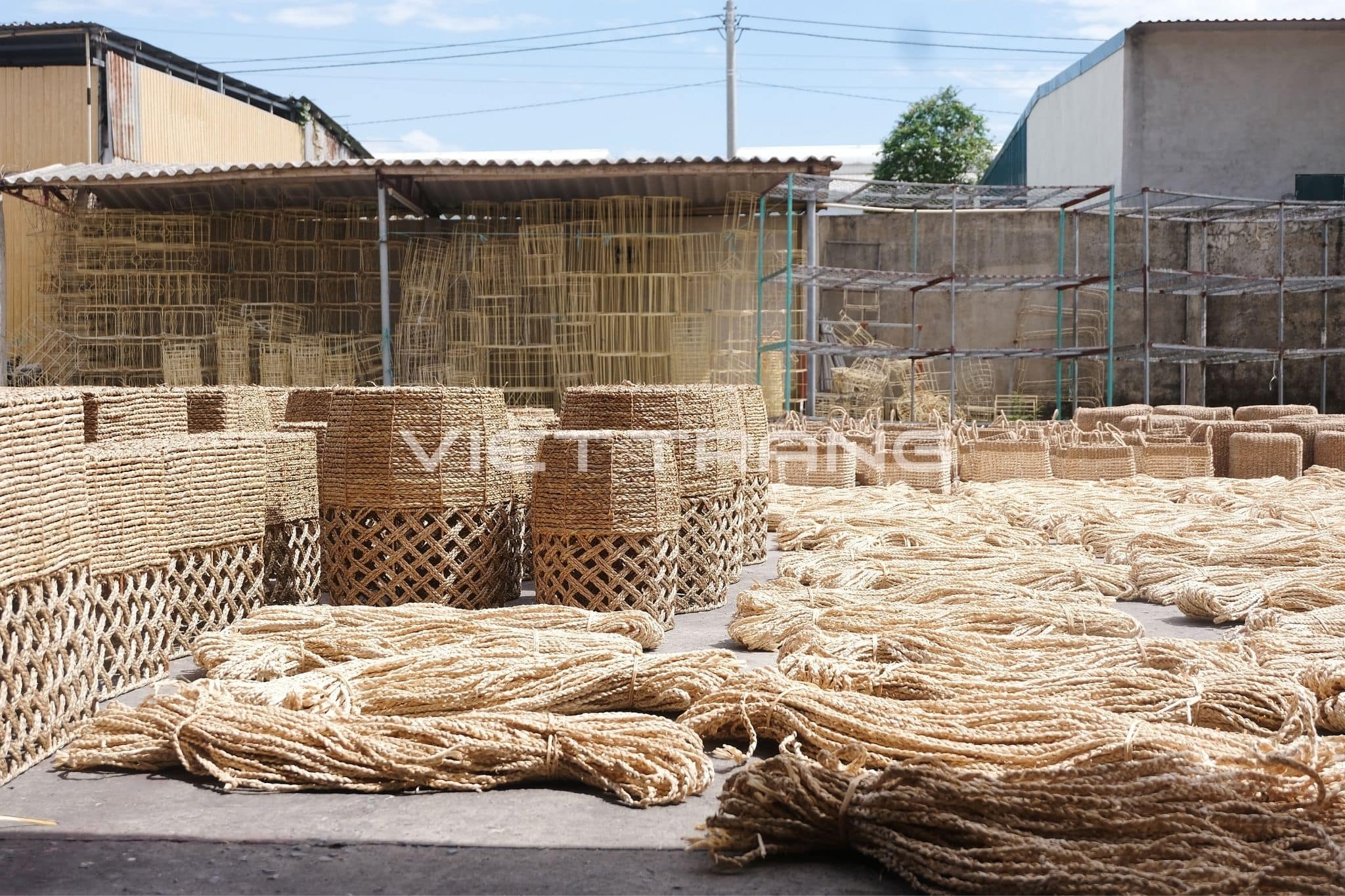
The leaves and roots are trimmed away first, and the long stem plants are sorted out, because stem length decides what can be woven from a batch. The stems are then dried until the moisture is gone and the colour settles into the warm brown buyers recognise. Drying is the stage that decides quality, and it is the stage the weather controls, which is why our four warehouses in Nga Son have drying machines for the wet months.
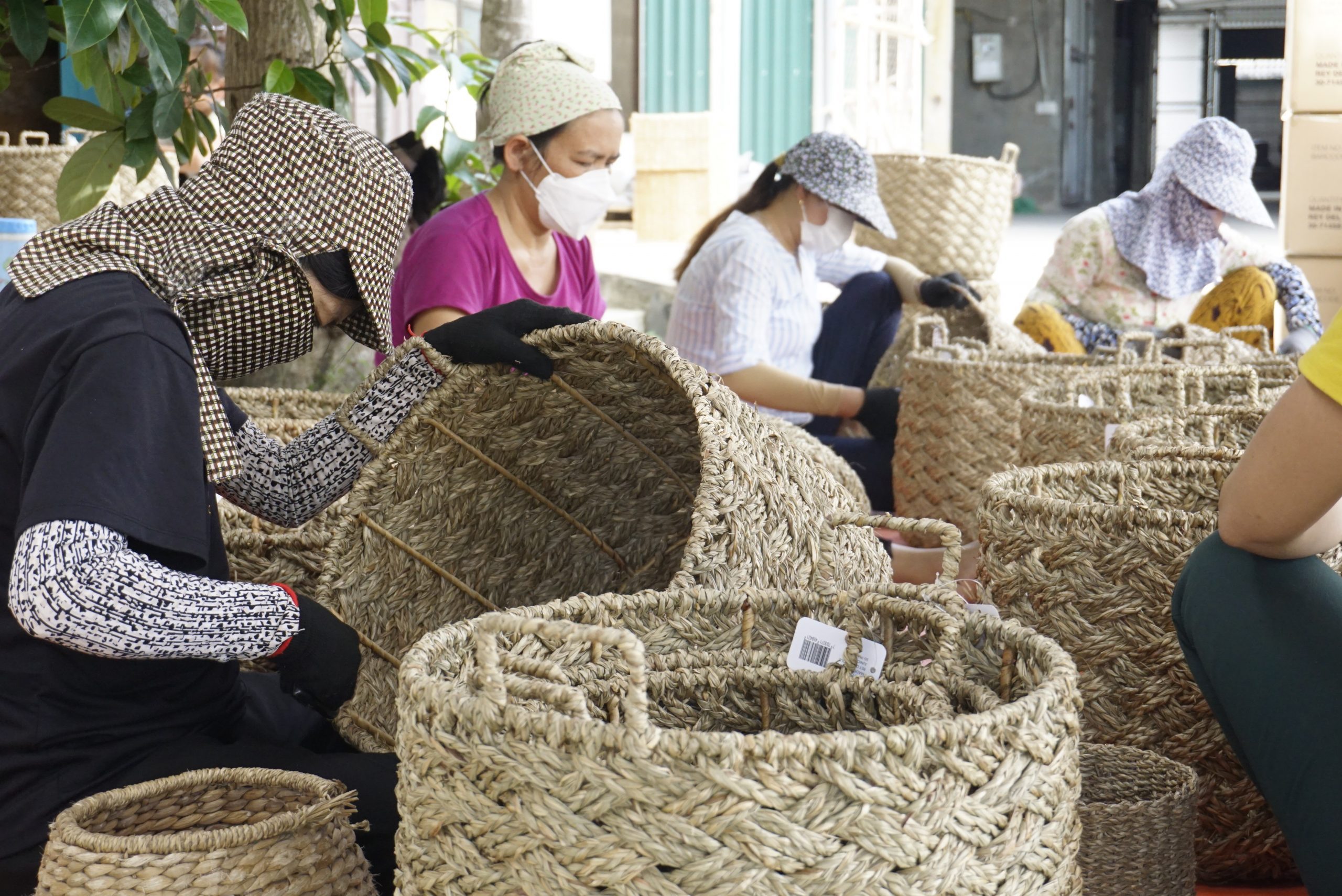
Dried stems are braided or twisted into an even cord so the weaver has something consistent to work with. After weaving, each piece is shaped, cleaned and dried again before it is packed. If you have never watched this happen, our post on what woven baskets are made of walks through the four fibers we use side by side.
What does water hyacinth look and feel like?

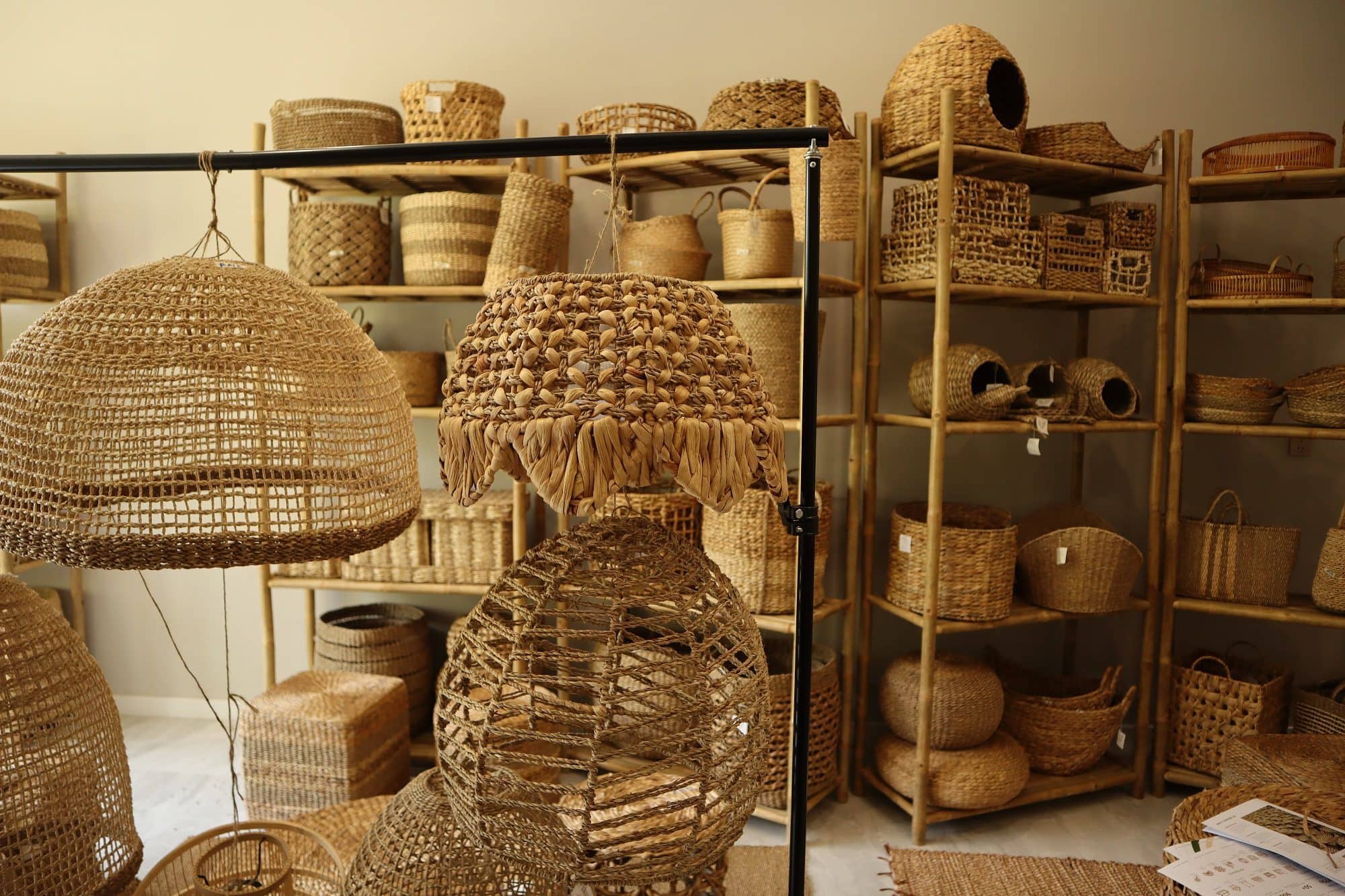
Water hyacinth is warm brown with a soft surface and a visibly chunkier strand than seagrass. It takes a relaxed, slightly rustic weave rather than a fine, tight one, which is part of why it suits large open shapes such as the hampers in our guide to water hyacinth laundry basket designs. We use natural hues only and no synthetic dye, so the tone you see is the tone the plant and the drying produced. Handwoven pieces carry small differences in size, shape and colour from one unit to the next, and that is worth saying plainly on your own product pages rather than leaving your customers to discover it.
Against our other fibers, the short version is this. Seagrass is finer, silkier and takes a tighter weave. Corn husk is pale and milky, which is why we mix it with darker fibers for contrast. Palm leaf is split and braided for white patterning and smooth edges. If you are choosing between the two most common fibers, our guide to the differences between water hyacinth and seagrass goes through them properly.
Where does water hyacinth work, and where does it not?
| Product type | Why water hyacinth suits it | What to watch |
|---|---|---|
| Storage baskets and hampers | Strong strand, holds its shape, forgiving of daily handling | Specify rim binding and handle joins on larger sizes |
| Rugs and poufs | Soft enough underfoot and comfortable to sit on | Keep away from damp rooms and constant direct sun |
| Pet beds and pet houses | Sturdy texture that takes a cushion insert well | Agree how the piece will be cleaned before you list it |
| Lanterns and decorative lighting | Warm tone and open patterning read well when lit | Shades that need light through the weave are usually seagrass or palm leaf |
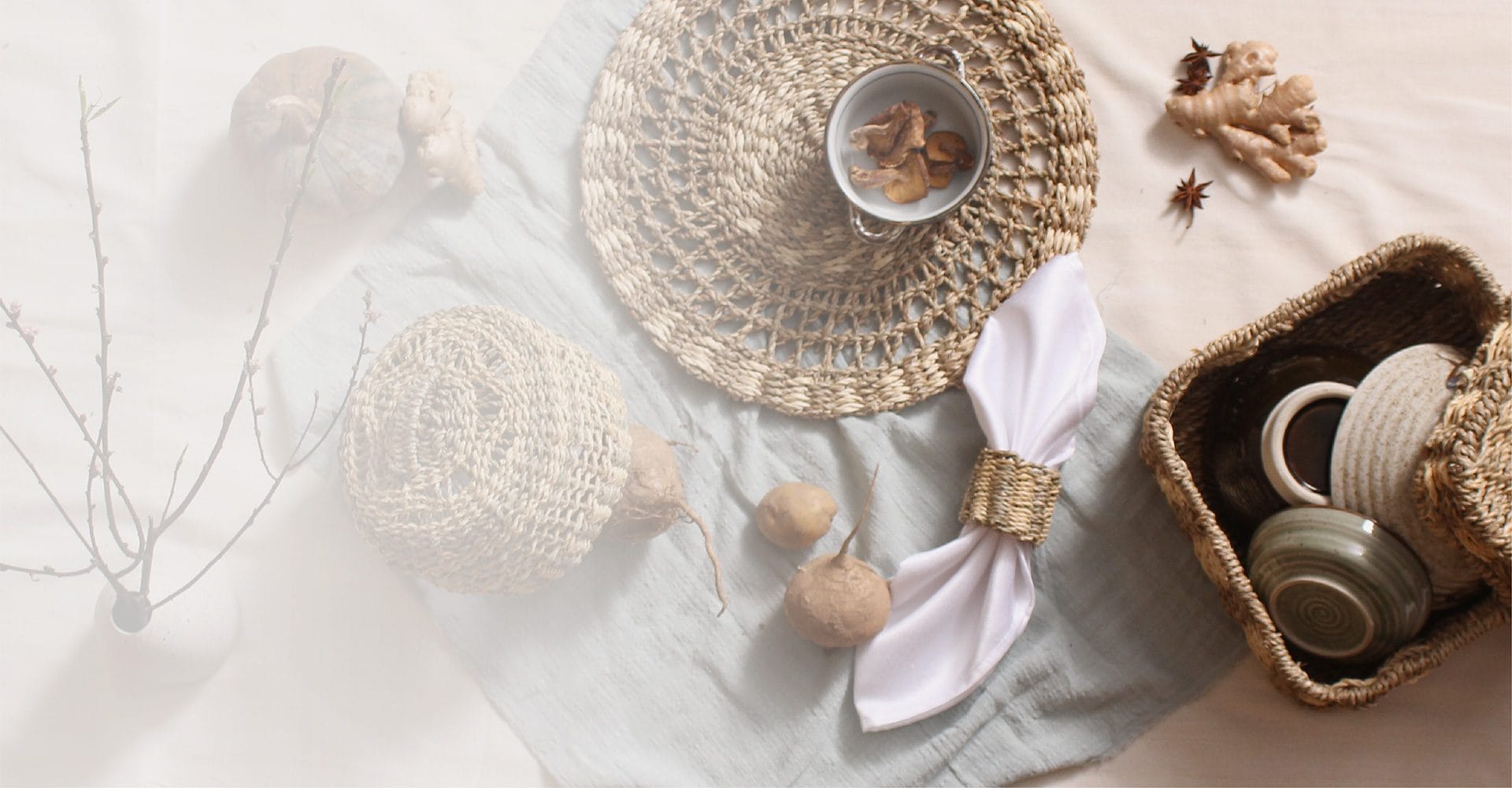
| Placemats and table pieces | Warm brown contrasts with ceramics and linen | A woven mat is a place setting, not a heat pad |
The honest limit is moisture. Water hyacinth is a plant fiber, and like every plant fiber it will grow mold if it is packed damp or stored in a humid container for weeks. That is a process question, not a material fault, and we wrote about it in detail in our guide to preventing and treating mold on natural fiber baskets.
What should you ask a supplier about water hyacinth?

Six questions separate a maker from a trader. Where is the plant cut, and is the harvest part of keeping that waterway clear? How long are the stems dried, and is there a drying machine for the wet season? What is the moisture control before packing? Is the strand braided or twisted, since that changes the look of the weave? Is any dye used at all? And can the supplier show you a current social audit, rather than a certificate with no date on it?
We are SMETA and amfori BSCI audited and we weave in our own 9,000 sqm factory in Nga Son, Thanh Hoa, with 500 to 600 seasonal weavers. We mention that here because those six questions are easy to answer when the answers are yours to give. Care guidance for your own customers is covered in our post on cleaning and caring for seagrass and water hyacinth homeware.
One more practical note. Water hyacinth demand has grown faster than Vietnamese supply in some years. IKEA says exactly that about its own programme, and it is the reason we ask buyers planning large water hyacinth orders to talk to us early in the season rather than close to their ship date. A design such as our antique water hyacinth basket with handles and a lid is quick to quote, but raw material planning is not instant.
Water hyacinth pieces from across our range
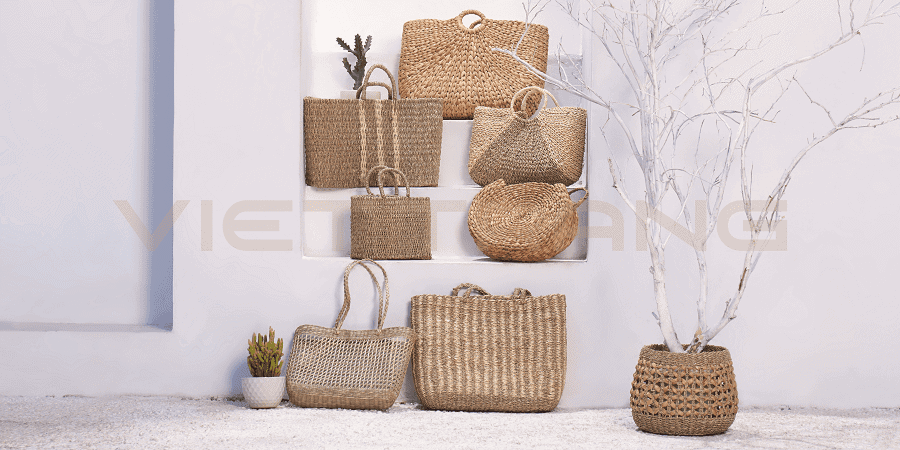
This post is about a material rather than one product type, so the selection below is drawn from across our range: a storage basket, a lantern, a placemat and a pet bed. Every piece shown is woven from water hyacinth.


Frequently asked questions
What is water hyacinth material made from?
From the stems of the water hyacinth plant. The leaves and roots are trimmed away, the longest stems are sorted out and dried, and the dried stems are braided or twisted into a cord that is then woven by hand.
Is water hyacinth durable?
Yes, for indoor use. The strand is strong and holds its shape well in baskets, poufs and furniture. Its lifespan depends far more on how dry it is kept than on how often it is used.
Can water hyacinth get wet?
It can take a wipe with a barely damp cloth, but it should never be soaked and it should not live in a bathroom, a laundry or anywhere with constant damp. Dry it fully before stacking or storing.
Is water hyacinth a sustainable material?
The plant is fast growing, it is often invasive where it is harvested, and cutting it helps keep waterways open. We use natural hues only and no synthetic dye. We would still encourage you to describe those specifics on your packaging rather than using a general word such as eco friendly, which is now restricted in EU marketing.
Can you make a design in water hyacinth instead of seagrass?
Usually yes. Most of our designs can be produced in a different fiber or a mix of fibers, and mixing fibers in one piece is something we do a great deal of. Send us the design and the sizes you need and we will tell you what the change does to the look and the lead time.
Talk to the people who weave it
Tell us the product, the sizes and the market you are selling into, and we will come back with a quotation and a sample plan. Water hyacinth, seagrass, corn husk, palm leaf or a mix of them.

To receive lots of incentives with dedicated and professional service...
Or view more handwoven product in our
lookbook collection
CONTACT NOW
+84 915 709 666
(WhatsApp available)