Woven Poufs, Ottomans and Stools: What Retail Buyers Should Know
23 Oct 2026A woven pouf is a soft handwoven seat light enough to move with one hand. An ottoman is the more structured version, usually cube or square, that reads as a piece of furniture rather than a cushion. A footstool sits lower and exists to rest your feet on. All three are woven from the same natural fibers, so the choice between them is about structure, height and how the piece will actually be used, not about material.
Key takeaways
- Pouf, ottoman and footstool differ in structure and height. Ask for all three dimensions and a photograph of someone sitting on the sample.
- Woven seats are often made from more than one fiber in the same piece. Our cube pouf, for example, is woven from palm leaf, seagrass and water hyacinth together.
- This category ships bulky. Confirm the packed volume per piece early, because freight rather than unit price usually decides the landed cost.
- Check the top weave, the structure under it and the base on a physical sample. A seat fails at the top first.
What is the difference between a pouf, an ottoman and a footstool?

In practice the names overlap, and different markets use them differently, which is why it is worth agreeing the format in writing. A round pouf is the softest of the four and the easiest to move, so it tends to sell as occasional seating and as a footrest. A cube ottoman is squarer and firmer and sits in a room as furniture. A footstool is lower again. An ottoman table is the one that carries a tray and does double duty as a surface.
We make all four, and the same design can usually be produced in more than one height. If you already have a size in your range you want matched, send it to us rather than describing it.
Which fiber suits a woven seat?
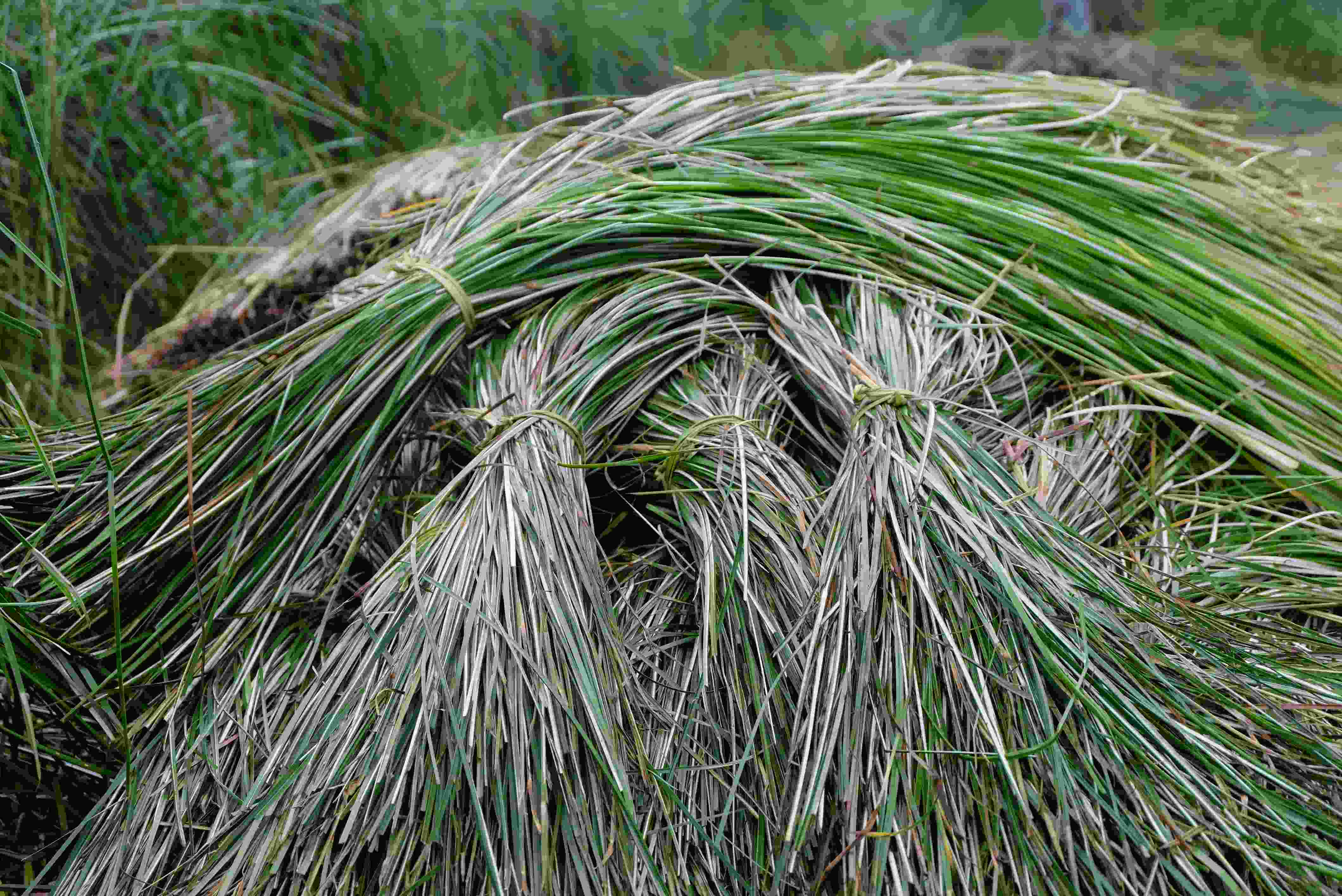
Seagrass takes a tighter, finer weave and is the most common choice for a structured ottoman. Water hyacinth is chunkier and softer and suits a relaxed round pouf. Corn husk is pale and milky, and is usually used alongside a darker fiber rather than on its own. Palm leaf brings white patterning and smooth edges.
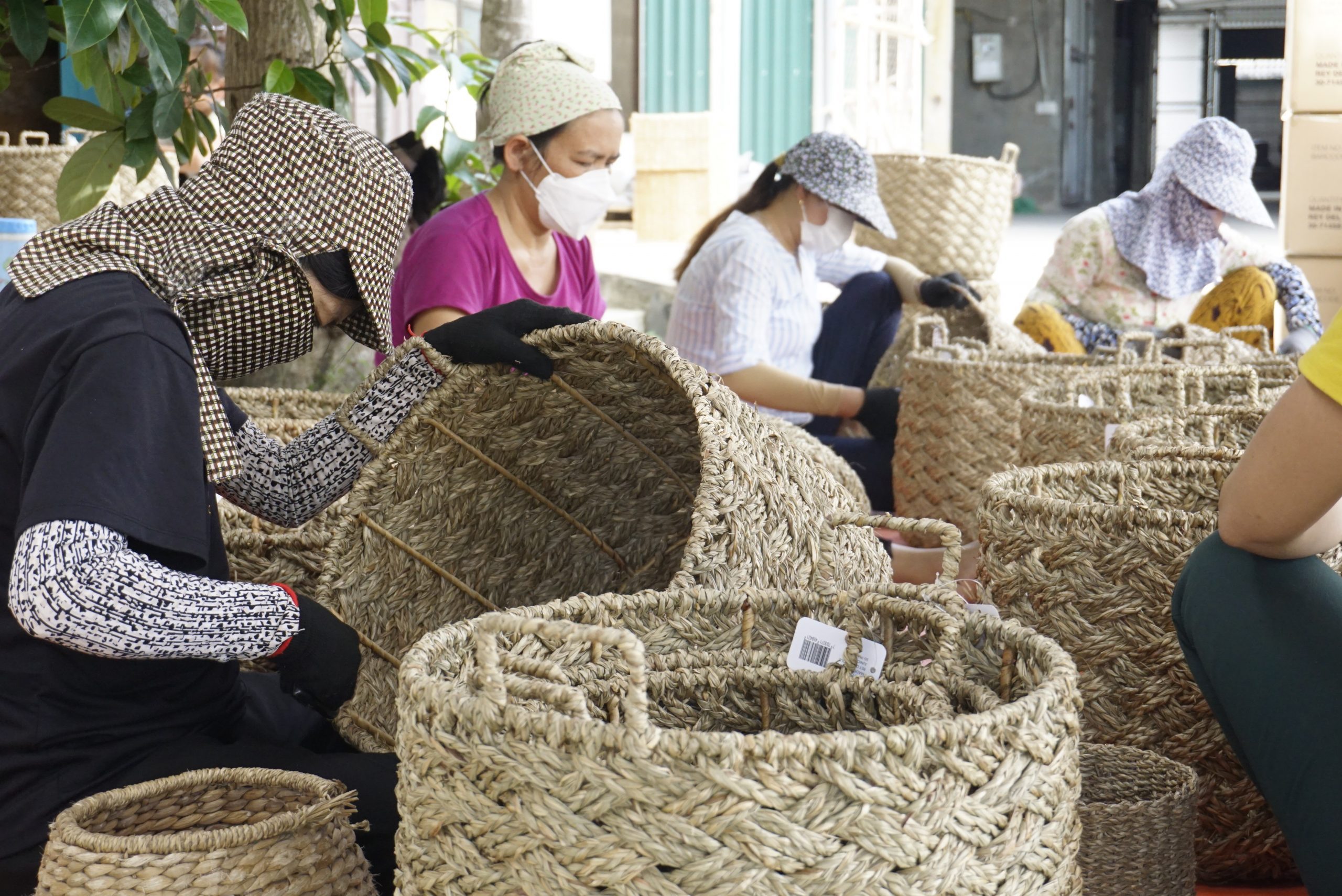
What surprises buyers most is how often a single piece uses several of them. Our seagrass ottoman cube pouf is listed as palm leaf, seagrass and water hyacinth together, and that mixing is a deliberate part of how we design. It also means that if you want a material statement on your own packaging, you should ask us which fibers a specific design uses rather than relying on the product name alone.
What goes inside, and does it ship filled?
A woven seat is only as good as what is under the weave, and this is the detail most specifications leave out. Settle three things at quotation stage. Is the piece supplied filled or as an unfilled cover. If filled, with what. And what does that do to the packed volume per piece.
We ask buyers to raise this early rather than at the sample stage, because it changes the price, the freight and sometimes the customs classification. An unfilled cover shipped flat and filled locally is a genuinely different product from a finished pouf, and both are legitimate ways to buy this category.
Why woven seats are selling

Two things are helping this category at once. The first is texture. Houzz reported in May 2026 that chunkier weaves in rattan and seagrass dominated the furniture market, with wicker furnishings appearing widely and heavier natural materials replacing the lighter caning of recent years. A handwoven pouf is about as chunky and natural as upholstery gets.
The second is flexibility. Homes and Gardens reported in March 2026 that designers are using more than one ottoman in the same room, layering ottomans and side tables to keep a living room adaptable. That is a sales argument retailers can use directly: two poufs instead of one armchair, moved where they are needed, stored under a console when they are not.
It also sits comfortably beside the rest of a natural fiber range. If you already stock seagrass rugs and runners, a pouf in the same fiber finishes the floor without adding a new supplier.
What to check on a sample

Sit on it. That sounds obvious and it is the step most often skipped on a showroom visit. Then look at four things. The top weave, which takes all the wear and should be tight and even with no loose strand ends. The shape under load, which should return rather than stay dented. The base, which should sit flat and not splay. And the rim or seam where the top meets the body, which is where a weak piece gives way first.
Natural fiber seating is sturdy but it is not outdoor furniture, and it does not like damp. The same guidance we give for baskets applies here, and our post on how durable seagrass and water hyacinth really are sets realistic expectations you can pass to your own customers. If you are putting a wider range together, our guide to building a natural homeware assortment covers how seating, rugs and baskets support each other on a shop floor, and our older piece on the woven round pouf looks at the shape itself.
Shipping and volume
Poufs and ottomans are light and bulky, which is the opposite of what a container likes. A filled pouf cannot nest, so the volume you pay to ship is the volume of the finished piece. Two things help. Nesting sets where the design allows it, and shipping unfilled covers where your market can fill them locally. Our factory capacity runs to twenty containers a month, so the constraint on this category is almost never production. It is the cubic metres.
Woven poufs, ottomans and stools from our range
Four seating formats from our Small Furniture line: a round pouf, a cube, a stool and a mini ottoman. Materials are given as each product states them, and the cube is listed in several fibers rather than one.


Frequently asked questions
What is the difference between a pouf and an ottoman?
A pouf is softer and lighter and is usually round. An ottoman is more structured, often cube or square, and behaves like furniture. Both can be sat on, and both are woven from the same natural fibers.
Are woven poufs strong enough to sit on?
Yes. The top weave and the structure under it carry the load, which is why those are the two things to check on a sample. Sit on the sample yourself before you place an order.
Do woven poufs come filled?
That is a specification decision. We can supply filled pieces or unfilled covers for local filling. Tell us which you want at quotation stage, because it changes the price and the shipping volume significantly.
Which fiber is best for a pouf?
Seagrass for a tighter, more structured look. Water hyacinth for a softer, chunkier one. Many of our designs use more than one fiber in the same piece, so ask us which fibers a specific design uses.
Can you make a custom size or shape?
Yes. Custom sizing is available across most of our categories and we run a bespoke design service that works from your references, sketches or mood boards and produces a sample before production.
Ask for a pouf sample
Tell us the format, the height and the fiber you want, and whether you need pieces filled or shipped as covers. We will quote it and send a sample before you commit.

To receive lots of incentives with dedicated and professional service...
Or view more handwoven product in our
lookbook collection
CONTACT NOW
+84 915 709 666
(WhatsApp available)