The Woven Pendant Lighting Trend: Why Natural Lampshades Are Selling in 2026
31 Jul 2026Woven pendant lampshades are one of the standout home lighting trends heading into 2026. Made from natural fibers like seagrass and palm leaf, they cast a warm, textured glow as light filters through the weave, and they bring organic softness to spaces dominated by hard surfaces. Demand is rising because buyers want natural materials, calm and tactile interiors, and statement lighting that still feels grounded. For retailers, woven pendants are a low-commitment way to add a design-led lighting line that pairs naturally with baskets, planters and rugs.
Key takeaways
- Woven and fabric shades are a confirmed 2026 lighting trend, named by interiors media including House Digest and Houzz.
- The appeal is the glow: light filtering through an open weave feels warm, diffuses softly and reduces glare.
- Seagrass and palm leaf are the go-to fibers because they diffuse light beautifully while holding their shape.
- Lampshades extend a natural homeware range into lighting using standard fittings.
Why woven lighting is having a moment
Lighting has become one of the most expressive parts of a room, and buyers are moving away from cold, hard fixtures toward pieces that feel warm and made by hand. Woven pendant shades sit right in that shift. Interiors media has been calling out natural and fabric shades as a major lighting story for 2026, tied to the broader move toward organic modern and Japandi interiors that feel calm and grounded. The demand shows up in real search behavior too: our own lampshade pages draw steady interest, and buyers search directly for “water hyacinth lantern,” “grass lamp shades” and “natural lantern.”
The reason is simple once you see one lit. A woven shade does not just block or direct light, it transforms it. The glow comes through the weave in a soft, dappled pattern that a solid shade cannot produce, softening strong lines in the room and easing glare from brighter bulbs.
The looks driving demand
A few shapes are doing most of the work in this trend.
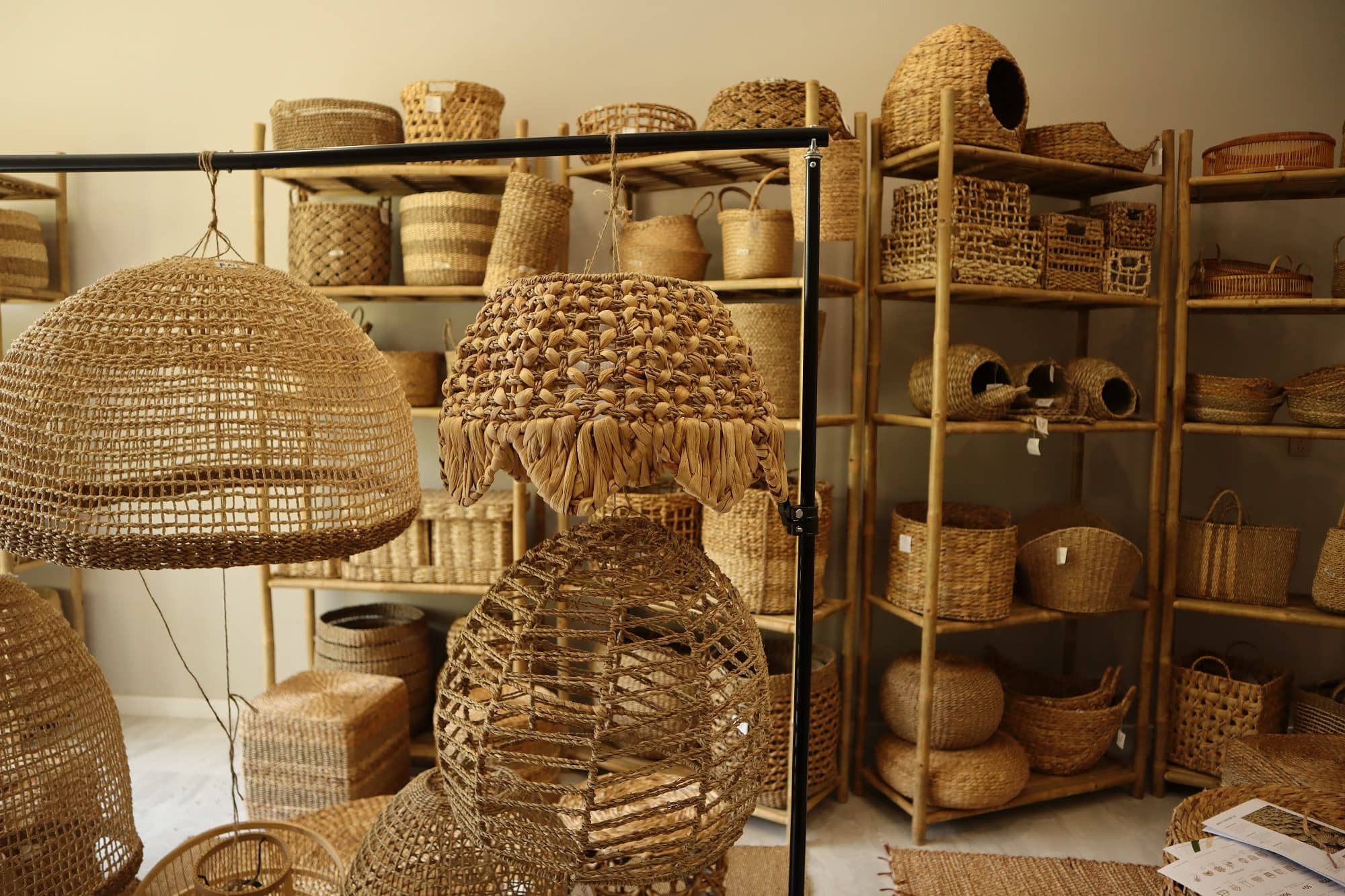
Bell-shaped pendants give a classic, gently tapered silhouette that suits kitchens, dining areas and hallways. Dome pendants read a little more architectural and modern. Wide, flat shades make a relaxed, oversized statement over an island or table. And open-weave structured shades lean into texture, letting the most light escape through the pattern.
Across all of them, the common thread is warmth. These are statement pieces that still feel calm, which is exactly what buyers are asking for in 2026.

Why seagrass and palm leaf work so well
Not every material makes a good shade. The fibers that shine here are the ones that diffuse light rather than swallow it. Seagrass and palm leaf are the primary choices for woven lighting because their strands are fine and even enough to weave into an open structure that light passes through cleanly. Palm leaf, split and braided using traditional techniques, gives a smooth, light surface, while seagrass adds a warmer tone. Both hold a shade’s shape well and keep their finish over time.

Because the material is natural and we use natural hues with no synthetic dyes, every shade has slight variation in tone and texture. For this category that is a selling point, not a flaw. It is what makes each piece feel handmade.
How woven pendants fit a retail range
One reason this trend is easy to buy into is that it does not demand a big commitment. Woven pendant shades are designed to work with standard pendant fittings, so they slot into a lighting assortment without special hardware. They photograph beautifully, which helps online. And they pair naturally with the rest of a natural homeware range, so a buyer already carrying baskets, planters or rugs can extend into lighting with a consistent look.
Interior designers and hospitality buyers are strong customers here too, often specifying woven pendants in clusters over counters, stairwells and dining spaces.

What buyers should check before sourcing
A good woven shade is judged on a few practical points. Look at the evenness of the weave, since gaps and irregular tension show once the light is on. Check how the shade is finished at the rim and where it meets the fitting. Confirm the fitting type matches your market’s standard. And ask about size options, because clusters and larger installations often need graduated diameters.
As with any handwoven product, the best way to judge is to see a lit sample in person. A shade can look one way flat on a table and completely different glowing from a ceiling.
The maker’s view
Lighting is where natural fiber quietly does something the material is uniquely good at: shaping light. That is why woven pendants have moved from a niche accent to a genuine 2026 trend, and why they are one of the more rewarding categories a natural homeware buyer can add. At Viet Trang, our lampshades are woven primarily in seagrass and palm leaf so the light comes through the way it should. If you are planning a lighting line for the season, ask us to show you the current range and send a sample you can hang and switch on.
Woven lampshades from our range
Pendant shades in seagrass, rattan and mixed fibers.


Frequently asked questions
Why are woven pendant lampshades trending in 2026?
Buyers want natural materials and calm, tactile interiors, and woven shades deliver a soft, textured glow as light filters through the weave. Interiors media including House Digest and Houzz has highlighted natural and fabric shades as a leading lighting trend for 2026.
What materials are best for woven lampshades?
Seagrass and palm leaf are the primary choices. Their fine, even fibers weave into an open structure that diffuses light cleanly while holding the shade’s shape.
Do woven pendant shades fit standard light fittings?
Yes. They are designed to work with standard pendant fittings, which makes them easy to add to an existing lighting assortment. Confirm the specific fitting type for your market when ordering.
Are woven lampshades suitable for commercial or hospitality use?
Yes. Interior designers and hospitality buyers often specify woven pendants in clusters over counters, dining areas and stairwells. Graduated sizes are available for larger installations.
How do I judge the quality of a woven shade?
Check the evenness of the weave, the finish at the rim and fitting, the fitting compatibility, and the size options. Reviewing a lit sample in person is the most reliable test.
Ready to source with Viet Trang?
Building a lighting range for the season? Ask us for the current woven lampshade line and a sample to hang.

To receive lots of incentives with dedicated and professional service...
Or view more handwoven product in our
lookbook collection
CONTACT NOW
+84 915 709 666
(WhatsApp available)