Corn Husk Leaf: The Natural Weaving Fiber Explained
18 Nov 2026Corn husk leaf is the papery outer leaf that wraps an ear of maize. After the harvest it is left behind, and in weaving regions it is collected, dried and twisted into a working strand. In woven homeware it reads as a pale, milky fiber with a soft matte surface, which is why it is used so often as the light band against darker seagrass and water hyacinth. It is a genuine by product: nothing is grown to make it.
Key takeaways
- Corn husk leaf is a waste utilisation fiber, left over from growing maize for food and feed.
- Its colour is its value. The pale, milky tone gives contrast in mixed fiber designs that a single fiber cannot.
- Published work describes corn husk fiber as pliable and durable, with moderate strength and high moisture retention.
- It is an indoor fiber. Keep it away from damp rooms and standing moisture, as with our other natural fibers.
What is corn husk leaf?
Maize grows an ear wrapped in layers of leaf. Those layers protect the kernels and are stripped away at harvest. The leaf is thin, flexible and, once dried, surprisingly tough along its length. It is one of the four natural fibers we weave with, alongside seagrass, water hyacinth and palm leaf, and it is the one buyers know least about.
The reason it earns its place in the range is colour. Seagrass runs from light straw to warm brown and water hyacinth is a deeper brown. Corn husk leaf sits lighter and cooler than either, close to cream. Combining fibers within a single piece is a Viet Trang design signature, and corn husk is usually the fiber doing the lightening. If you want the wider picture of what goes into a woven piece, our note on what woven baskets are made of sets the four fibers side by side.
Where does the husk come from?
Vietnam is a maize growing country, though not a large one by regional standards. FAO put the 2025 maize crop at about 4.3 million tonnes, roughly 5 per cent below average, after some farmers moved land to more profitable crops. The United States Department of Agriculture forecast the 2026 to 2027 crop at about 4 million tonnes on around 800,000 hectares, and notes that a maize cycle runs 90 to 100 days, which allows three to four cycles a year in good conditions.
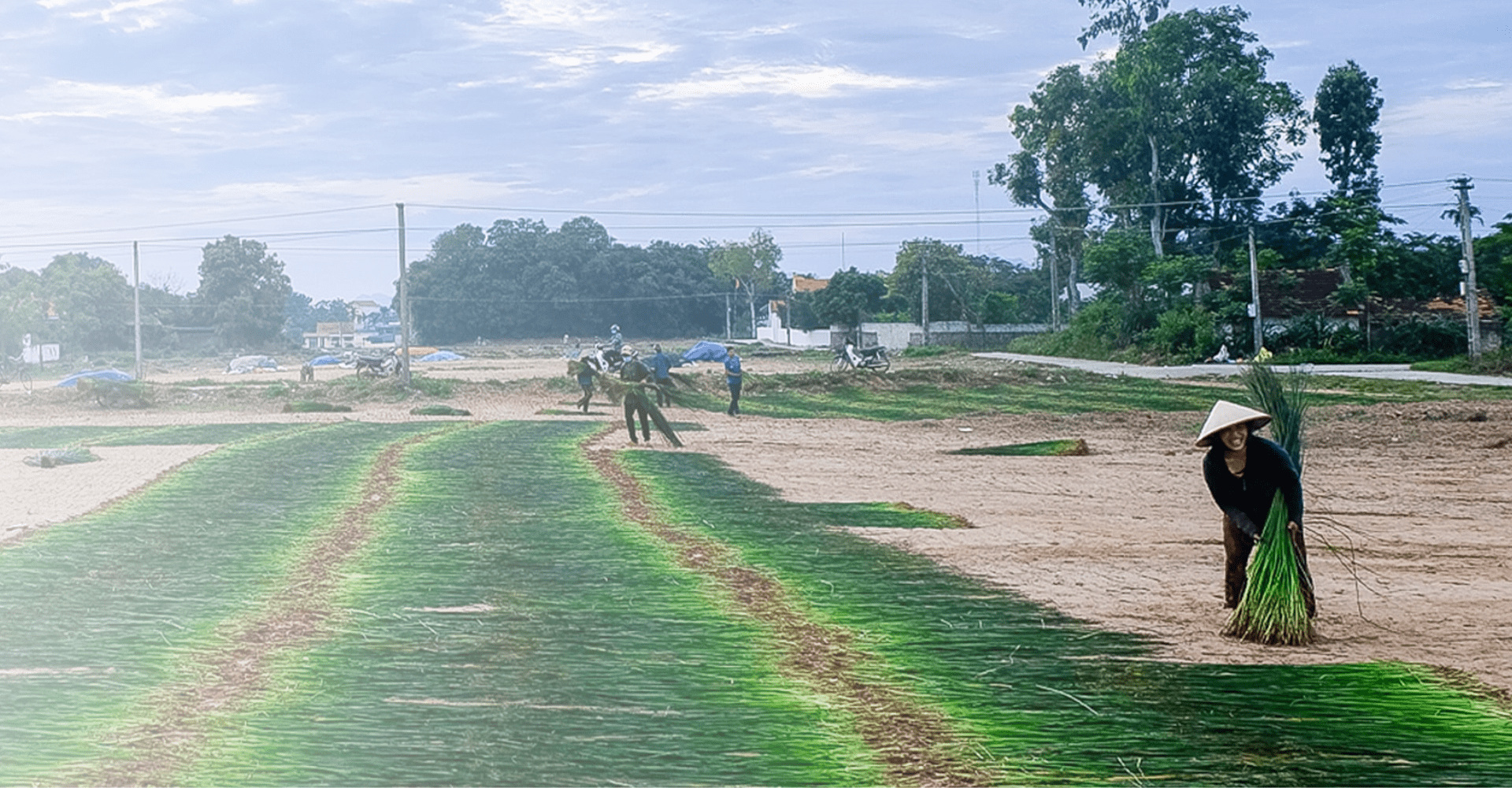
For a weaving workshop the useful part of those numbers is the rhythm, not the tonnage. Several harvests a year in the regions around us mean husk arrives more than once a season, and it arrives as something the farm has no better use for. Collecting it is a short trip rather than a supply chain.

How is corn husk leaf prepared for weaving?
The husk that arrives from a field is not yet a weaving material. It is damp, uneven and mixed with torn and discoloured leaves. Preparation is what turns it into something a weaver can work with, and it is mostly patience.
Leaves are sorted first, because a marked leaf will show in the finished weave and cannot be hidden later. They then dry in the open until the moisture is out and the pale colour settles. Dry leaves are split to an even width and twisted into a continuous strand, and only then does weaving begin. Our wider account of the journey from raw material to finished piece is in from fiber to finished basket, and Vietnamese woven baskets, fibers and villages puts the craft in its regional context.

How does corn husk leaf behave in a finished product?
Research into corn husk as a textile and composite fiber describes a consistent picture: moderate strength, high toughness and good elongation, which together give pliability, softness and durability. The same literature notes high moisture retention, and that is the characteristic a buyer needs to plan around. A fiber that holds moisture readily belongs indoors and away from bathrooms, laundries and unheated porches.
| Fiber | Natural colour | Surface | Where it is usually placed in a design |
|---|---|---|---|
| Corn husk leaf | Pale, close to cream | Soft and matte | The light band, rosettes, contrast panels |
| Seagrass | Light straw to warm brown | Smooth with a natural sheen | The body of baskets, rugs and furniture |
| Water hyacinth | Deeper warm brown | Soft and slightly spongy | Rugs, poufs and pieces that need comfort |
| Palm leaf | White to very light | Clean and smooth, braided | White patterned detail and trims |
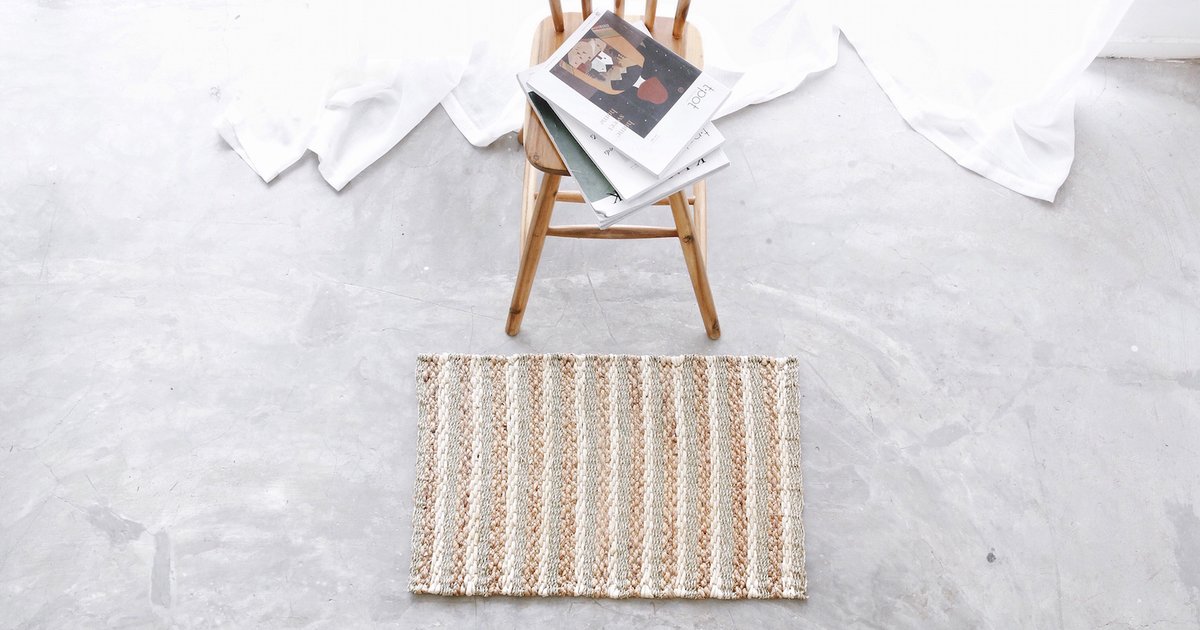
In practice that means corn husk leaf turns up in three places in our range. It is the pale banding in a mixed fiber rug, it is the contrast rosette or panel on a planter, and occasionally it is the whole piece, as in our round pouf woven from corn husk leaf. It is not a fiber we would put under a plant pot that gets watered, and we would say so rather than take the order.

What should a buyer check when specifying corn husk?
Three questions do most of the work. First, ask where the fiber sits in the piece. A product described as corn husk may be corn husk throughout, or it may be a seagrass body with a corn husk band. Both are legitimate; they are not the same product, and the difference shows on the shelf.
Second, ask about colour consistency. Corn husk is a natural material with no synthetic dyes anywhere in our process, so pale means a range of pale rather than one flat tone. Decide in advance how much variation you accept across a set and write it into the specification, because shade matching is the question most likely to come back at inspection.
Third, confirm the use case. Our pieces carry the same care guidance across every fiber, set out in our explainer on water hyacinth: indoors, dry, vacuum on suction, blot rather than rub. Corn husk is no more fragile than its neighbours, but it is no more forgiving of damp either.
Corn husk leaf pieces from our range
Every product below names corn husk leaf in its own product name. The material label repeats what the name states, nothing more.


Frequently asked questions
Is corn husk leaf as strong as seagrass?
Published studies describe corn husk fiber as moderate in strength but high in toughness and elongation, which makes it pliable and durable in use. In our range it is used where contrast and softness matter, and seagrass carries the structural work.
Is corn husk leaf really a recycled material?
It is a by product. The maize is grown for food and feed, and the husk is what remains after the ear is taken. Weaving it gives the leaf a second life rather than leaving it to be burned or composted.
Can corn husk products be used outdoors?
No. Corn husk holds moisture readily, so it belongs indoors and away from damp rooms. That is the same guidance we give for seagrass, water hyacinth and palm leaf.
Will the colour match across a set of three?
Close, but not identical. Natural fiber with no synthetic dye carries shade variation, which is part of why customers buy it. Tell us the tolerance you need and we will sort to it.
Can you weave a custom design in corn husk leaf?
Yes. Custom sizing is available across most of our range and our in house design team develops pieces from sketches, references or mood boards. Send us what you have in mind and we will sample it.
Want to see corn husk leaf in person?
A photograph flattens the colour. Ask us for a sample and judge the tone against the rest of your assortment, or send a reference and we will weave a piece to it.

To receive lots of incentives with dedicated and professional service...
Or view more handwoven product in our
lookbook collection
CONTACT NOW
+84 915 709 666
(WhatsApp available)