Natural Fiber Doormats: A Wholesale Buyer’s Guide
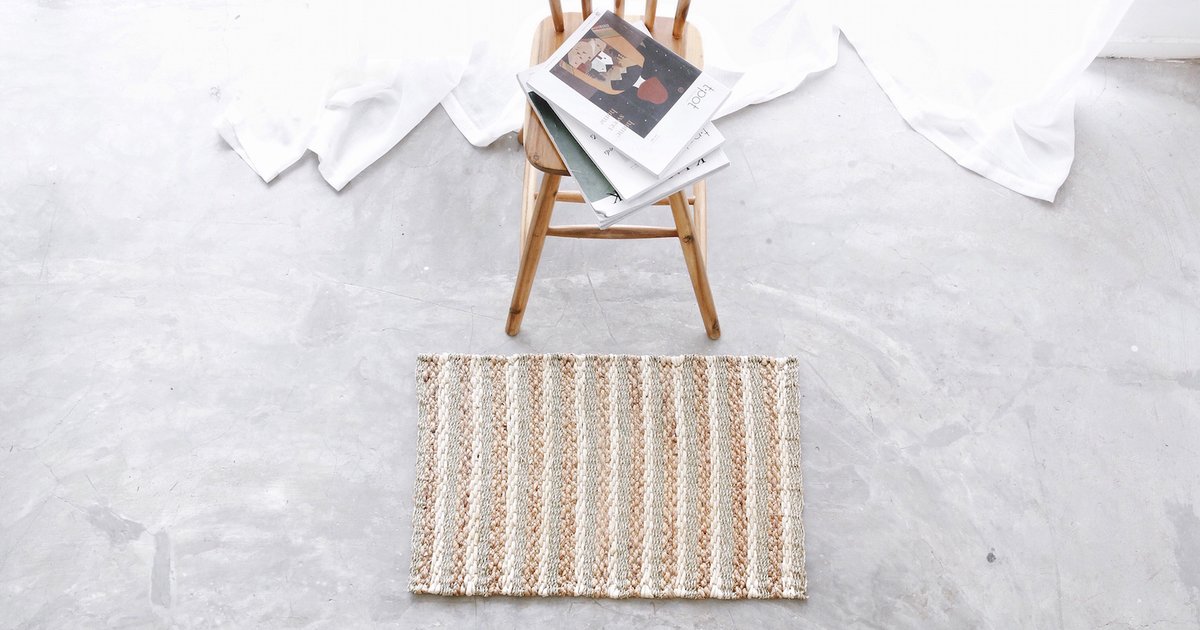
16 Nov 2026A natural fiber doormat is an entrance mat handwoven from plant fiber rather than tufted from synthetic yarn. For wholesale buyers the practical question is not whether it looks good, because it does, but where it will sit: a woven natural fiber doormat is at its best just inside the door or on a covered porch in a dry climate, and it is the wrong product for an entrance open to rain. Get the placement right and you have a mat that ships flat, stacks well and sells on texture alone.
Key takeaways
- Natural fiber doormats belong indoors or under cover. Standing damp is what ends their life, not foot traffic.
- The fiber decides the feel and the behaviour. Seagrass is dense and resists marking, jute is softer and absorbs more readily.
- Five things belong on every doormat specification: finished size, thickness, edge finish, backing and fiber.
- Mats ship flat and stack, so ask for carton quantity and carton dimensions at the same time as the price.
What is a natural fiber doormat?
It is a small flat mat, usually somewhere between 40 by 60 cm and 60 by 90 cm, woven by hand from dried plant fiber. At Viet Trang doormats sit inside our Crafted Rugs range, which also covers area rugs, round rugs and runners, and draws on more than 50 years of rug and mat making in Nga Son, Thanh Hoa. The weaving method is the same one behind our larger floor pieces, worked at a size a retailer can sell off a shelf rather than off a floor display.
The construction matters more than the name on the label. A woven mat is built strand by strand, so the structure holds together without a glued backing. A tufted mat is punched into a backing cloth, which is why tufted mats shed and delaminate as they age. If you are comparing quotations, confirm which of the two you are being offered.

Which fiber suits a doormat?
Most of our doormats are woven in seagrass or in a mixed natural fiber weave, and some designs use jute. Buyers often ask how these compare with coir, the coconut husk fiber behind the classic bristly doormat. The honest answer is that they are different products for different places.
| Fiber | Feel underfoot | Behaviour when damp | Best placement |
|---|---|---|---|
| Seagrass | Dense and smooth, with a natural sheen | More resistant to marking than most plant fibers, but dislikes standing damp | Inside the door, or a covered porch in a dry climate |
| Jute | The softest of the group, with a subtle lustre | Absorbs readily and marks more easily | Indoors only |
| Mixed natural fiber | Varies band by band, which is the design point | Follows the behaviour of the weaker fiber in the mix | Inside the door |
| Coir, for comparison | Coarse and bristly | Slow to dry and inclined to stay damp | Exposed entries where appearance matters less |
The flooring specialists at Curran recommend coir over jute for a doormat purely on durability, and note that jute is an indoor fiber that fades or damages once it gets wet from shoes. They also rate seagrass as more stain resistant than sisal, while warning that it is vulnerable to mould in humid environments. Our own view matches that: a woven plant fiber mat is a dry location product. If you want the detail on how the two fibers we use most behave side by side, our note on the differences between water hyacinth and seagrass covers it.
Where does a natural fiber doormat actually belong?
Three placements come up again and again with buyers, and they do not perform the same way.
Inside the door. This is the placement the product is designed for. The mat stays dry, catches grit from shoes already wiped outside, and the fiber reaches its full life. It is also where the texture is seen in good light, which is the reason a customer buys a woven mat rather than a rubber one.
A covered porch. Workable in a dry climate. The mat should be lifted and dried after heavy rain, and the customer needs to be told that in the care information on the swing tag.
An entrance open to rain. We advise against it. A plant fiber mat left to sit wet will mould and shed fiber, and no finish we can apply changes that. Where a customer needs a genuinely exposed mat, coir or a synthetic is the right answer, and saying so early saves a return later.

What should go on the specification?
A doormat looks simple, which is exactly why specifications arrive incomplete. Five points settle almost every question that comes back later in the order.
Finished size and tolerance. Give the size in centimetres and say what variation you will accept. Handwoven pieces move a little, and an agreed tolerance avoids an argument at inspection.
Thickness. A thicker mat holds more grit, but it also needs clearance under an inward opening door. If the mat is for a market where doors open inward, this is worth stating.
Edge finish. Bound, braided or fringed. A bound edge frays least in daily use, a fringe looks softer and photographs better, and a braided edge sits between the two.
Backing. Say whether you want a non slip layer. It changes the look of the underside, the weight and the way the mat is packed, so it is not a detail to leave until sampling.
Fiber and colour. We use natural hues only and no synthetic dyes, so the colour range comes from the fiber itself and from how fibers are banded together. If you need a specific contrast, send a reference and we will weave to it. Custom sizing is available across most of the range, and our in house design team can develop a mat from a sketch if nothing in the catalogue fits.

How do woven doormats ship and merchandise?
Mats ship flat, which makes them one of the easier woven products to plan freight around. They stack without crushing, they fill the gaps left by bulkier baskets in a container, and they are light for their footprint. Ask for pieces per carton and carton dimensions alongside the quotation, not after it, so the loading plan can be built from real numbers. Our factory in Nga Son runs to a capacity of up to 20 containers a month, so mats are usually straightforward to combine with a larger basket or rug order.
On the shop floor, a woven mat sells on texture, so it needs to be touched. Retailers who do well with them hang one at eye level or lean it against a wall rather than laying the whole range flat where only the top mat is visible. A short care line on the swing tag, shake out and keep dry, prevents most of the complaints that come back. Our guide to cleaning and caring for seagrass and water hyacinth homeware is written in language you can lift straight onto a tag.
If a customer wants the same look at room scale, the mat is also the entry point to a larger assortment. Our guide to seagrass rugs and runners and the broader Vietnamese woven rugs buyer guide cover the formats above doormat size. The Mekong River seagrass doormat is a good place to start if you want to see the weave density we work to.
Woven doormats from our range
These four doormats are all woven at entrance mat size. The material label repeats what the product name states, nothing more.


Frequently asked questions
Are natural fiber doormats suitable for outdoor use?
Only under cover, and only in a dry climate. A plant fiber mat left exposed to rain will stay damp, which leads to mould and fiber loss. Inside the door is where these mats perform best.
What sizes do woven doormats come in?
Most designs sit in the usual entrance mat range, and custom sizing is available across most of our range. Send us the finished size you need in centimetres and we will confirm what is possible in that weave.
Can a doormat be made in a specific colour?
We work in natural hues only, with no synthetic dyes, so colour comes from the fiber and from banding fibers of different tones together. Send a reference image and we will tell you honestly how close we can weave to it.
What is the minimum order quantity for doormats?
It depends on the design, the size and whether a backing is specified. Send us your specification and we will confirm the minimum order quantity and the lead time against it.
How should a customer clean a woven doormat?
Shake it out, vacuum on suction with the beater bar turned off, and blot any spill rather than rubbing it. Keep it dry. Those four lines fit on a swing tag and prevent most complaints.
Looking at doormats for your next range?
Send us the sizes, the edge finish and whether you need a backing. We will come back with what we can weave, the carton detail you need for freight, and a sample you can put in front of your buyer.

To receive lots of incentives with dedicated and professional service...
Or view more handwoven product in our
lookbook collection
CONTACT NOW
+84 915 709 666
(WhatsApp available)