Woven Christmas Ornaments: A Wholesale Buyer’s Guide
20 Nov 2026Buying woven Christmas ornaments wholesale runs on a calendar most other homeware does not. A range seen at the January trade fairs is sampled in spring, woven through the summer, shipped in early autumn and on the shelf the following November. If you are reading this in December, the range you are looking at was agreed roughly eleven months ago. That one fact shapes every other decision in the category.
Key takeaways
- Seasonal decoration is bought almost a year ahead. Christmasworld in Frankfurt runs 29 January to 2 February 2027.
- Woven ornaments are hung, so three details matter early: hanging method, cord length and inner packaging.
- Natural fiber gives a seasonal range a story that survives January: it is not plastic and it is not thrown away.
- Vietnamese production pauses for Tet, so a Christmas programme has to be planned around a February shutdown.
What counts as a woven Christmas ornament?
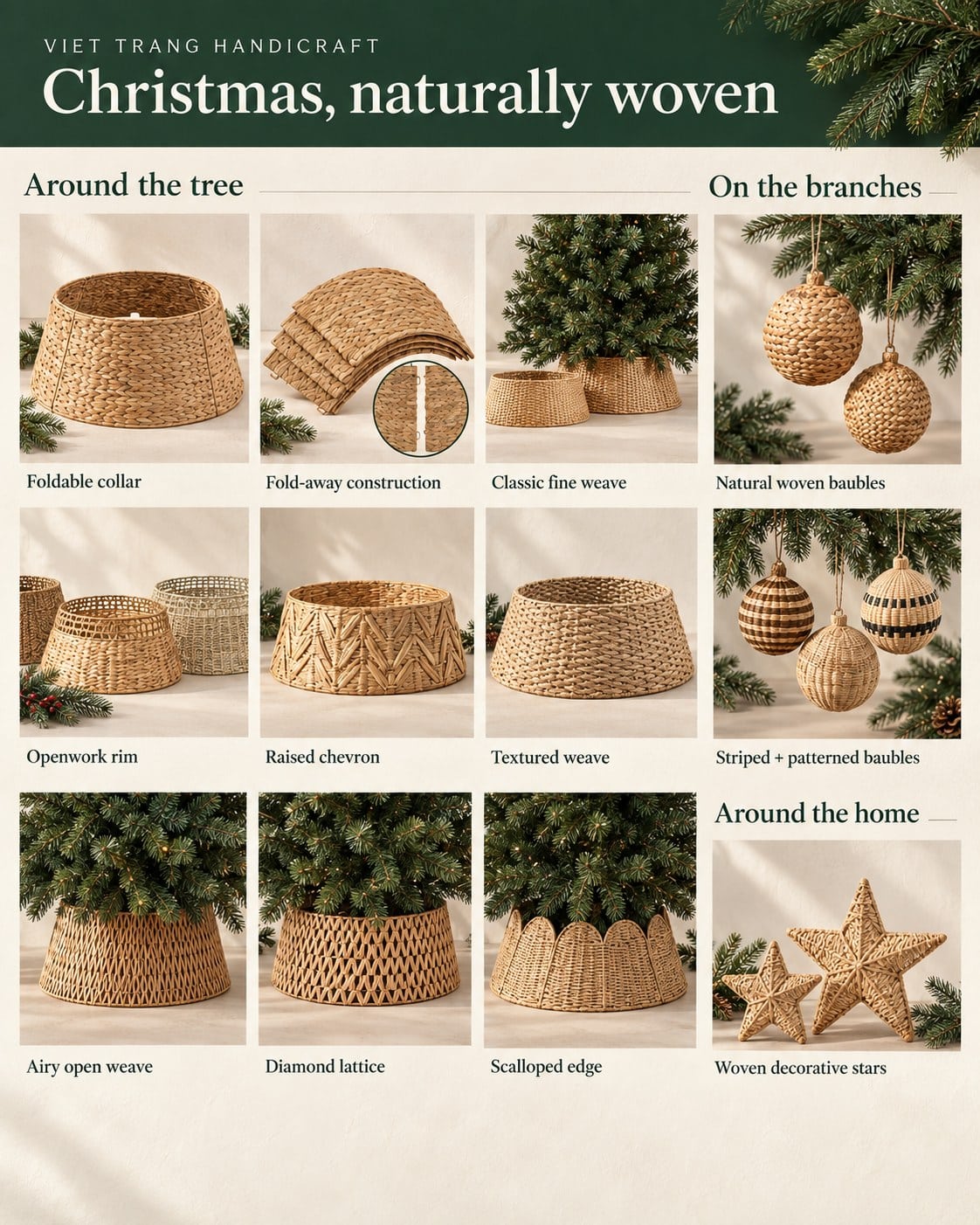
The category covers small handwoven pieces made for a seasonal display rather than for daily use: baubles, bells, stars, angels, miniature stockings, wreaths and tabletop cone trees. They sit alongside the larger seasonal pieces a buyer already knows, above all the tree collar, which we covered separately in our guide to wholesale Christmas tree collars.
Seasonal decoration is a newer part of our range, introduced through the SS27 collection proposal. It came from buyers asking the same question in different words: they wanted a natural, handcrafted alternative to the synthetic ornaments that dominate the category, made by the same hands and from the same fibers as the baskets they already stock.

Why natural fiber for a Christmas range?
Christmas decoration is a real market in its own right. Fortune Business Insights projects the global Christmas decorative products market at about 3.29 billion US dollars in 2026, rising to roughly 4.36 billion by 2034. That is one forecaster view rather than settled fact, and the figure matters less than the shape of it: a category that grows steadily and is bought new every few years by most households.
Within that market, the argument for woven natural fiber is not that it is cheaper, because it is not. It is that a handwoven ornament behaves differently in a shop. It has weight and texture a moulded ornament does not, it photographs well against greenery, and it answers the question a growing number of customers ask about what happens to a decoration at the end of its life. Our range uses natural hues only and no synthetic dyes, which keeps the look consistent with the rest of a natural homeware assortment. The same logic runs through our note on eco friendly baskets.
When should a Christmas range be bought?
Earlier than feels natural. The European season opens at Christmasworld in Frankfurt, which runs from 29 January to 2 February 2027 alongside Ambiente at the Messe Frankfurt exhibition centre. Ranges are seen and shortlisted there, sampled through March and April, and the production window opens from late spring.
For a Vietnamese supplier there is a second date on the calendar. Production pauses for Tet, the lunar new year, and the pause is longer than a single public holiday because weavers travel home. We set out the practical effect in our guide to sourcing around the Tet holiday in 2027. A Christmas programme agreed in spring sits comfortably after that pause. A programme agreed in late summer is working against the clock and usually ends up paying for air freight.

What belongs in a first natural fiber Christmas range?
A first seasonal range does not need to be broad. It needs to hang together on a shelf and give the customer a reason to pick up more than one piece.
Two or three hanging shapes. Baubles, bells, stars, angels or miniature stockings. Sets of two or three graduated sizes are how most of our range is built, and they work better at retail than single pieces because they create a price ladder and a fuller display.
One tabletop piece. A cone tree or a set of small woven trees gives the display height and gives the customer something that is not for the tree itself.
One larger anchor. A woven wreath or a tree collar carries the higher price point and photographs as the hero of the range.
Building the seasonal range as an extension of a core assortment rather than as a separate world is what makes it commercially sensible. The thinking behind that is in our guide to building a natural homeware assortment.

What should you specify?
Ornaments are small, which tempts everybody to skip the specification. Three details cause almost all of the second rounds of sampling, and all three can be settled in the first conversation.
Hanging method and cord length. A loop, a cord or a ribbon changes how the piece sits on a branch and how it looks hanging in a shop. Give the cord length you want in centimetres.
Inner packaging. Ornaments usually sell as sets, so the inner packaging is part of the product, not an afterthought. Decide whether the set needs a box, a sleeve, a header card or nothing at all, and whether your market requires recycled or recyclable packaging.
Carton quantity per set. Small light items make poor use of a container if they are packed loosely. Ask for pieces per carton and carton dimensions early, and plan to fill the rest of the container with the baskets or rugs you are already ordering.
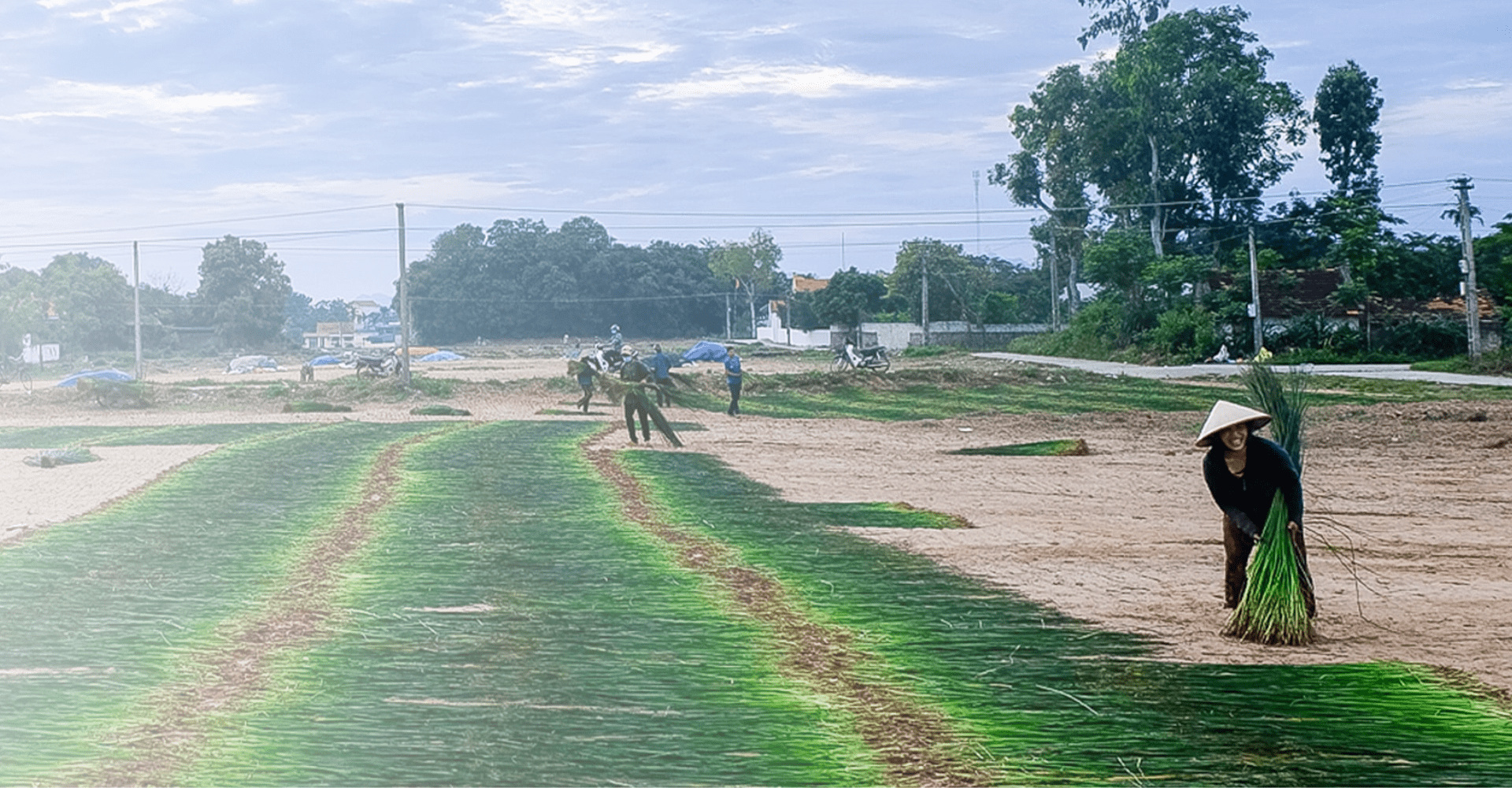
Everything we weave is made in our own 9,000 sqm factory in Nga Son, Thanh Hoa, by a team of 30 full time staff and 500 to 600 seasonal weavers, under SMETA and amfori BSCI audits. For a seasonal range that lands in a Christmas gift display, being able to answer where it was made and under what conditions is worth as much as the design itself.
Woven Christmas ornaments from our range
Three hanging ornament sets, each sold as a set of two. The material label says woven natural fiber because that is what the product name states.


Frequently asked questions
When should I place a Christmas order for next season?
Most buyers shortlist at the January or February fairs, sample in March and April, and confirm before the summer. That sequence leaves room for weaving and sea freight. Later than midsummer and the schedule gets tight.
What material are the woven Christmas ornaments made from?
They are woven from our natural fibers. The product name tells you what a given piece states, and where a design is made to order in more than one fiber we will confirm the options against your specification rather than guess.
Can ornaments be made in custom shapes or sizes?
Yes. Custom sizing is available across most of our range and our design team develops new pieces from sketches, references or mood boards. Seasonal shapes are a natural fit for that service.
Are the ornaments sold as sets?
Most are, in sets of two or three graduated sizes. Sets display better and give a retailer a price ladder. If you need single pieces for a particular format, tell us and we will quote it.
How should woven ornaments be stored between seasons?
Dry, loosely packed and out of direct sun. Natural fiber does not like being compressed in a damp loft for eleven months, and a line to that effect on the packaging protects the product and the retailer.
Planning a seasonal range for next Christmas?
Tell us the shapes, the sizes and how you want the sets packed. We will come back with what we can weave, the carton detail for your freight plan, and samples in time for your spring review.

To receive lots of incentives with dedicated and professional service...
Or view more handwoven product in our
lookbook collection
CONTACT NOW
+84 915 709 666
(WhatsApp available)