How to Build a Natural Homeware Assortment for Your Store
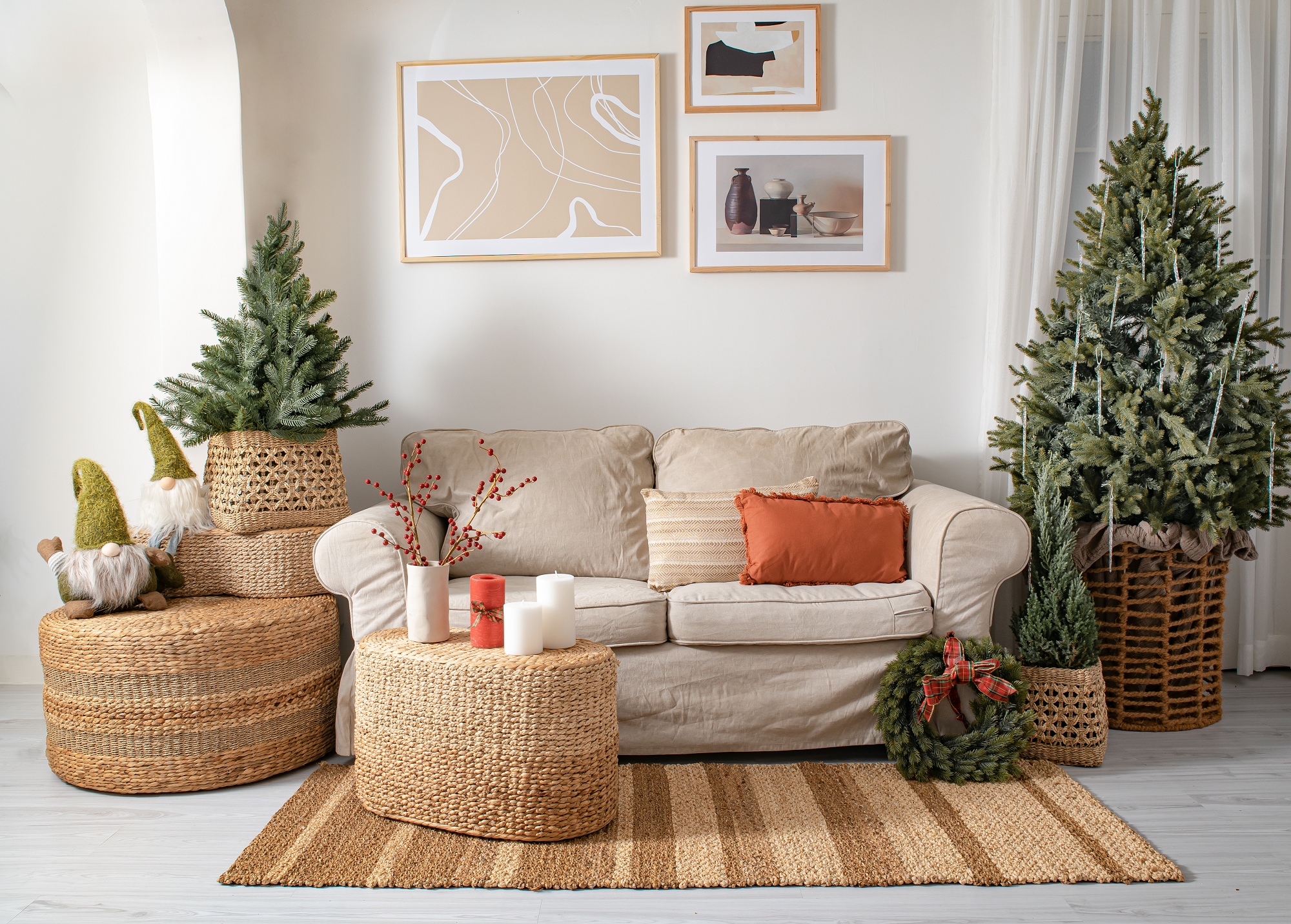
31 Jul 2026A strong natural homeware assortment balances anchor categories that drive volume with supporting and accent lines that add depth and a fuller basket. For natural fiber, that usually means leading with baskets and storage, adding rugs and planters as supporting categories, and finishing with accents like trays, lighting and decorative pieces. Selling products in nested sets, keeping a consistent material palette, and sourcing across categories from one maker keeps the range cohesive and easier to manage. The goal is a coordinated look a customer can buy into, not a shelf of unrelated items.
Key takeaways
- Build in tiers: anchor categories for volume, support categories for depth, accents for character.
- Keep a consistent fiber and tone palette so the range looks like a collection, not a jumble.
- Nested sets lift display value and the size of each order.
- Sourcing across categories from one maker keeps quality, tone and lead times aligned.
Start with what the range is for
A homeware assortment is not just a list of products. It is a coordinated offer that a shopper can understand at a glance and build a room around. Natural fiber lends itself to this because the materials already share a family of tones and textures. The job is to choose categories that work together and cover the different reasons a customer walks in: to organize, to soften, to decorate.
The clearest way to do that is to think in tiers rather than trying to stock a little of everything.
The anchor categories
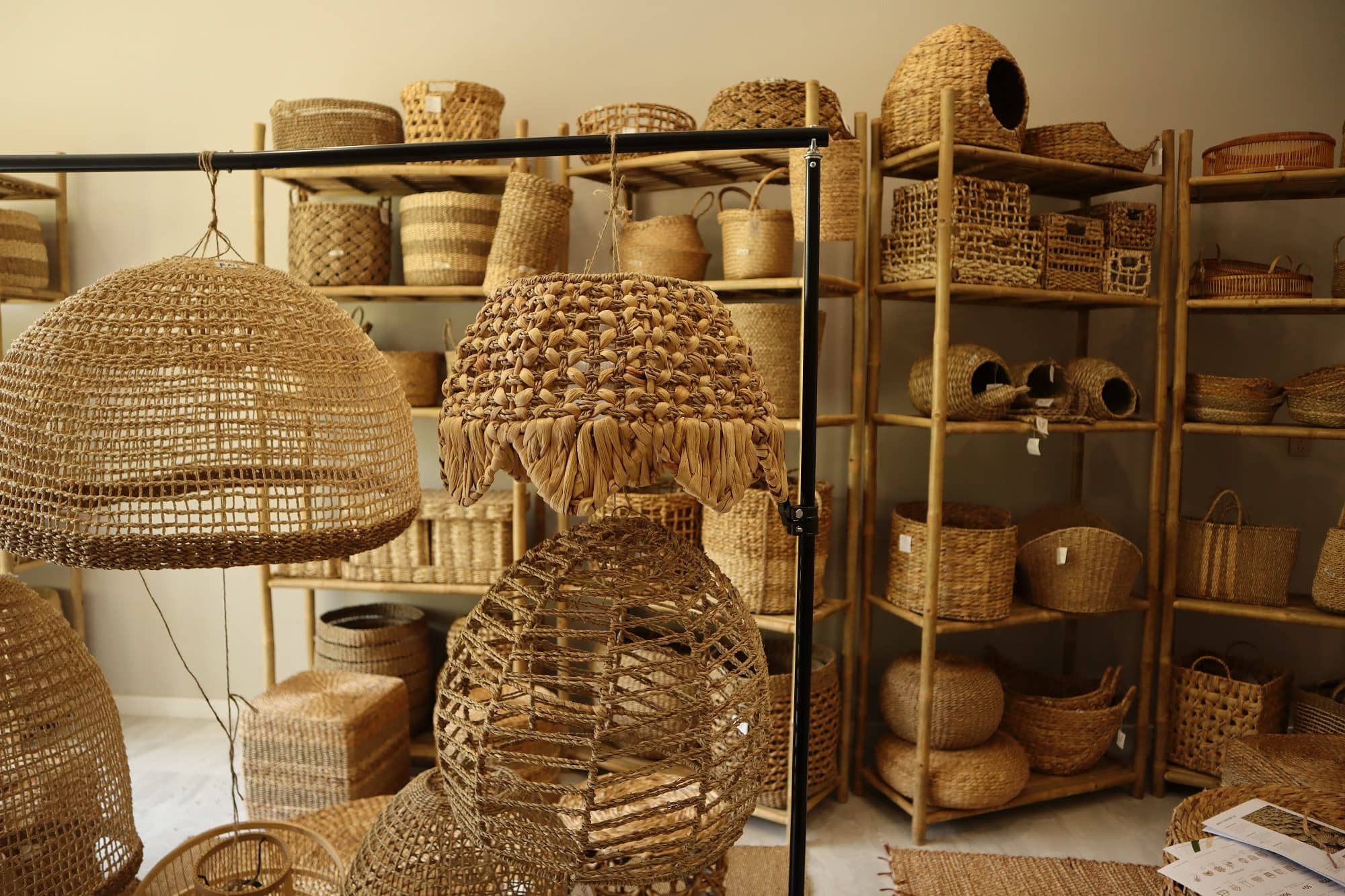
Anchors are the categories that do the heavy lifting on volume and on first impressions. For natural fiber homeware, baskets and storage are the natural anchor. They are practical, they suit almost every room, and they are the products customers reach for most often. A good basket wall or storage display is what pulls people into the rest of the range.
Rugs sit close behind as a second anchor for many stores. They are a considered purchase with strong design pull, and they set the tone of a display. A range built on baskets and rugs already has a solid backbone.

The supporting categories
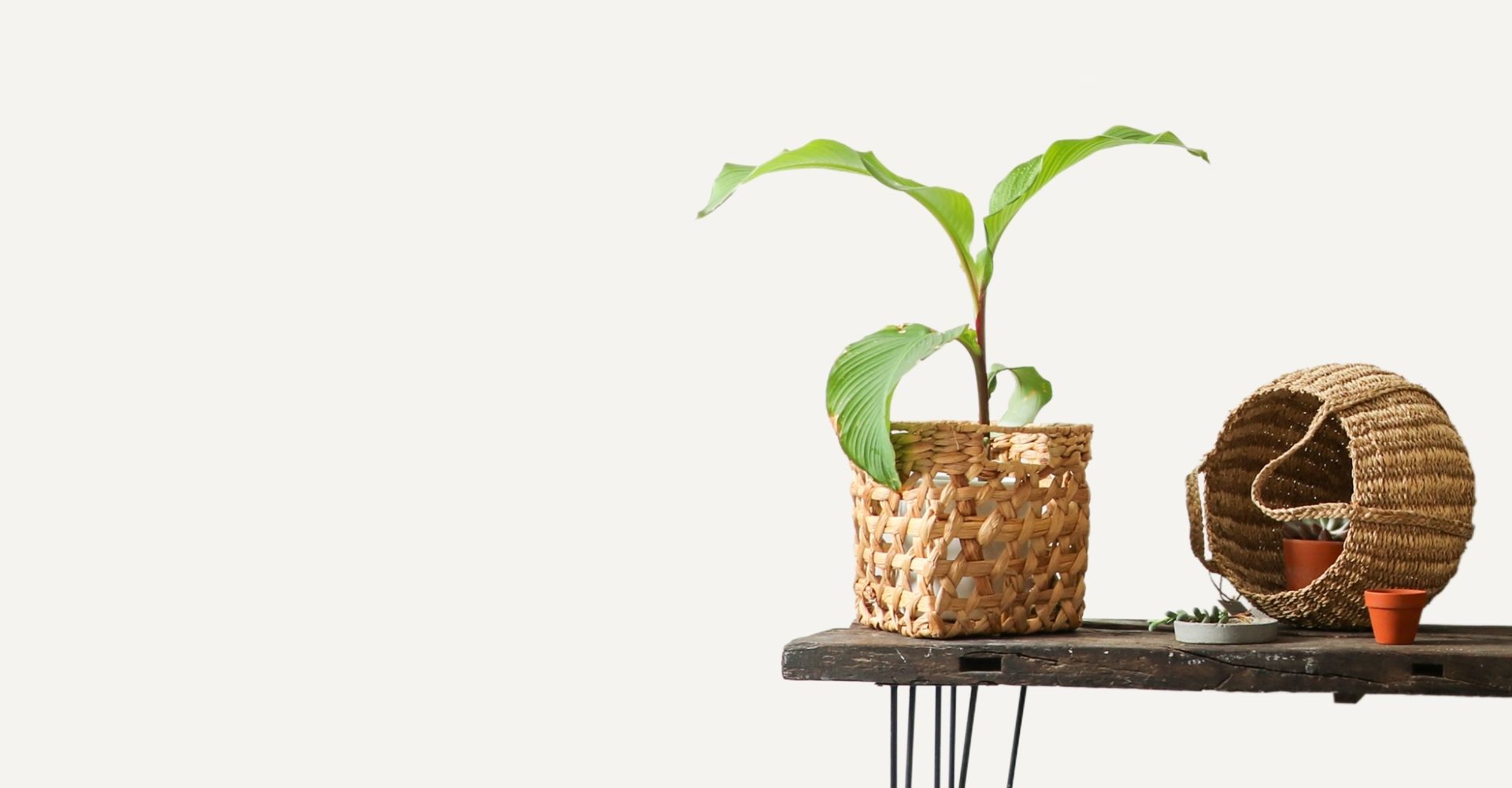
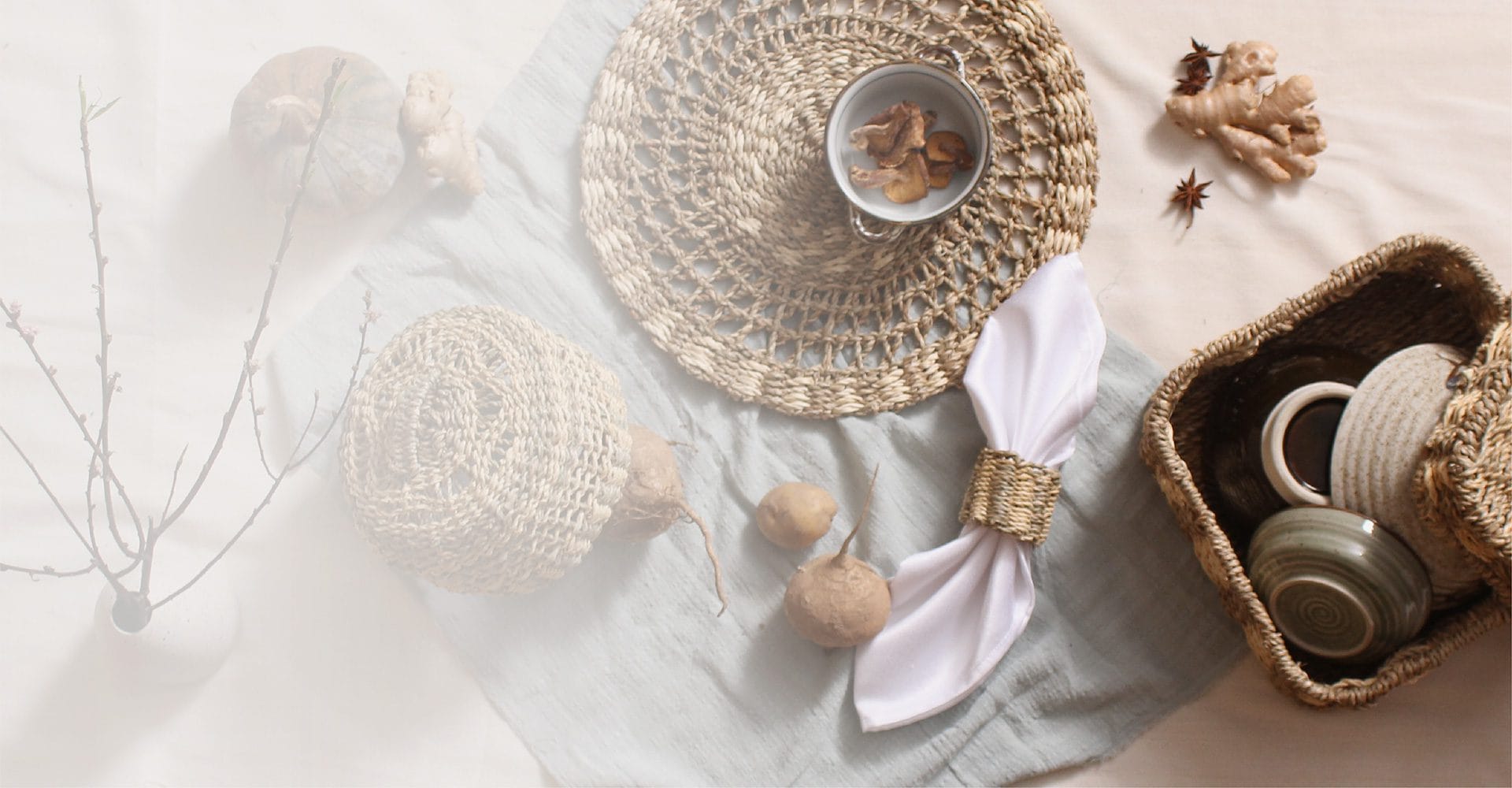
Supporting categories add depth and give customers a reason to buy more than one thing. Woven planters ride the ongoing indoor-plant trend and pair obviously with baskets. Poufs, stools and small furniture bring in seating and surface pieces that let a customer take the natural look further into a room. Kitchen and dining items such as placemats, trays and bread baskets open up a whole second use area of the home.
These are the categories that turn a single-item purchase into a small collection.
The accent categories
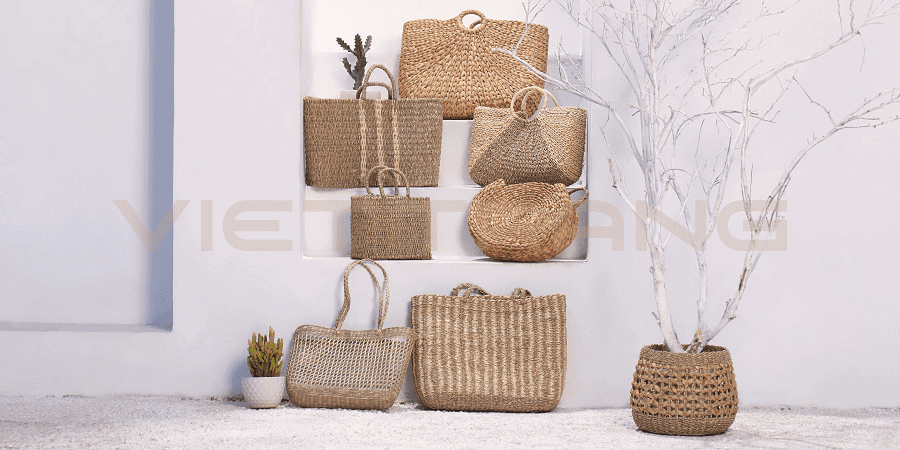
Accents give a range personality and photograph well, even if they sell in smaller numbers. Woven lampshades add a lighting story and a warm glow. Decorative trays, bowls, wall pieces and mirrors bring finishing touches. Handbags and market totes extend the look into lifestyle. Seasonal decoration lets you refresh a display around key retail moments.
You do not need every accent. Two or three chosen to match your customer is enough to make a range feel complete rather than sparse.
Keep the palette consistent
The single biggest thing that makes an assortment look intentional is a consistent material palette. Natural fiber gives you a coherent base of straw, warm brown and milky tones from seagrass, water hyacinth, corn husk and palm leaf. Mixing fibers within pieces creates tonal stripes that tie categories together. If a rug, a basket and a planter clearly belong to the same tonal family, the whole display reads as a collection and customers buy into the look.
Use sets to your advantage

A large share of natural fiber homeware is designed in nested sets of two, three or five graduated sizes. That is a merchandising gift. Sets fill a shelf attractively, offer built-in choices for the shopper, and lift the size of each order because a customer buys the set rather than a single piece. When you plan the assortment, lean on sets for your anchor and supporting categories.

A simple starting framework
If you are building a natural homeware range from scratch, a workable starting point looks like this. Lead with two or three basket and storage lines, ideally in sets. Add one or two rug options and a planter line as support. Finish with a small group of accents, such as a lampshade, a tray set and one seasonal piece, chosen to fit your customer. Keep every piece within one tonal family. From there, you widen the categories that sell and trim the ones that do not.
Why sourcing from one maker helps
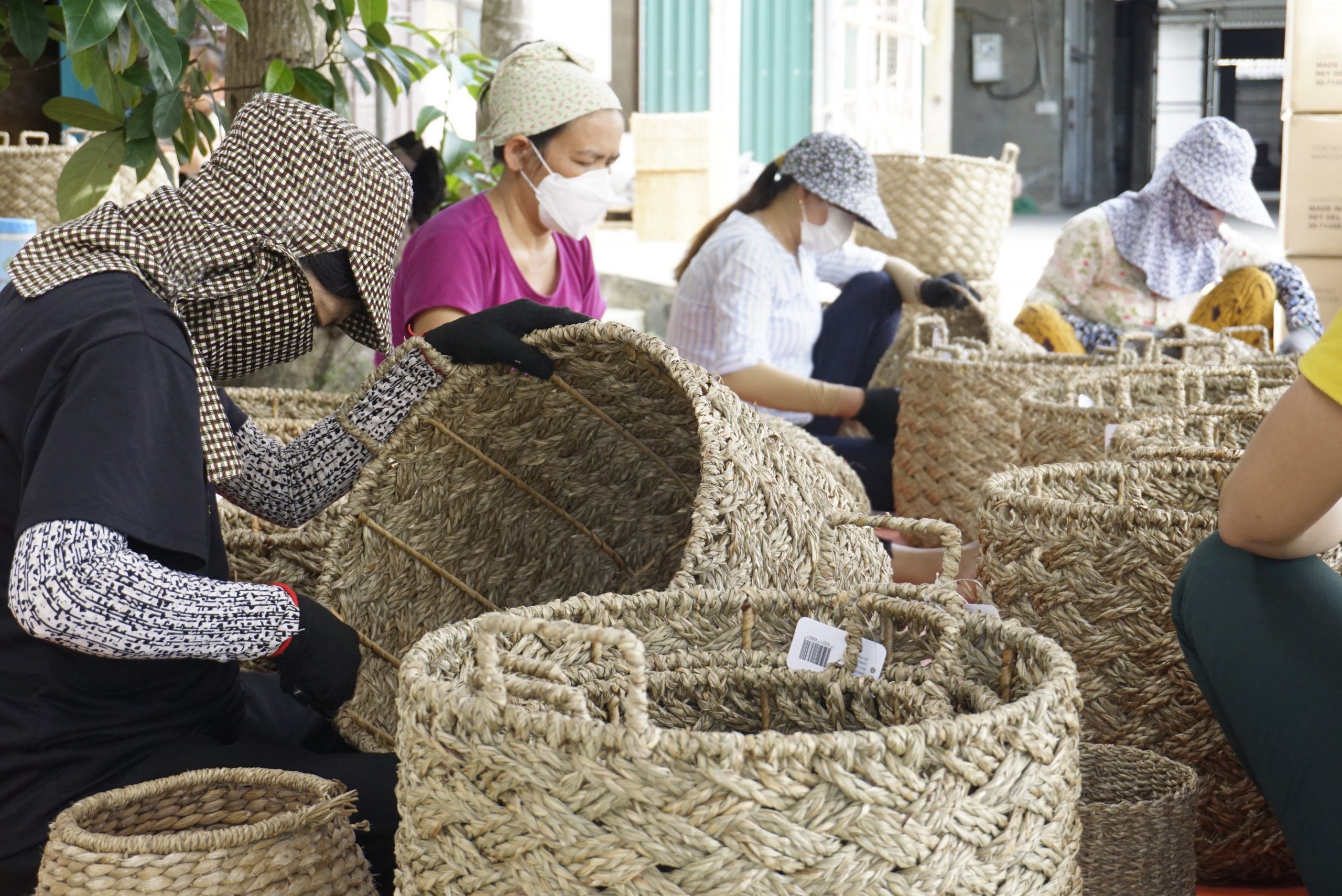
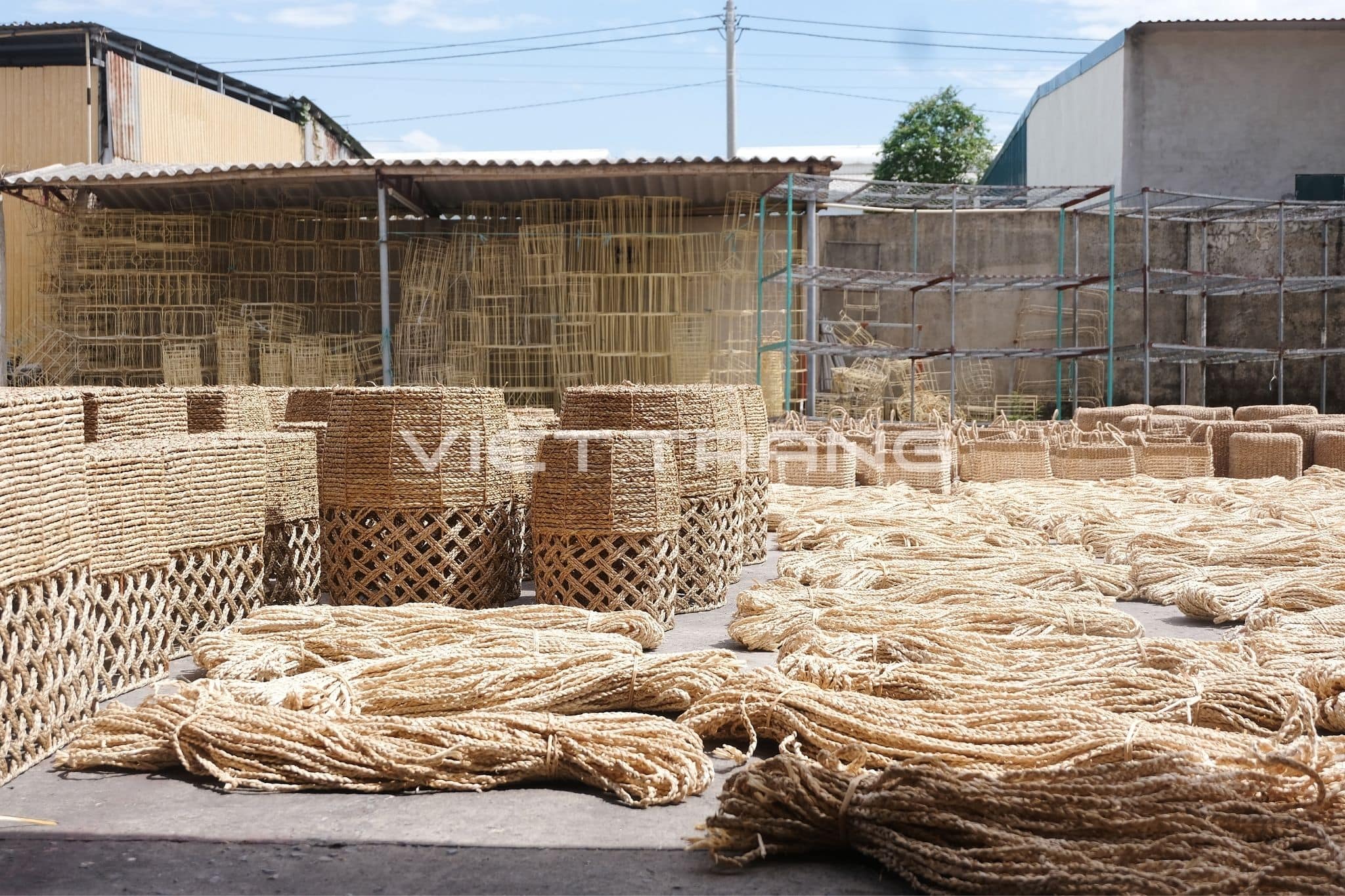
Building this kind of coordinated range is far easier when the products come from a single maker. Tones match because the fibers come from the same place. Quality is consistent because one team weaves them. Lead times and communication stay simple because you manage one relationship instead of many. And when a category takes off, you can extend it, or develop a bespoke piece to fill a gap, without starting a new supplier search.
At Viet Trang we produce across roughly ten categories, from baskets and rugs to lighting, planters and pet supplies, with around 800 SKUs in active production, so partners can build a full natural homeware assortment from one range. If you tell us your store profile and customer, we can suggest a balanced starting assortment and send samples across the tiers.
One supplier, several categories
Examples across the categories we make, for building a coordinated assortment.


Frequently asked questions
What categories should a natural homeware assortment include?
Lead with anchor categories like baskets and storage, add supporting categories such as rugs, planters and small furniture, and finish with accents like lampshades, trays and seasonal pieces. Choose accents to match your specific customer.
How do I make a homeware range look cohesive?
Keep a consistent material and tonal palette. Natural fibers such as seagrass, water hyacinth, corn husk and palm leaf share a family of tones, so pieces read as a collection rather than unrelated items.
Why are nested sets useful in retail?
Sets of two, three or five graduated sizes fill displays attractively, give shoppers built-in choices, and increase the size of each order because customers buy the set rather than a single piece.
Should I source my whole range from one supplier?
Sourcing across categories from one maker keeps tones matched, quality consistent and communication simple, and makes it easy to extend a category or add a bespoke piece later.
How many products do I need to start?
A workable start is two or three basket lines, one or two rugs, a planter line and a few accents, all in one tonal family. You then expand what sells and trim what does not.
Ready to source with Viet Trang?
Send us your store profile and we will suggest a starting assortment with samples across the tiers.

To receive lots of incentives with dedicated and professional service...
Or view more handwoven product in our
lookbook collection
CONTACT NOW
+84 915 709 666
(WhatsApp available)