Wholesale Christmas Tree Collars: A Natural Fiber Buyer’s Guide
25 Sep 2026A Christmas tree collar is a rigid band that stands on the floor and hides the tree stand, and in natural fiber ranges it has taken over from the fabric tree skirt. If you are sourcing a wholesale Christmas tree collar in seagrass, water hyacinth or rattan, three decisions do most of the work: the inside diameter, whether it folds flat, and how tight the weave is. The rest is styling.
Key takeaways
- A tree collar hides the stand with a rigid woven band. A tree skirt covers the floor with fabric. Woven fibers hold their own shape, which is why collars suit a natural range better than skirts do.
- Size from the stand outwards. Balsam Hill sizes small collars up to 29 inches across for trees under 7 feet, and large collars around 34 inches for trees of 7 to 11 feet.
- Fold-away construction decides how much air you ship. Ask for it before the sample is made, not after.
- Christmas decorative products were worth about USD 12.7 billion in 2025, and ornaments are the fastest growing segment at 7.7 percent a year to 2033, so small woven pieces matter as much as big ones.
What is a Christmas tree collar, and how is it different from a tree skirt?
A tree skirt is a piece of fabric draped around the base of the tree. A tree collar is a decorative band that sits around the base and conceals the stand, and Family Handyman describes it as the modern answer to the traditional skirt. The practical difference for a retailer is structure: a skirt drapes and creases, a collar stands up on its own and keeps a clean circle on the floor.
That structure is what hand weaving gives you. A seagrass or water hyacinth collar holds a firm rim without a frame, so the piece reads as furniture rather than as textile, and it photographs well online.
| Woven tree collar | Fabric tree skirt | |
|---|---|---|
| What it does | Hides the stand behind a rigid band | Covers the floor and the stand with cloth |
| Shape on the floor | Holds a clean circle by itself | Drapes, creases and shifts when knocked |
| Fit | Sized to the stand: the inside must swallow it | One size stretches over most stands |
| Look | Texture, natural colour, quiet | Pattern, colour, traditional |
| Under the tree | Presents can sit inside or around it | Presents sit on top of the fabric |
| Storage at home | Folds flat if built to, otherwise bulky | Folds into nothing |
| Best for | Natural, coastal, Japandi and modern rustic ranges | Classic and character Christmas ranges |
Fit is the part buyers get wrong. Family Handyman puts it simply: the collar must contain the stand completely and still sit under the lowest branches. Specify from the stand outwards, not from the tree down.
Which woven Christmas pieces are worth putting in a range?
Three shapes carry most of a woven Christmas offer, and they sell together because they share a material story.
Tree collars. The hero piece and the highest ticket. Our collar designs run from a foldable, fold-away construction through to fixed one-piece rings, with a classic fine weave, a raised chevron, a chunkier textured weave, an airy open weave and a diamond lattice. Rims can be a plain bound edge, an openwork band or a scalloped line. The collection board below shows the current range.

Woven baubles. Small, light and easy to sell in threes. Plain, striped and patterned versions give a display depth without adding colour, and they weigh almost nothing in a container.
Woven decorative stars. The bridge between tree and room. They work on a tree, on a wall, in a window and on a table, so one design earns several places in your merchandising. The pair below were woven in natural fiber and photographed in our own Christmas set, hung from a bare branch rather than on the tree, which is how most buyers end up merchandising them.


The same weave families run through the rest of our range. The open diamond lattice above is from a collapsible hamper, and it is the technique a buyer would specify for an open weave collar. Samples and photographs of the current Christmas designs are available on request.
What should you check on a woven tree collar sample?
Christmas decorations are handled hard for six weeks, then live in a loft for eleven months. Judge a sample on both halves of that life.

Inside diameter. Measure the widest stand you sell, add clearance for a water reservoir on real trees, and quote the collar by its internal measurement. Balsam Hill lists collars covering bases up to 32 inches across, which marks the upper end.
Foldable or fixed. A fold-away collar ships and stores flat. Fixed rings are the strongest shape but they travel as air, and that shows up in your landed cost. We have written before about how much foldable woven construction changes freight and shelf space, and the arithmetic is the same for a collar.
Weave tightness. Lift the sample by the rim. A well woven collar keeps its circle. If it sags into an oval, the weave is too loose for the height, and it will not survive a season of being nudged by a vacuum cleaner.
Edge and finish. Look for a bound rim with no loose ends, an even top line and a base that sits flat. On panelled or hinged designs, check the joins twice: that is where a cheap collar fails.
Does natural fiber Christmas decor really support a sustainability commitment?
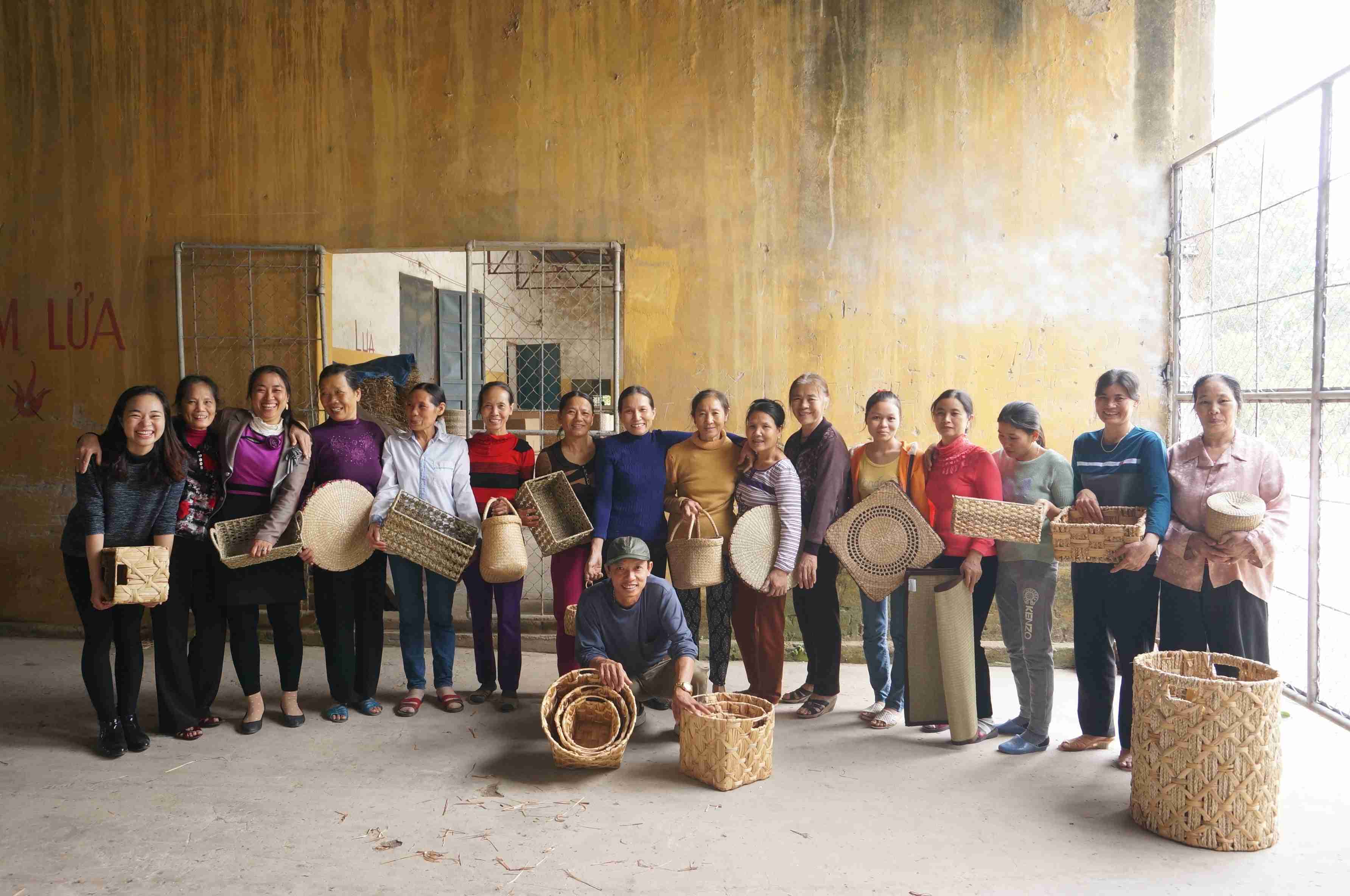
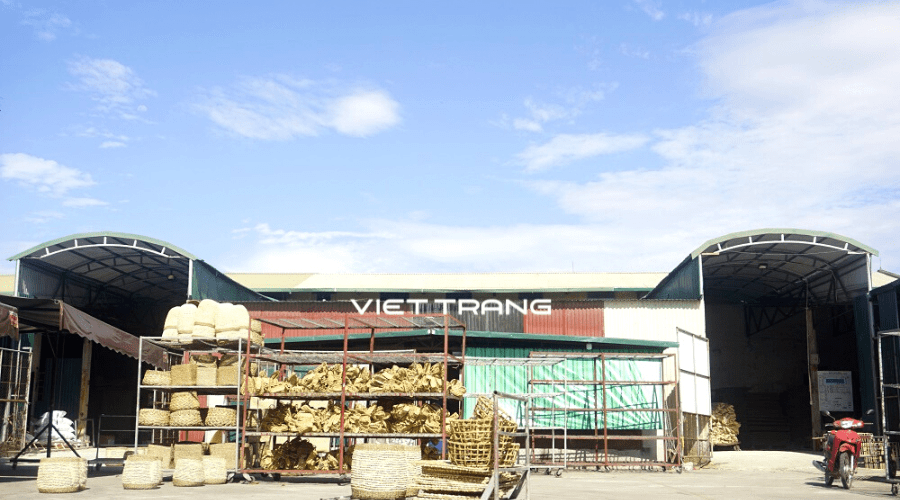
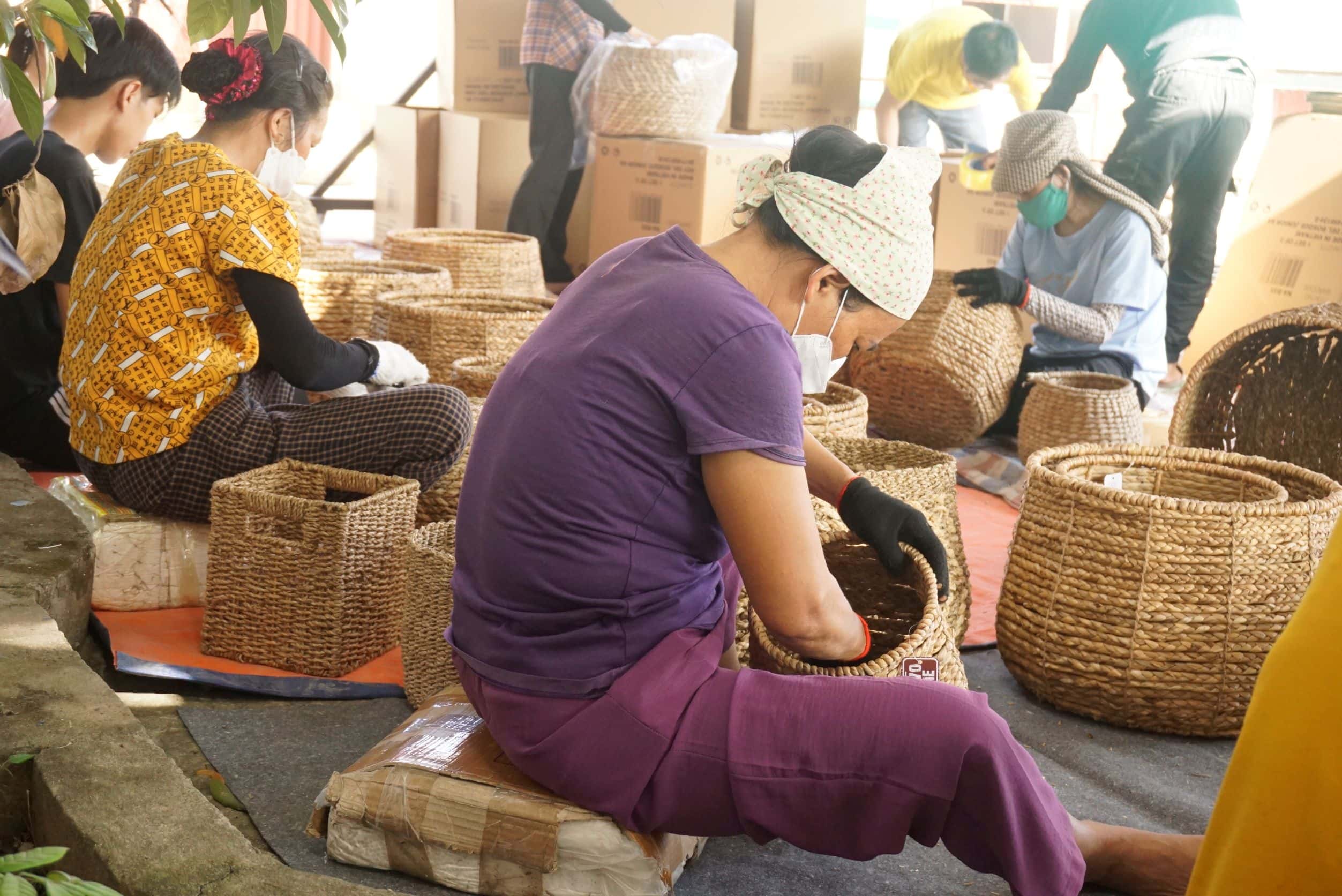
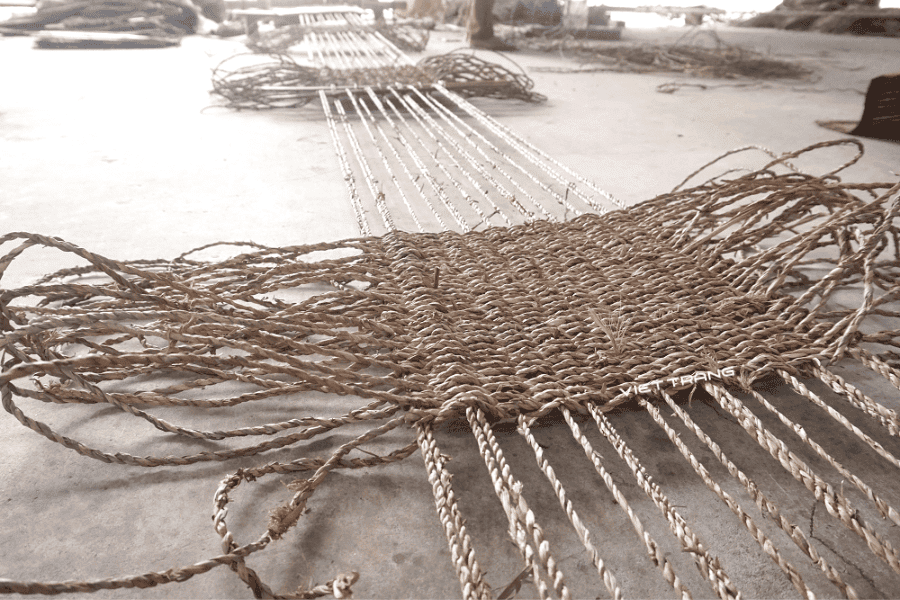
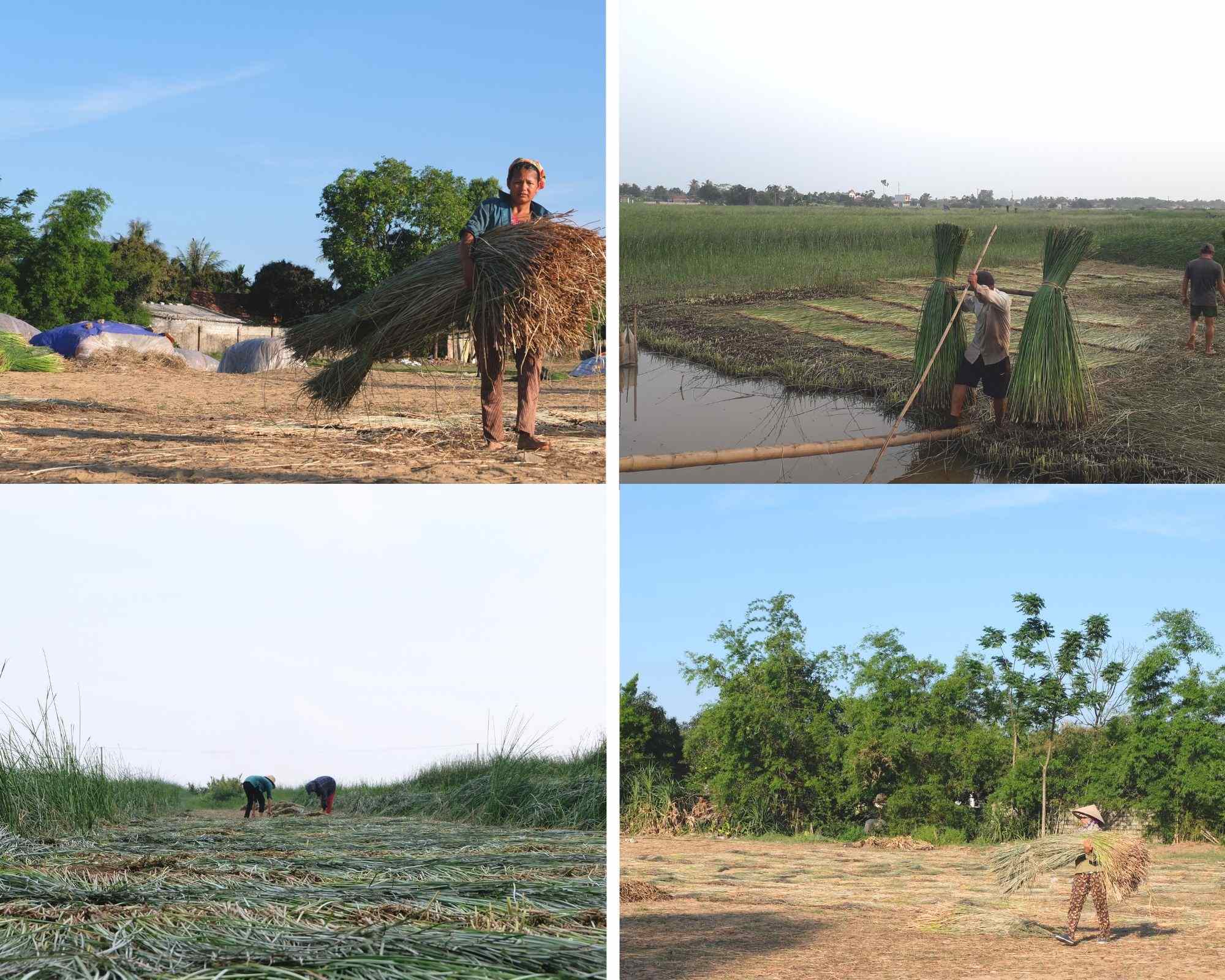
It helps, but only if you describe it honestly. A woven collar is a plant fiber grown, cut, dried and woven by hand. Our pieces are made in natural hues without synthetic dyes, in our own 9,000 square metre factory in Nga Son, Thanh Hoa, with 500 to 600 artisans and SMETA and BSCI social audits behind it.
The stronger argument is durability. A decoration that comes out of its box for ten Christmases does more good than any single material claim. That is the story worth putting on the swing tag: made to be kept, not made to be recycled.
Be careful with the word compostable on a finished decoration. The fibers are natural, but glues, linings and fittings are not always, so check the specification before you print anything on the packaging.
How do you fill a Christmas container so it is worth shipping?
Decorations alone rarely fill a container. Collars take floor space, baubles and stars weigh nothing, and a seasonal order on its own is light and expensive per cubic metre. The buyers who get the best landed cost combine seasonal pieces with everyday woven homeware that sells all year.

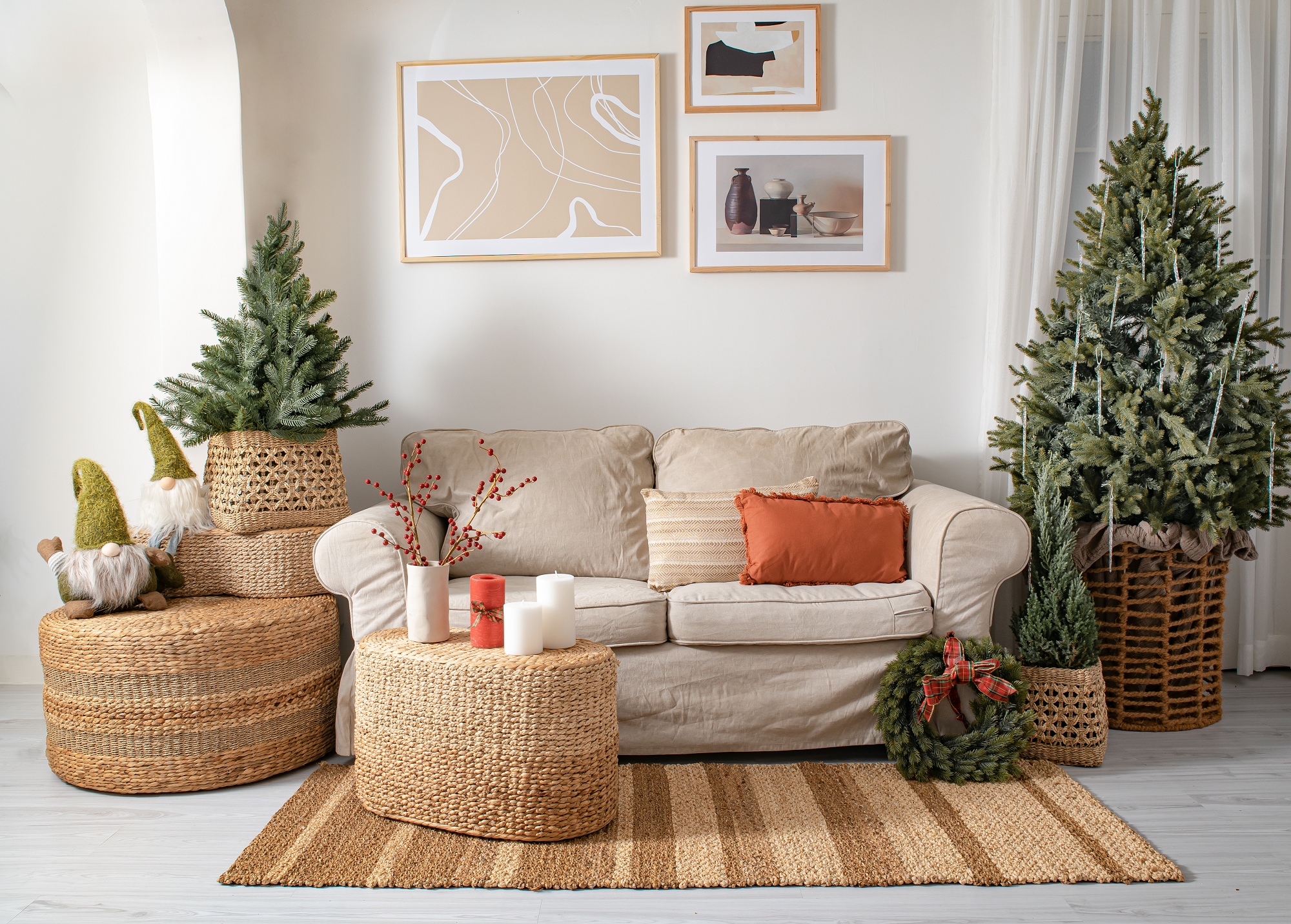
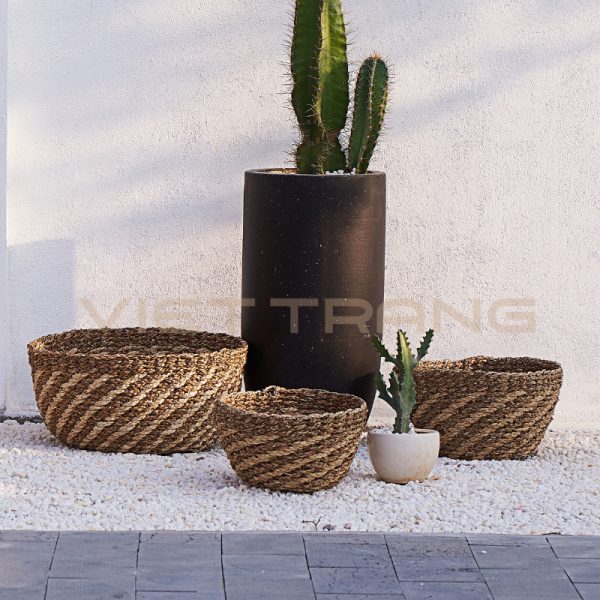
A seagrass belly basket becomes a gift hamper in December and a plant holder in March. A round rug anchors a Christmas window, then moves to the rug wall. Poufs, lampshades, planters and hampers do the same double duty. A large part of our core range already works for Christmas display and gifting, and most of those are everyday products rather than seasonal ones.
If you are building the mix from scratch, our guide to building a natural homeware assortment sets out the ratios, and the woven pendant lampshade trend explains why lighting is the easiest add-on. Browse the wider woven home decor category to see what travels well together.
When should you start the conversation for next Christmas?
Honestly: reading this in late September 2026, the 2026 season is largely closed for new bulk production. What is still realistic is a late top-up of existing designs, or a small trial order that tests a woven collar in a few doors before you commit for 2027.
For 2027, the useful window is much earlier than most buyers assume. Trade sources are blunt about it: the best Christmas stock is ordered and allocated in the second and third quarters, and waiting until the fourth quarter means port congestion, peak season surcharges and whatever inventory nobody else wanted. Wholesale planning guides say much the same, that retailers plan Christmas ranges months in advance and work backwards from the date stock has to be on the shelf.
Work backwards, not forwards. Fix the date the goods must be in your warehouse, then subtract ocean transit, production and sampling. Ocean freight from Vietnam to the United States currently runs around 24 to 29 days port to port for a full container and 37 to 41 days door to door, and each sample round realistically needs a couple of working weeks. Ask your supplier for their current lead time in writing rather than assuming last year applies.
Pieces from our Christmas range
Four woven products our buyers use for Christmas display and gifting, all made from natural fibers in Nga Son, Vietnam.


Frequently asked questions
What size Christmas tree collar do I need for a 7 foot tree?
Start from the stand, not the tree. Balsam Hill sizes collars up to about 29 inches across for trees under 7 feet and around 34 inches for trees of 7 to 11 feet. For a wholesale range, two sizes usually cover most of the market.
Can a woven tree collar be used with a real tree that needs watering?
Yes, if you specify it for that. Leave clearance for the water reservoir and choose a hinged or panelled construction so the stand can be reached without lifting the tree. Natural fibers should not sit in standing water, so spills need wiping up.
Do woven tree collars fold flat for shipping and storage?
Some do. A fold-away construction folds flat for the container and for the customer loft, while a fixed ring is stronger but travels as air. It is a design decision, so raise it in the first email rather than after the sample is woven.
What is the minimum order quantity for wholesale Christmas tree collars?
It depends on the design, the material and the sizes, so we confirm it against your specification rather than quoting one number. Send the diameters, the weave and the quantity you have in mind, and we will come back with the order quantity, sample timing and current lead time.
How should retailers store woven Christmas decorations after the season?
Dry, ventilated and off the floor. Natural fibers are fine in a cool loft but not a damp garage, and anything put away slightly damp can bloom. Our guide to preventing and treating mold on natural fiber baskets applies to collars, baubles and stars too.
Planning a woven Christmas range?
Send us the tree sizes you sell, the diameters you need and the weave you have in mind. We will come back with samples, current lead times and a packing plan for your market, and you can see the factory in Nga Son on a video call before you commit.

To receive lots of incentives with dedicated and professional service...
Or view more handwoven product in our
lookbook collection
CONTACT NOW