Wholesale Serving Trays: A Buyer’s Guide to Woven Trays
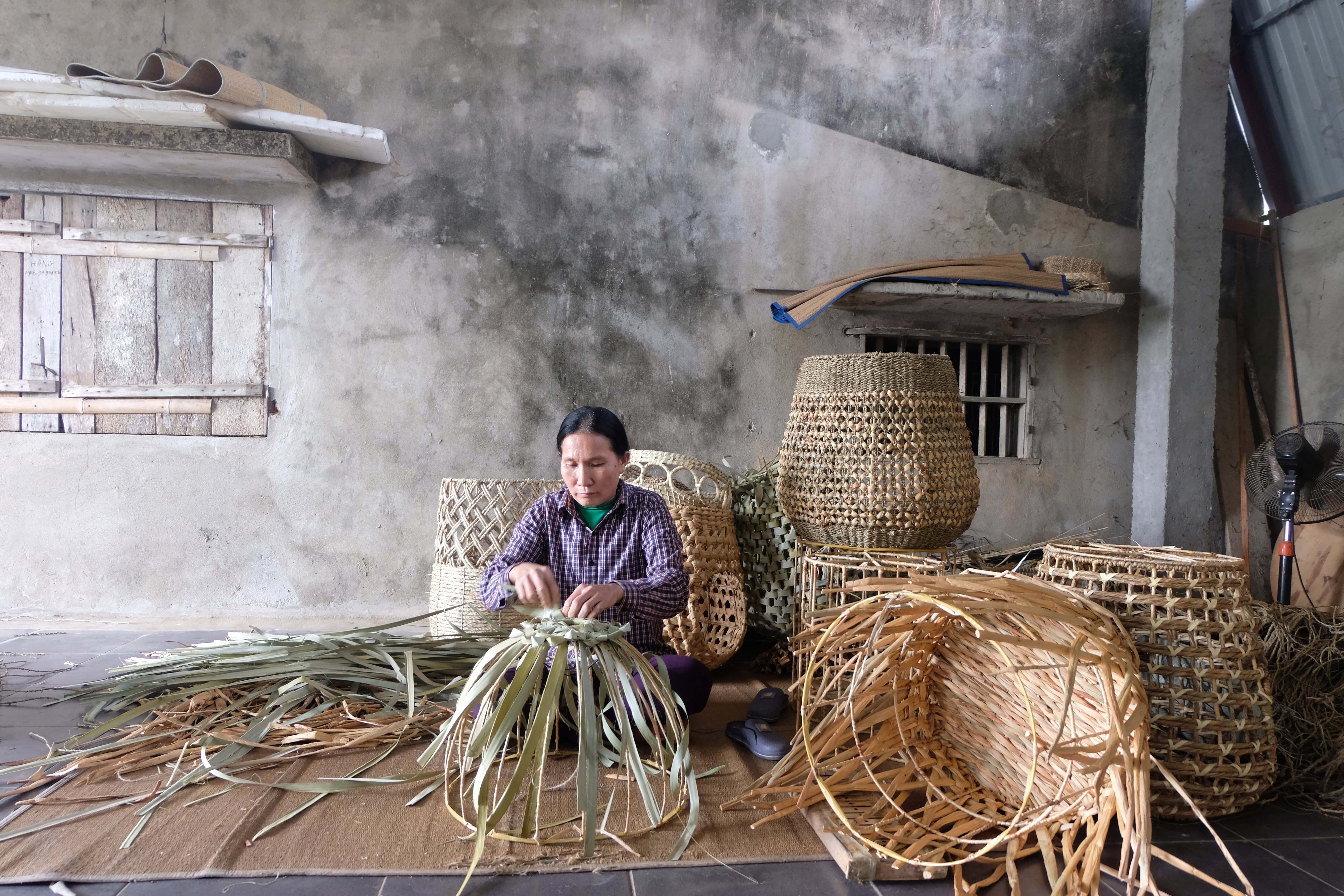
5 Oct 2026Wholesale serving trays are handwoven trays bought by the carton for retail, hospitality and gifting ranges, most often in rattan, bamboo, seagrass or water hyacinth. The fiber decides the weight, the colour and how the tray ages. The rim, the base and the handle joins decide whether it survives a season of daily use. We weave trays in all four of those fibers at our own factory in Nga Son, Thanh Hoa, and list them at a minimum of 50 pieces per design.
Key takeaways
- Four fibers dominate the tray category: rattan and bamboo give structure, seagrass and water hyacinth give softer texture and warmer tone.
- A tray sample is judged on five things: rim binding, base flatness, handle joins, surface finish and how dry it smells.
- Trays in our range are listed at MOQ 50 per design, packed in cartons, on FOB, CFR or EXW terms.
- Round, oval and rectangular formats all sell, and most designs can be made in custom dimensions for your own programme.
What kinds of woven trays do wholesale buyers order?
Buyers rarely order one tray. They order a tray story that covers several uses in the home, because a woven tray sells in more than one department. The four formats that move are the serving tray, the decorative tray, the storage tray with handles and the small desk or counter tray.
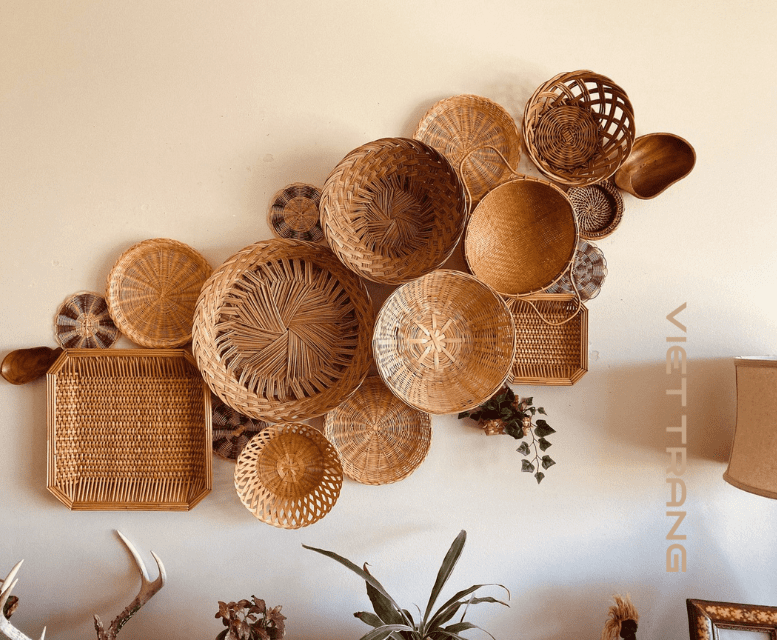
A serving tray is the flat, rimmed format carried from kitchen to table. A decorative tray is shallower and often shaped, bought for styling a coffee table or a console, and increasingly hung as wall decor. A storage tray with handles sits between a tray and a shallow basket and is used on shelves and in pantries. A desk tray is the small format that holds stationery, keys or cosmetics.

Our tray listings run across all four, from the Natural Seagrass Fika Tray through to rectangular rattan storage trays with cut-out handles. If you are building a wider natural homeware programme rather than a single line, our guide on how to build a natural homeware assortment sets out how trays sit alongside baskets and rugs.
Which fiber should you choose for a wholesale serving tray?
This is the question that decides your cost, your look and your returns rate, so it is worth answering before you ask for prices. Rattan and bamboo are woody materials that hold a rigid shape. Seagrass and water hyacinth are grasses and aquatic plants that are softer in the hand and warmer in tone.
| Fiber | What it is | Look and feel | Best suited to |
|---|---|---|---|
| Rattan | Climbing palm stems, solid rather than hollow | Pale to mid brown, rigid, crisp weave lines | Serving trays and storage trays that need to hold a rigid rim |
| Bamboo | A fast-growing grass with a high strength to weight ratio | Light, clean, slightly glossy surface | Larger serving and breakfast trays where weight matters |
| Seagrass | Harvested and dried in the Nga Son fields around our factory | Soft, silky, straw to warm brown | Decorative and table trays where texture is the selling point |
| Water hyacinth | An aquatic plant, dried and twisted before weaving | Warm brown, soft, chunky braid | Decorative trays and trays sold with matching baskets |
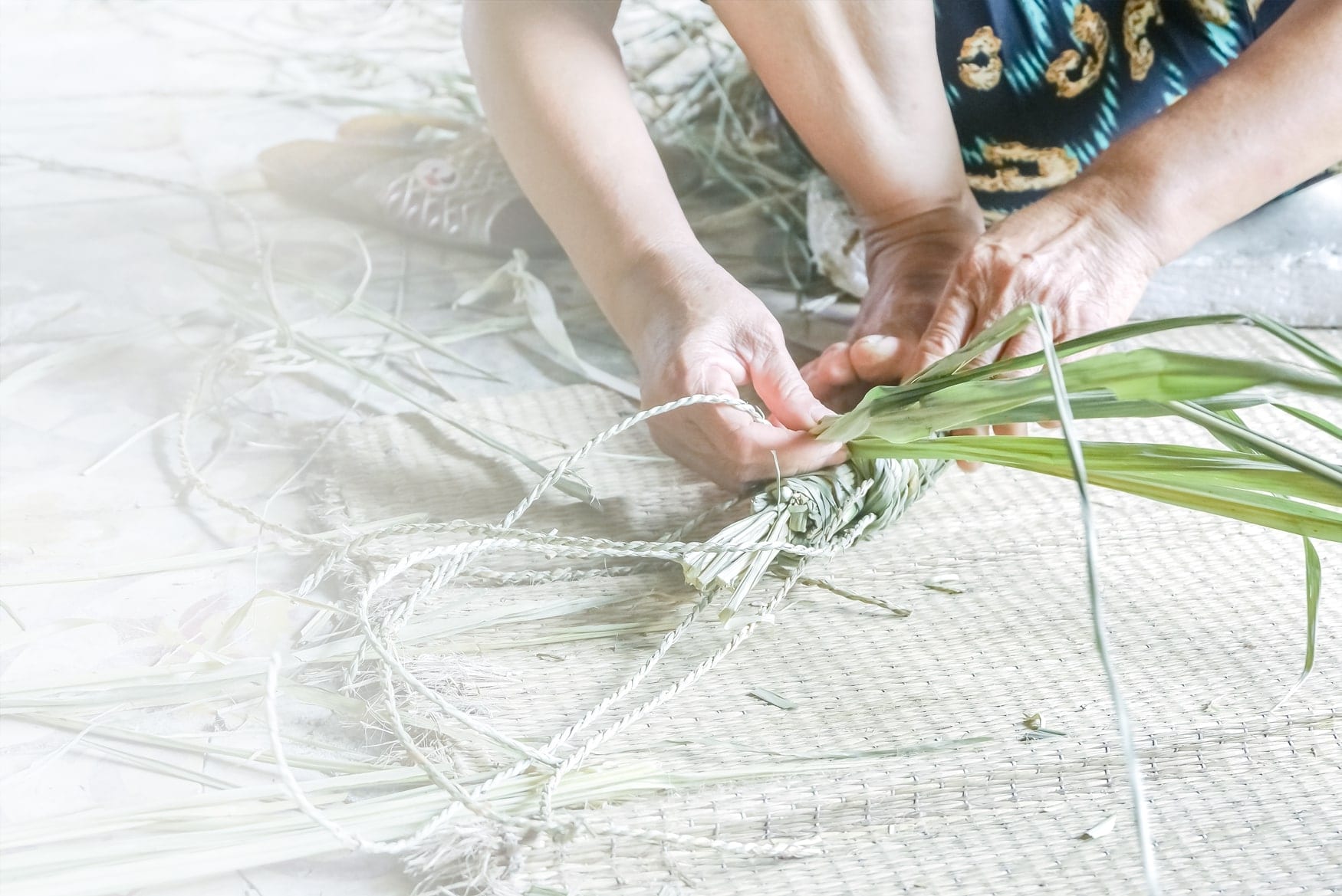
Rattan is a group of around 600 species of climbing palms, most diverse in the forests of Southeast Asia, and unlike bamboo its stems are solid, which is why it takes a rigid frame so well. Bamboo belongs to the grass family and is one of the fastest-growing plants on earth, with some species adding close to a metre in a day, and it has been used for trays and household utensils across Asia for centuries. If you want the longer comparison across our own fibers, our guide to what woven baskets are made of covers each one in turn.
One point worth saying plainly: we do not use synthetic dyes. Every tray leaves the factory in the natural hue of the fiber. If your market needs a specific finish or a food-contact declaration, tell us at the quotation stage so we can confirm what is possible before you sample.
How do you check a tray sample before you approve it?
A tray fails in predictable places. Work through these five checks on the physical sample, not on photographs, and you will catch almost everything that would otherwise come back as a complaint.

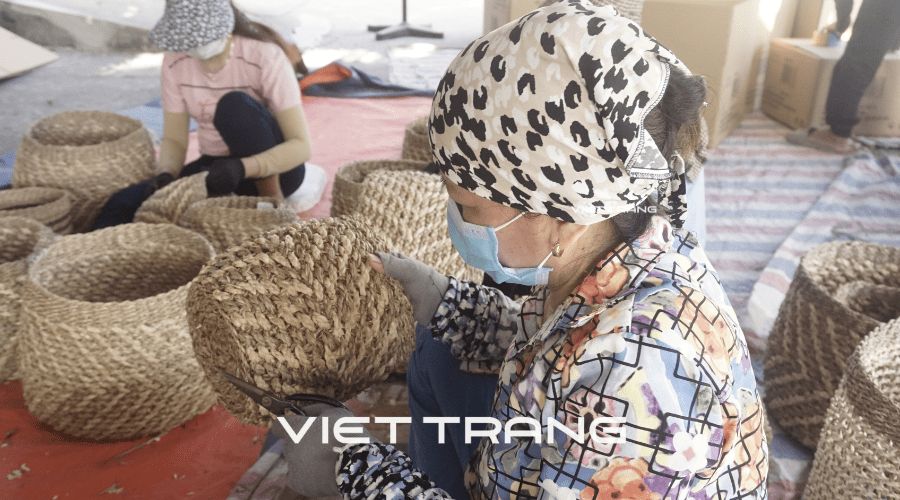
The moisture check is the one buyers skip most often and regret most. A tray that is still carrying moisture inside the weave will travel for weeks in a sealed container and arrive with mould on the surface. Our finishing stage covers shaping, cleaning and drying, and we run four warehouses with drying machines so that stock is dry before it is packed. If you have had mould problems with a previous supplier, our maker guide on how to prevent and treat mould on natural fiber baskets explains what goes wrong in transit and how to specify against it.
What sizes and sets work best in retail?
Trays sell well in graduated sets, in the same way our baskets do. A large portion of our range is offered in sets of 2, 3 or 5 nested sizes, which improves the shelf display, lifts the perceived value and raises the average order size without adding a new design to your range.

Round trays are the safest commercial choice and the easiest to nest. Rectangular and oval formats work harder in the kitchen and on a bar cart. Small trays in the eight to fifteen centimetre range sell as coasters and catch-alls, often merchandised beside the larger pieces. Most designs across our categories can be produced in custom dimensions, so if your planogram needs a specific diameter, send the measurement rather than choosing the nearest listed size.

How are woven trays packed and shipped?
Our tray listings show a minimum order quantity of 50 pieces per design, carton packing, and FOB, CFR or EXW trade terms. Natural brown is the standard colour on the rattan serving trays. Lead time depends on the design, the quantity and where it sits in the production calendar, so it is confirmed with your quotation rather than quoted as a flat number.
Nesting is what makes trays economical to ship. A set that nests cleanly takes a fraction of the volume of the same pieces packed flat, which matters when a tray is light but bulky. Ask for the carton dimensions and the pieces per carton in writing at quotation stage, because that figure drives your landed cost more than the unit price does.
Can trays be made to your own design?
Yes. Alongside the catalogue we run a bespoke design service for partners who need something that is not in the range, covering custom shapes, sizes, weave patterns and material combinations. Our in-house design team works from your references, sketches or mood boards and develops a sample for approval before anything goes into production.
Combining two fibers in one piece is a signature of our design work. A seagrass body with a palm leaf rim, or a corn husk stripe through a water hyacinth tray, gives a tonal contrast that a single-fiber tray cannot. If you are developing a private-label line, that contrast is a straightforward way to make your tray look unlike anything on the next shelf.
Woven trays from our range
Four trays we weave, one in each of the fibers compared above. The material shown under each name is the one stated in that product name.


Frequently asked questions
What is the minimum order for wholesale serving trays?
Our tray listings show a minimum order quantity of 50 pieces per design. If you want several designs in one shipment, send us the full list and we will confirm the combination on your quotation.
Which fiber lasts longest for a serving tray?
Rattan and bamboo hold a rigid shape longest because they are woody materials, which makes them the usual choice where a tray is carried loaded every day. Seagrass and water hyacinth are softer and are generally specified where texture and tone matter more than rigidity.
Are your trays safe to put food on?
Our trays are woven from natural fibers with no synthetic dyes, and they are used in homes for serving. Food-contact requirements differ by market, so tell us the standard you need to meet at quotation stage and we will confirm what we can supply before you order samples.
How do you clean a woven tray?
Wipe with a dry or barely damp cloth and let it dry fully in open air before it goes back on the shelf. Do not soak a woven tray or put it in a dishwasher. Our guide to cleaning and caring for seagrass and water hyacinth homeware has the longer version you can pass to your own customers.
Can you make trays in our own size and finish?
Custom sizing is available across most of our categories, and our bespoke design service covers new shapes, weave patterns and fiber combinations. Send a drawing or a reference photo with your target dimensions and we will come back with a sample proposal.
Ready to see a tray sample?
Tell us the formats, sizes and fibers you are working with and we will put a sample set together, woven at our own factory in Nga Son. We are SMETA and BSCI audited and we ship to buyers in more than 30 countries.

To receive lots of incentives with dedicated and professional service...
Or view more handwoven product in our
lookbook collection
CONTACT NOW
+84 915 709 666
(WhatsApp available)